 Save
Save There's something about October that makes me crave butternut squash soup, that kind of day when the kitchen smells like caramelized sweetness before you even taste anything. I stumbled onto this version years ago when a friend showed up with a butternut squash from her farmers market haul and we spent an afternoon roasting it just to see what would happen. The sage and nutmeg weren't part of any plan—they were just sitting there on the shelf, and somehow that spontaneous seasoning choice turned into something I make every fall now.
I made this for my roommate once when she was having a rough week, and she sat there with a bowl cradled in both hands, not saying much, just breathing in the steam. That's when I knew it wasn't just soup—it was the kind of thing people remember when they're thinking about being taken care of.
Ingredients
- Butternut squash: One large one, peeled and cubed—the roasting caramelizes the natural sugars, so don't skip that step or you'll lose half the flavor.
- Yellow onion: Medium-sized, chopped into roughly even pieces so it cooks at the same rate as your garlic.
- Garlic: Just two cloves, minced fine—too much and it bullies the delicate squash flavor.
- Vegetable broth: Four cups, and honestly, using a good one makes a real difference here.
- Olive oil: Two tablespoons total, split between roasting and sautéing.
- Sea salt and black pepper: Tsp and quarter tsp respectively—taste as you go because the broth adds its own saltiness.
- Nutmeg: Half a teaspoon ground, not more—nutmeg has a way of taking over a room if you're not careful.
- Dried sage: One teaspoon, or a tablespoon fresh if you have it, which smells infinitely better.
- Heavy cream or coconut milk: Optional for serving, but a swirl on top changes the whole vibe.
- Roasted pumpkin seeds and fresh sage: For garnishing, if you want it to look like you really tried.
Tired of Takeout? 🥡
Get 10 meals you can make faster than delivery arrives. Seriously.
One email. No spam. Unsubscribe anytime.
Instructions
- Get your oven ready:
- Preheat to 400°F while you prep the squash—this matters more than you'd think because a properly hot oven gets that caramelization going right away.
- Season and roast the squash:
- Toss your cubed squash with a tablespoon of olive oil, half a teaspoon of salt, and a pinch of pepper, then spread it on a parchment-lined baking sheet. Roast for thirty to thirty-five minutes, turning it halfway through—you'll know it's done when the edges are golden and a fork goes through easily.
- Build the base:
- While the squash is roasting, warm your remaining tablespoon of olive oil in a large pot over medium heat and sauté the onion until it's soft and translucent, which takes about four or five minutes. Add your minced garlic and let it get fragrant for just a minute—any longer and it starts to taste bitter.
- Combine and season:
- Once the squash is done, add it to the pot along with the sage and nutmeg, then pour in your vegetable broth. Bring it to a gentle boil, then lower the heat and let it simmer for ten minutes so all the flavors can get to know each other.
- Blend to silky perfection:
- This is where an immersion blender is your friend—blend it right there in the pot until it's completely smooth and velvety. If you're using a countertop blender, work in batches and let it cool slightly first to avoid a steam explosion, which I learned the hard way.
- Taste and adjust:
- This is the step people skip, but don't—taste it and add more salt or pepper if it needs it, remembering that the broth already has some seasoning built in.
- Serve with intention:
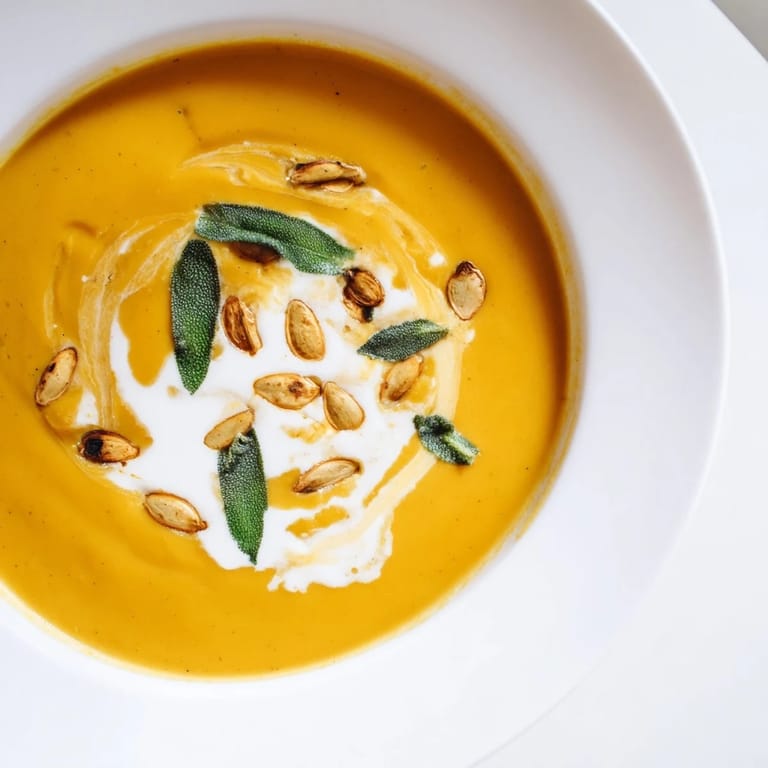
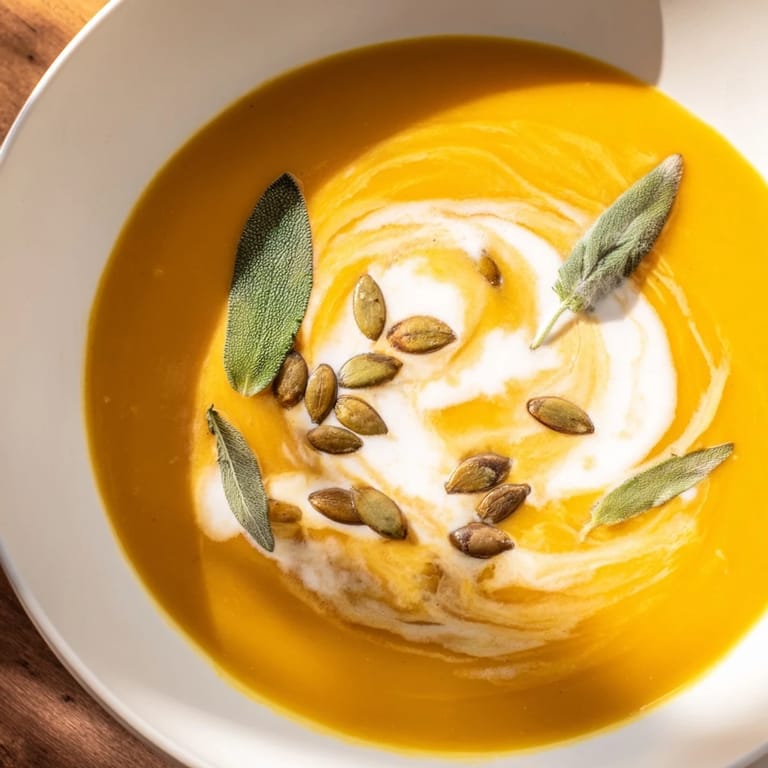
- Ladle it into bowls and top with a swirl of cream or coconut milk if you're using it, a handful of roasted pumpkin seeds, and maybe a leaf or two of fresh sage.
 Save
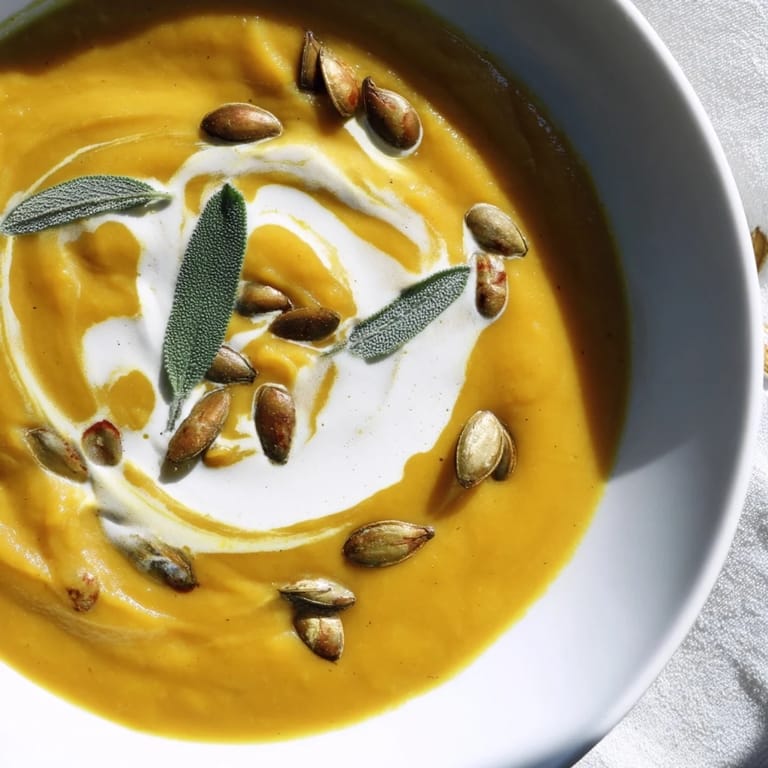
Save There's a moment when you first blend it where the whole pot turns this beautiful burnt-orange color and smells so good you forget why you were even hungry in the first place. That's when you know you've gotten it right.
The Magic of Roasting
The roasting step is what separates this from a bland squash puree situation. When you let that squash sit in a hot oven with a little olive oil and salt, something chemical happens—the natural sugars caramelize and the edges get crispy and dark. I used to think I was being fancy by roasting vegetables, but really it's just how you unlock the actual flavor that's already there. Once you taste the difference, you can't go back to just boiling everything and hoping for the best.
Sage and Nutmeg: The Quiet Stars
These two seasonings are doing more work than they get credit for. Sage has this slightly peppery, almost minty quality that makes you think of fall and open fires, while nutmeg brings this warm, almost woody sweetness that makes people say the soup tastes better than they expected. The trick is using them sparingly—if you go overboard, they drown out the squash instead of supporting it. I've found that fresh sage is noticeably better than dried if you can get it, but dried works fine in a pinch.
Serving and Pairing Ideas
This soup is honestly enough on its own, but it gets even better with some crusty bread on the side for dipping or even a glass of crisp white wine like Sauvignon Blanc. I've served it as a first course at dinner parties and people always ask for the recipe, which I take as a small victory. The cream or coconut milk swirl isn't just pretty—it adds a richness and a little something to bite into that changes the whole eating experience.
- A thick slice of sourdough is the ideal companion for this soup.
- If you're making it for vegans, the coconut milk swirl is genuinely better than the heavy cream anyway.
- Leftover pumpkin seeds from prepping another dish are perfect for garnishing here.
 Save
Save This soup has a way of turning an ordinary Tuesday into something worth remembering. That's the thing about food that's made with a little intention—it sticks with people.
Recipe Questions & Answers
- → What enhances the flavor of roasted butternut squash?
Sage and nutmeg add warm, aromatic notes that complement the natural sweetness of the roasted squash.
- → How do I achieve a smooth texture?
Puree the cooked squash mixture using an immersion blender or countertop blender until silky and smooth.
- → Can I make a creamy swirl without dairy?
Coconut milk serves as an excellent non-dairy alternative to cream, adding richness and subtle flavor.
- → What cooking method brings out the best taste?
Roasting the squash caramelizes its sugars, deepening the flavor profile for a richer, more complex dish.
- → Are there simple additions for texture contrast?
Roasted pumpkin seeds and fresh sage leaves provide a pleasant crunch and fresh herbal note.