 Save
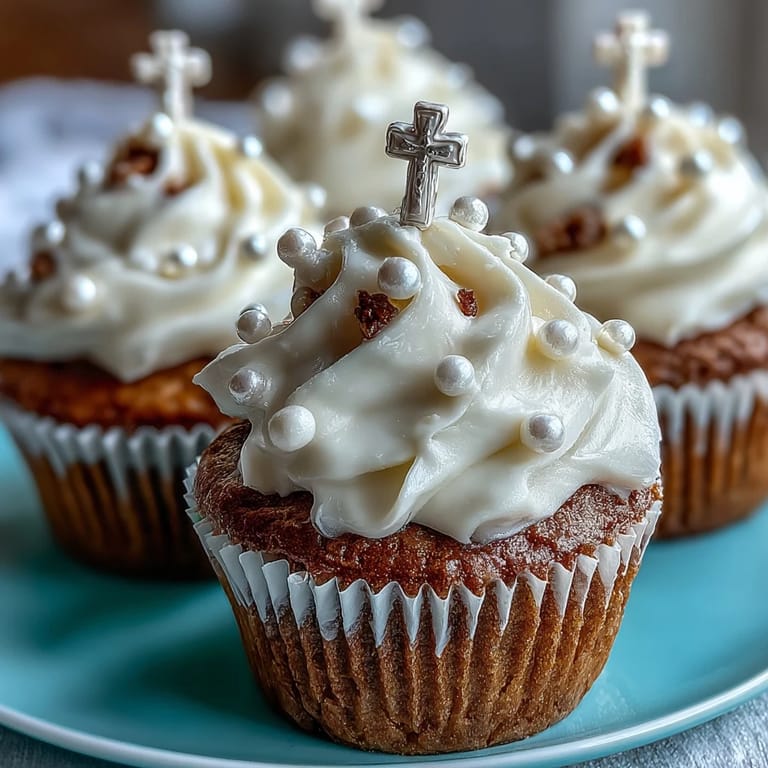
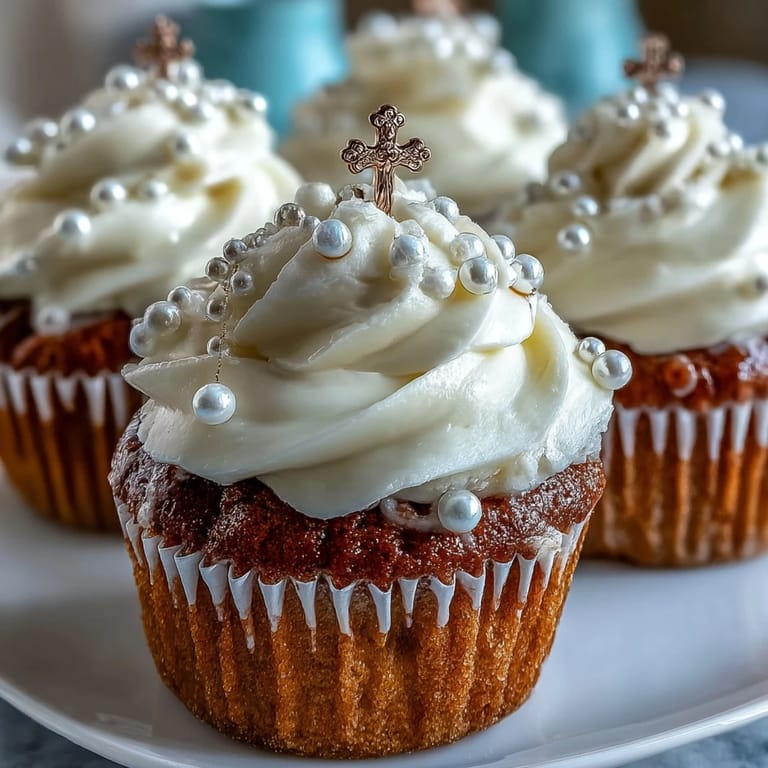
Save My cousin's daughter was turning seven, and her mother asked if I could make something special for her First Communion party that wasn't just ordinary sheet cake. I found myself at the kitchen counter on a Saturday morning, thinking about how to capture something both elegant and playful—tiny cupcakes crowned with fondant rosaries felt right, like edible prayer beads. The moment I bit into one of those vanilla clouds topped with buttercream, I knew these would become tradition in our family.
I'll never forget watching my aunt's eyes water a little when she saw the cupcakes lined up on the dessert table, each one topped with its tiny rosary. What started as a baking project became this quiet moment of recognition—how food can hold meaning beyond just tasting good. The kids devoured them, of course, but the adults lingered over theirs, and that's when I knew I'd made the right call.
Ingredients
- All-purpose flour: Use a light hand when measuring to avoid packing it down, or weigh it for precision since mini cupcakes are unforgiving about proportions.
- Granulated sugar: Creaming this with softened butter creates the tender crumb that makes these cupcakes melt on your tongue.
- Baking powder and baking soda: Together they give these tiny cakes a delicate rise without doming, keeping them perfectly proportioned for their size.
- Unsalted butter: Room temperature is non-negotiable here—cold butter won't cream properly and will leave you with dense, disappointing results.
- Eggs at room temperature: This detail actually matters because they incorporate more smoothly into the batter, creating a finer crumb structure.
- Whole milk: The alternating method of adding this with dry ingredients keeps the batter tender and prevents overmixing.
- Pure vanilla extract: Don't skip this or substitute with imitation—the real thing makes a noticeable difference in the final flavor.
- Powdered sugar: Sifting it before adding prevents lumps and gives you buttercream that's actually smooth and spreadable.
- White fondant: Quality matters here since you're shaping tiny details—cheap fondant tears and cracks, making the rosary toppers frustrating to craft.
- Edible pearls: These transform fondant beads into something that catches light and feels intentional rather than homemade.
Tired of Takeout? 🥡
Get 10 meals you can make faster than delivery arrives. Seriously.
One email. No spam. Unsubscribe anytime.
Instructions
- Prepare and preheat:
- Set your oven to 350°F and line the mini muffin tin with liners—this small step prevents that sticky mess of removing cupcakes later.
- Combine the dry goods:
- Whisk flour, baking powder, baking soda, and salt together in a bowl so everything distributes evenly throughout the batter.
- Cream butter and sugar:
- Beat them together for 2 to 3 minutes until the mixture looks pale and fluffy, which means air is getting incorporated and your cupcakes will be tender. This is honestly the most important step for texture.
- Add eggs one at a time:
- Mix well after each egg so the batter stays emulsified and doesn't look curdled or separated.
- Alternate dry and wet:
- Add the dry mixture in two parts with milk in between, mixing gently just until combined—overmixing develops gluten and makes cupcakes tough.
- Fill and bake:
- Divide batter so each liner is about two-thirds full, then bake 12 to 15 minutes until a toothpick comes out clean. The mini size means they bake faster than regular cupcakes, so check early.
- Cool properly:
- Let them sit in the pan for 5 minutes so they firm up, then transfer to a wire rack—this prevents condensation from making them soggy.
- Make the buttercream:
- Beat softened butter until creamy, then gradually add sifted powdered sugar so you don't create a cloud of sweetness and end up with lumps. Add vanilla, salt, and milk until you reach a consistency that pipes smoothly.
- Frost with confidence:
- Use a piping bag for neat swirls or a small spatula for a more casual look—both are correct.
- Craft the fondant rosaries:
- Roll small balls of fondant between your fingertips, connect them in a short string, shape a tiny cross, and use a damp brush to attach everything together. Let them firm up for a couple hours before placing them on cupcakes.
- Final assembly:
- Add the fondant toppers just before serving so the buttercream stays pristine and the fondant doesn't start sticking to the frosting.
 Save
Save There's something almost meditative about rolling those tiny fondant balls, making each rosary slightly different while staying true to the same quiet purpose. When you hand someone a cupcake and they actually notice the little cross and beads, you realize you've created something that matters beyond just being delicious.
Why Mini Cupcakes Work for Special Occasions
Mini cupcakes eliminate the awkwardness of cutting and plating—every guest gets their own perfectly complete dessert without anyone feeling like they're getting a smaller portion. They also photograph beautifully when lined up, which matters more than people admit when you're celebrating something worth documenting. Plus there's something psychologically satisfying about something small and complete rather than a sliver of something larger.
Making Fondant Work for You
Fondant intimidates people for no good reason—it's just sugar paste that behaves predictably if you respect a few rules. The color options mean you can personalize these cupcakes for any occasion or any kid's preferences, turning them from generic celebration desserts into something that feels chosen specifically for the person being honored. Once you've shaped one rosary successfully, the muscle memory kicks in and you'll find yourself making them faster.
Beyond the Communion Celebration
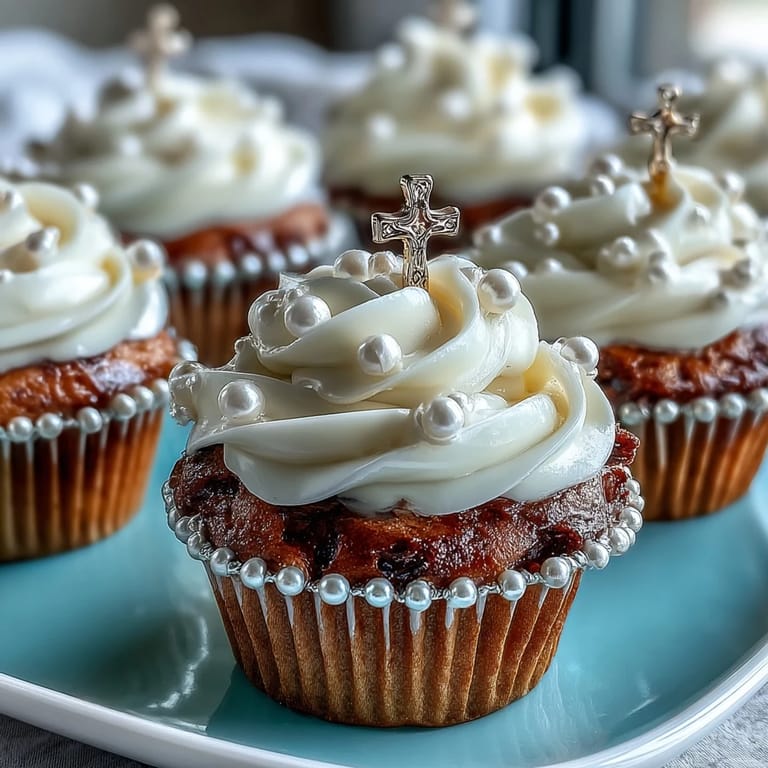
These cupcakes work beautifully for baptisms, confirmations, or any religious milestone, but they're equally lovely for regular celebrations if you swap the rosary toppers for fondant crosses, flowers, or personal initials. The vanilla base is neutral enough that you could even add almond extract or lemon zest if you wanted something different. Here's what you need to remember when adapting:
- Keep any flavor additions subtle so they don't overpower the delicate crumb and buttercream balance.
- If you're making these ahead, bake and cool the cupcakes a day early, then frost and add toppers the morning of the event.
- Trust yourself when decorating—fondant doesn't need to be perfect to be meaningful, and small imperfections actually make them feel more genuine.
 Save
Save These cupcakes are small enough to eat in two bites but meaningful enough to remember for years. Make them with attention but without pressure, and they'll become something your family asks for again and again.
Recipe Questions & Answers
- → How do I ensure the cupcakes are moist?
Use room temperature eggs and freshly measured ingredients. Avoid overmixing and bake until a toothpick comes out clean but still moist.
- → Can I color the fondant rosary toppers?
Yes, food coloring can be added to fondant for pastel pink, blue, or gold hues to personalize the decorations.
- → What’s the best way to apply buttercream frosting?
Use a piping bag or spatula to spread evenly on cooled cupcakes for smooth, creamy coverage.
- → Can almond extract be used instead of vanilla?
Almond extract can replace vanilla to give a nutty flavor, adding depth to both cupcakes and frosting.
- → How do I store these cupcakes to keep them fresh?
Store in an airtight container at room temperature for up to two days or refrigerate for extended freshness.