 Save
Save The first time I tasted pastilla, I was mesmerized by how a single bite could hold so many contradictions—crispy and soft, sweet and savory, delicate yet deeply satisfying. My friend's grandmother made it in her Marrakech kitchen, and watching her hands move through the phyllo sheets with such confidence, as if the pastry might shatter if she hesitated for even a second, taught me that this wasn't just cooking; it was an act of care. When I finally attempted it at home, my kitchen filled with the warmth of cinnamon and ginger, and I understood why she'd spent two hours on something that would vanish from the table in minutes.
I made this for my partner's birthday dinner, and I remember being genuinely nervous about the phyllo—everyone warns you about how easy it tears. But something clicked as I worked; maybe it was muscle memory from all those nights my grandmother made strudel, or maybe I was just too focused to second-guess myself. When it came out of the oven, golden and puffed like a crown, and we both sat down with mint tea and that first bite, everything else in the world felt very far away.
Ingredients
- Bone-in chicken thighs (1.5 lbs): This cut holds more flavor and moisture than breasts—it's worth the extra shredding work because the meat stays tender through simmering and stays that way even after baking.
- Onions and garlic (2 onions, 3 cloves): These mellow as they cook down with the spices, becoming almost sweet and creamy; this is why you sauté them first rather than rushing to the chicken.
- Ginger, cinnamon, turmeric, black pepper, nutmeg (1 tsp each of the first three, 1 tsp black pepper, 1/2 tsp nutmeg): Each spice layers differently—the ginger and turmeric warm you from inside, while cinnamon whispers at the edges, and nutmeg ties everything together with an almost floral note.
- Saffron threads (1/2 tsp, optional, soaked in 1 tbsp warm water): If you use it, soak it first; the warmth releases its color and haunting earthiness, and honestly, it's the secret that made me finally understand why this dish is served at celebrations.
- Chicken stock (2 cups): This becomes the glue that holds the filling together and carries all those spices into every strand of meat.
- Toasted slivered almonds (1/2 cup): The toasting matters—you want them slightly dark and fragrant so they add texture and a subtle nuttiness that doesn't compete with the spices.
- Fresh herbs—parsley and cilantro (1/3 cup and 1/4 cup): These go in at the end to add brightness and keep the filling from feeling too heavy; they're your last chance to add lift.
- Eggs (6 large): These scramble softly and fold into the cooled filling, creating a silky texture that catches the spices and makes the whole thing feel almost creamy.
- Phyllo pastry (10 sheets): Buy it fresh if you can find it; frozen works but fresh has a delicate crispness that truly matters here, and it won't shatter as easily when you're layering.
- Melted butter (1/2 cup): This is what transforms the phyllo from tissue-thin to golden and shatteringly crisp; don't skimp and don't use oil as a substitute because the flavor is part of the magic.
- Powdered sugar and ground cinnamon (1/2 cup sugar, 2 tsp cinnamon): The final dusting is non-negotiable—it looks beautiful and the sweetness against the savory filling creates this perfect moment of surprise on the palate.
Tired of Takeout? 🥡
Get 10 meals you can make faster than delivery arrives. Seriously.
One email. No spam. Unsubscribe anytime.
Instructions
- Build the flavor foundation:
- Heat olive oil in a large Dutch oven over medium heat until it shimmers, then add your onions and garlic. Let them cook until they're soft and smell so good you want to eat them on bread right then. This takes about 5 minutes and creates the base that everything else will rest on.
- Brown the chicken in spice:
- Add the chicken thighs and all your spices at once—the warm pan will wake them up and toast them slightly. Let the chicken sit undisturbed for a few minutes so it develops a golden crust, then flip and repeat. The whole browning takes about 5 minutes and the smell will convince you that this is exactly the right decision.
- Simmer until the meat falls from bone:
- Pour in your chicken stock, cover the pot, and let it simmer for 30 to 35 minutes until the chicken is so tender it wants to fall apart. You'll know it's ready when the meat pulls away from the bone without any resistance.
- Reduce and concentrate:
- Once the chicken is cooked, remove it to a plate and crank the heat to medium-high. Let that cooking liquid bubble down until you have about 1 cup left and it coats the back of a spoon with a light gloss. This concentrates all the flavor into something that glues the filling together.
- Shred and recombine:
- While the chicken cools enough to handle, shred the meat, discarding every bit of bone and skin. Return the shredded meat to the pot along with the parsley, cilantro, and toasted almonds, then stir it all together and let it cool completely. The filling should taste bright and alive, with the herbs cutting through the richness.
- Scramble eggs into silk:
- In a separate pan, melt butter over medium-low heat and beat your eggs with salt. Pour them in and stir constantly with a soft hand, breaking them into small curds and pulling the cooked bits from the edges. You want them soft and still slightly glossy—they'll continue to cook slightly from the residual heat. Once they're cool, fold them gently into your chicken filling.
- Layer the phyllo shell:
- Preheat your oven to 375°F and brush your baking dish generously with melted butter. Lay down your first phyllo sheet, brush it with butter, and let the edges hang over the rim of the pan. Repeat with four more sheets, each one brushed and each one hanging slightly over the edge at different angles—this overhang will eventually fold back over the filling.
- Fill with care:
- Spread your chicken-egg mixture evenly into the phyllo nest, then take those overhanging sheets and fold them back over the filling like you're tucking it into bed. This layer of phyllo trapped beneath protects the filling and keeps the bottom crust from getting soggy.
- Crown it with phyllo:
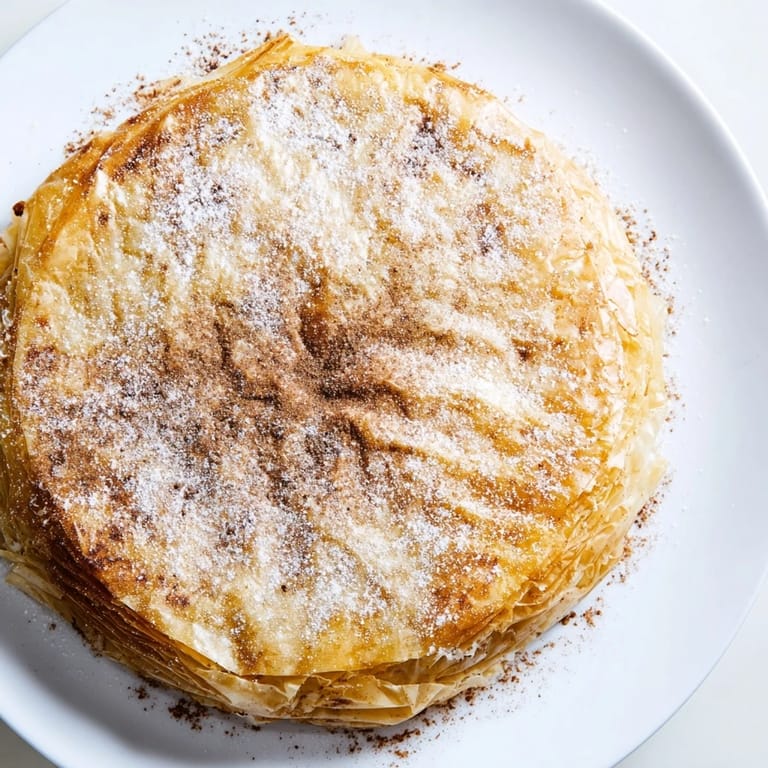
- Lay your final four phyllo sheets on top, buttering each one and tucking the edges into the pan so everything stays sealed and crisp. Finish with one more sheet on top, buttered, and you'll have something that looks like a golden crown waiting to bake.
- Bake until golden and shatteringly crisp:
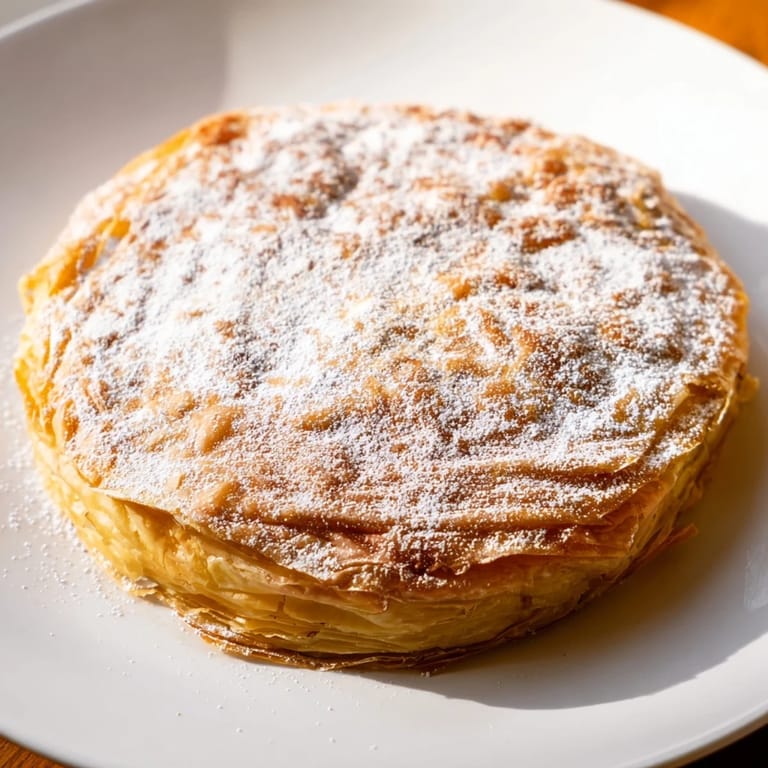
- Bake for 35 to 40 minutes until the top is deep golden brown and the edges are pulling slightly from the pan. The smell will be extraordinary—spiced and buttery and almost perfumed. Let it rest for 10 minutes so the filling sets slightly and the steam escapes.
- Dust and serve:
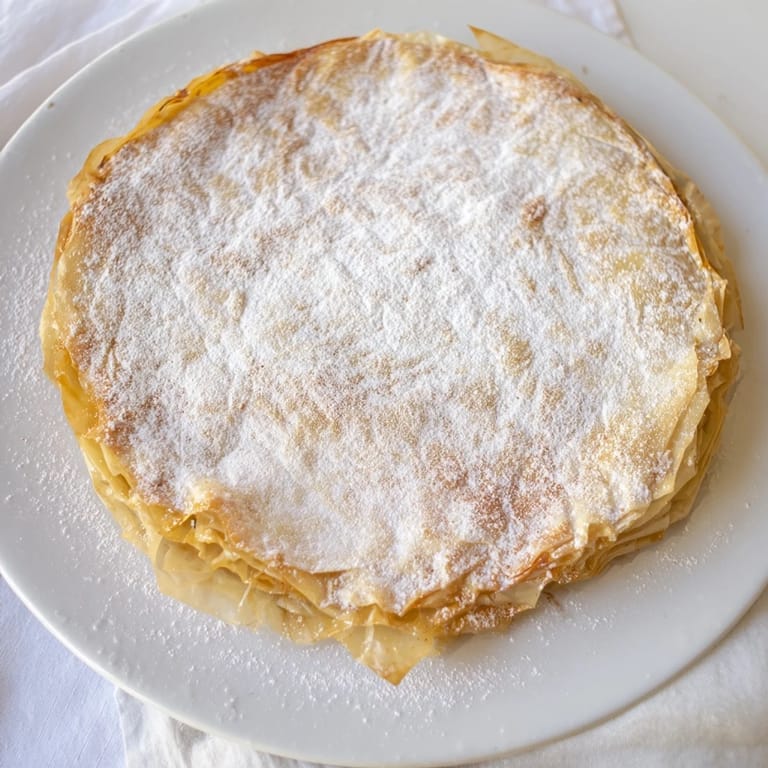
- Just before serving, dust the top generously with powdered sugar and cinnamon. The contrast of that sweet-spiced dust against the savory filling underneath is where the magic lives.
 Save
Save My neighbor, who grew up in Fez, watched me make this the first time, and when I nervously asked if I was doing it right, she smiled and said that pastilla is always right when it's made with attention. That moment shifted something for me—it wasn't about achieving technical perfection, but about honoring the dish by slowing down and being present with each layer, each fold, each breath of steam that rose from the oven.
The Sweet-Savory Magic
There's a reason this dish has survived for centuries in Moroccan kitchens: it understands something fundamental about how flavor works. The powdered sugar isn't trying to make the pastilla dessert; instead, it dances with the savory spices and creates a moment of tension on your palate that makes you want another bite immediately. The first time someone at your table hits that combination, watch their face—that pause, that slight confusion followed by understanding, that's when they get it. It's the same reason you add a pinch of sugar to tomato sauce or why fine chocolate wants a grain of salt: contrast is what makes flavor sing.
Why Phyllo is Worth the Nervousness
Phyllo seems like the most delicate, impossible thing, and that's exactly why people avoid it. But here's what I learned: it wants to tear, it's designed to tear slightly, and those tiny imperfections actually help it crisp beautifully because heat can reach more surface area. Stop thinking of phyllo as fragile and start thinking of it as responsive—it tells you immediately if your hands are tense or if the filling is too warm, and that feedback is actually useful. Once you make pastilla once, you understand that phyllo isn't the enemy; it's the most forgiving of all the pastries because if you mess up, you simply butter another sheet and layer over the problem.
Feeding People with Ceremony
Pastilla deserves to be brought to the table with a moment of attention. Let people see that golden crust; let them hear it crackle when the knife cuts through. Serve it with something bright and acidic—a Moroccan carrot salad, a simple tomato-cucumber-onion combination, or just a squeeze of fresh lemon over tender greens. The mint tea afterward is not optional; it's part of the experience, the way the spiced richness settles into your body and the tea carries it away like a gentle hand.
- Bring the pastilla to the table whole or cut it into wedges in the kitchen—either way, let the phyllo shine.
- If you're making this ahead, assemble everything through the final phyllo layer, cover it with plastic wrap, and refrigerate for up to 8 hours, then bake when you're ready.
- Leftover pastilla, if you somehow have any, is best eaten the same day, though it tastes surprisingly good at room temperature the next morning with strong coffee.
 Save
Save This pastilla represents something larger than a recipe—it's the way traditions travel through hands and memories, becoming both honored and transformed. Every time you make it, you're part of a chain of cooks stretching back centuries, adding your own small moments and learning to your link in that chain.
Recipe Questions & Answers
- → What type of meat works best for this dish?
Chicken thighs are commonly used as a tender and flavorful substitute, but traditional versions use squab or Cornish hen for authenticity.
- → How do you achieve the crispness of the phyllo pastry?
Brushing each phyllo sheet with melted butter before layering and baking at a high temperature ensures a golden, crisp texture.
- → Can I prepare the filling ahead of time?
Yes, the spiced meat filling and scrambled eggs can be made in advance and combined before assembling the pie.
- → What gives the pie its unique sweet-savory flavor?
The combination of warm spices in the meat along with a finishing dusting of powdered sugar and cinnamon creates a harmonious blend of sweet and savory.
- → Are there common additions to the filling?
Chopped dried apricots or dates are often included for added sweetness and texture.