 Save
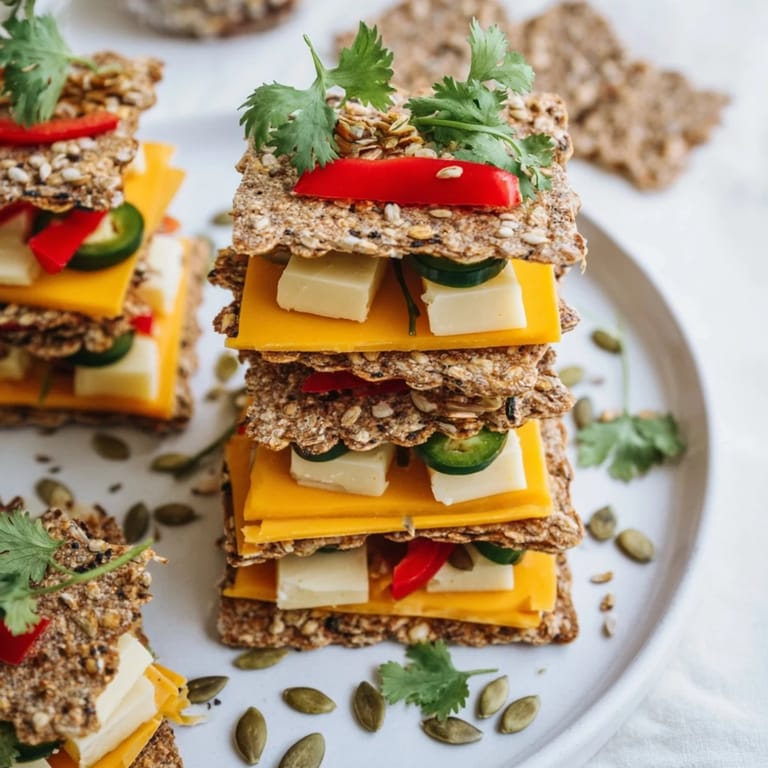
Save The first time I stacked cheese on crackers without thinking much about it, my friend gasped and said it looked like the mesas she'd seen driving through Arizona. That comment stuck with me—suddenly those wobbly towers became something deliberate, something with a story. Now whenever I want to impress people without spending hours in the kitchen, I think about that moment and build these edible landscapes.
I made these for a small gathering once where someone mentioned they were craving something flavorful but didn't want a heavy meal. As I started layering the cheeses, I realized how each one brought something different—the cheddar's sharpness, the pepper jack's heat, the gouda's smoke—all working together. By the time everyone was done sampling, they weren't just eating, they were having a conversation about flavor, and that felt like the real win.
Ingredients
- 24 assorted crackers: Mix shapes and sizes—multigrain, wheat, rye, seeded—because the variety is what makes these stacks visually interesting and keeps the eating experience from feeling monotonous.
- 100 g cheddar cheese, sliced: The backbone of the stack, sharp enough to cut through richness but not so intense it overwhelms the other flavors.
- 100 g pepper jack cheese, sliced: This is where the heat comes in, so taste as you go if you're sensitive to spice.
- 100 g Monterey Jack cheese, sliced: Mild and creamy, it balances the bolder cheeses and helps everything meld together.
- 50 g smoked gouda, sliced: A smaller amount goes a long way—the smoke adds complexity without taking over.
- 50 g blue cheese, cut into cubes: Optional but worth trying if you like funk and depth; it plays beautifully against the milder cheeses.
- 1 small red bell pepper, thinly sliced: These add color and a subtle sweetness that echoes the spice from the pepper jack.
- 2 tablespoons fresh cilantro leaves: Don't skip this—the freshness cuts through all that richness and brings the whole thing to life.
- 1 small jalapeño, thinly sliced: Optional, but if you add it, you'll taste it in every bite, so decide your heat level first.
- 1 tablespoon toasted pumpkin seeds: These aren't just decoration; they add a toasty nuttiness and a little crunch that ties the whole plate together.
Tired of Takeout? 🥡
Get 10 meals you can make faster than delivery arrives. Seriously.
One email. No spam. Unsubscribe anytime.
Instructions
- Slice your cheeses slightly smaller than the crackers:
- This matters more than you'd think because it keeps the stacks from toppling and lets the cracker be the foundation. Use a sharp knife or a cheese slicer—clean cuts make for sturdier stacks.
- Start building your mesas on a large platter:
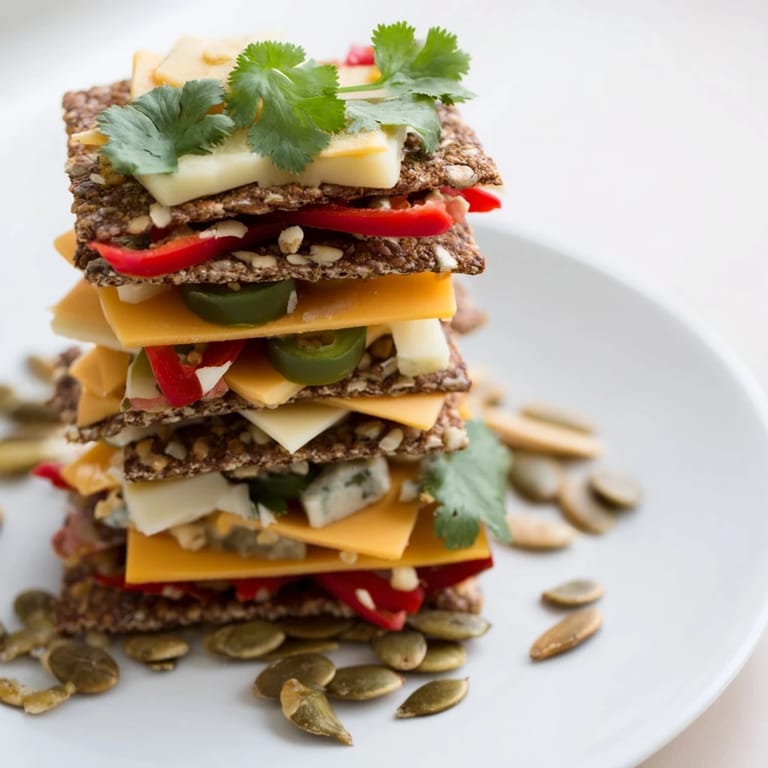
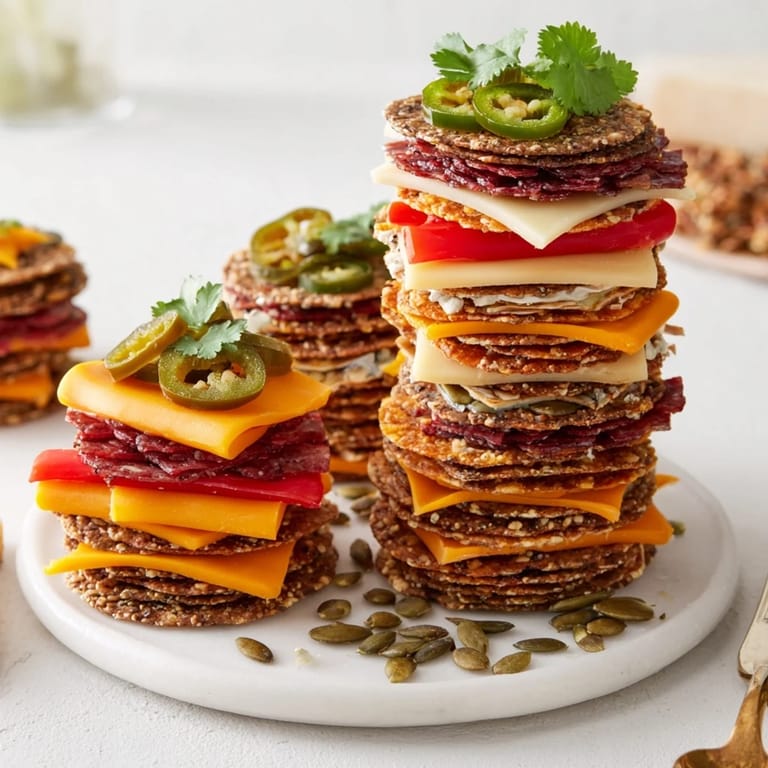
- Lay down a cracker, add a slice of cheese, then another cracker, then a different cheese. Vary the heights and the types of cheese in each stack to keep things interesting and mimic those natural rock formations.
- Tuck in the fresh elements as you go:
- Slide bell pepper slices, cilantro leaves, and jalapeño slices between layers or on top—think of them as little veins of color running through the rocks. This is where you get creative and make each stack feel unique.
- Scatter the pumpkin seeds around the base:
- Sprinkle them like they're the sandy desert floor beneath these towers. They ground the whole composition and add texture.
- Serve right away or cover loosely and chill:
- If you're making these ahead, let them sit uncovered in the fridge so the crackers don't get soggy. They're best at room temperature, when the cheese is soft enough to taste its fullest.
 Save
Save There's something quietly satisfying about arranging food on a platter with intention, even when it's something as simple as crackers and cheese. My daughter once asked why I was taking so long to stack them, and I realized I wasn't rushing because I actually enjoyed the process—it felt like building something, like art you could eat.
Playing with Flavor Combinations
Once you understand the framework, these stacks become a playground. I've layered in thin slices of cured meat—prosciutto, salami, whatever's open—and the salt adds another dimension. Sun-dried tomatoes tucked between layers bring a sweet tang that plays off the pepper jack's heat. The key is thinking about contrast: sweet against savory, sharp against mild, soft against crisp.
Making It Your Own
This is genuinely a template more than a strict recipe, so don't feel locked in. I've made these gluten-free by swapping in gluten-free crackers, and they're just as impressive. The point is building towers that look intentional and taste like you care, which you do.
Pairing and Serving
These feel special with something cold and crisp to drink—a Sauvignon Blanc hits the mark, or a dry rosé if you want something lighter. The acidity cuts through the cheese and makes you want another bite. I serve them on a large platter so people can admire them before digging in, which always gets a reaction.
- Pull the cheeses out 10 minutes before assembling so they're soft and pliable, not cold and brittle.
- Taste as you build so you know the flavor balance feels right before your guests try them.
- If any stack feels wobbly, just lean it slightly or shorten it—imperfection is part of the charm.
 Save
Save These little stacks remind me that you don't need complicated recipes to make something memorable. Sometimes the smallest appetizers create the biggest moments.
Recipe Questions & Answers
- → What types of cheeses work best for these stacks?
A combination of cheddar, pepper jack, Monterey Jack, smoked gouda, and optionally blue cheese provide a balanced mix of flavor and texture.
- → Can I use gluten-free crackers for this dish?
Yes, substituting gluten-free crackers is a great option to make this suitable for gluten-sensitive diets.
- → How should I prepare the cheeses for stacking?
Slice cheeses slightly smaller than the crackers to facilitate neat stacking and visual appeal.
- → What garnishes complement these stacks?
Thin slices of red bell pepper, jalapeño, fresh cilantro leaves, and toasted pumpkin seeds add freshness, heat, and crunch.
- → How long can the stacks be stored before serving?
Stacks can be loosely covered and refrigerated until ready, but are best served fresh to preserve cracker crispness.