 Save
Save I still remember the first time I arranged a noodle board at home—it was meant to be a simple weeknight dinner, but the moment I stepped back and saw all those vibrant vegetables, tender noodles, and proteins arranged in careful lines across our wooden board, something clicked. It felt less like cooking and more like creating edible art. My guests leaned in before I'd even finished setting down the sauce bowls, and suddenly we were all gathered around, building our own perfect bites. That's when I realized this wasn't just a meal; it was an experience, a conversation starter, a way to let everyone be the chef of their own bowl.
I'll never forget hosting my first dinner party after moving to a new city, feeling nervous about making a good impression. I chose this noodle board because it was ambitious enough to feel special, but the beauty of it meant my slight trembling hands didn't matter—the food spoke for itself. As my friends twirled noodles, dipped shrimp in peanut sauce, and debated which sauce combination was best, the kitchen anxiety melted away. By the end of the meal, we were all laughing, sauce on our chins, making plans for next time. That board became the reason people actually wanted to come over.
Ingredients
- Rice noodles or soba noodles (300 g): The foundation that bridges everything—rice noodles are delicate and neutral, while soba brings an earthy, nutty depth. I learned to rinse them under cold water after cooking; it stops the starches from making them gluey, and the sesame oil adds that toasted fragrance that makes people close their eyes on the first bite.
- Sesame oil (1 tbsp): Just a touch, but it's the difference between noodles that taste like noodles and noodles that taste like intention. Never cook with it directly—add it after everything cools, like a final whisper.
- Cooked chicken breast, thinly sliced (200 g): I poach mine gently so it stays tender, then slice against the grain. If you're in a hurry, rotisserie chicken works beautifully and tastes even better.
- Cooked shrimp, peeled and deveined (150 g): The pink adds such color, and the sweetness plays perfectly against the salty-spicy sauces. Cook them just until they curl; overshooting means rubbery shrimp, and nobody wants that.
- Boiled eggs, halved (2): Soft-boiled is my secret weapon here—the runny yolk becomes its own sauce when you dip. If you prefer hard-boiled, that works too, but you lose that golden moment.
- Julienned carrots (1 cup): Cut them thin so they stay crisp and sweet. I do mine by hand with a sharp knife when I have time; it feels meditative.
- Sliced cucumber (1 cup): The cool contrast nobody expects but everyone needs. Slice them just before serving so they don't weep.
- Julienned red bell pepper (1): The brightness—it's almost mandatory. Choose one that's firm and shiny.
- Thinly sliced red cabbage (1 cup): It holds its color and crunch longer than anything else on the board, a quiet hero.
- Cooked edamame, shelled (1 cup): A texture surprise, slightly nutty, a protein boost that makes it feel substantial.
- Thinly sliced radishes (4): Peppery and crisp—they wake up your palate between bites.
- Sliced scallions (2): A whisper of onion that doesn't overpower, fresh and bright.
- Fresh cilantro leaves (1/4 cup): Use the leaves, not the stems. It's herbaceous, alive on the tongue.
- Fresh mint leaves (1/4 cup): Cooling, unexpected in a savory context, utterly transformative.
- Roasted peanuts, chopped (1/4 cup): Crushed just before serving so they stay crunchy. Toast them yourself if you can; the aroma fills your kitchen with promise.
- Toasted sesame seeds (2 tbsp): That nutty, toasty flavor—buy them already toasted so you don't have to think about it.
- Lime wedges: The final acidity that makes everything brighter. Don't skip them.
- Soy sauce (1/3 cup): The umami anchor. Use good soy sauce; it matters.
- Spicy peanut sauce (1/3 cup): Store-bought is fine, or make your own if you're feeling ambitious. The richness and heat become the soul of certain bites.
- Hoisin sauce (1/3 cup): Sweet and complex, the backbone of so many Southeast Asian flavors.
- Sweet chili sauce (1/3 cup): Bright, accessible, the gateway sauce for people nervous about bold flavors.
Tired of Takeout? 🥡
Get 10 meals you can make faster than delivery arrives. Seriously.
One email. No spam. Unsubscribe anytime.
Instructions
- Cook and cool the noodles:
- Bring a pot of water to a rolling boil and cook the noodles until they're just tender—not mushy, not crunchy. You want them to bend without snapping. Drain them in a colander and rinse under cold running water, stirring gently with your fingers until they're completely cool. This is the moment where most people rush, but don't; cold noodles are crucial. Once cool, toss them lightly with the sesame oil using two forks, separating any clumps. They should smell toasted and feel silky.
- Prepare your ingredients with intention:
- Lay out your cutting board and start with the vegetables that won't oxidize quickly—carrots, cabbage, radishes, bell peppers. Slice them with focus; thin, uniform pieces look more polished and feel better to eat. Handle the cucumber and proteins last so they stay fresh. Arrange everything in small bowls or on plates as you go, keeping things organized. Your future self, when you're actually assembling the board, will be grateful.
- Cook and cool the proteins:
- If your chicken and shrimp aren't already cooked, now's the time. Poach the chicken in gently simmering salted water until it's just cooked through—about 12 minutes for a whole breast. Let it cool slightly, then slice against the grain. Cook the shrimp in the same water (or fresh water) for just 2-3 minutes until they turn pink and curl up. Cool them immediately in an ice bath so they stay tender. Boil your eggs now too if you haven't already—about 6-7 minutes for soft-boiled, 10-12 for hard.
- Arrange your board like you're painting a landscape:
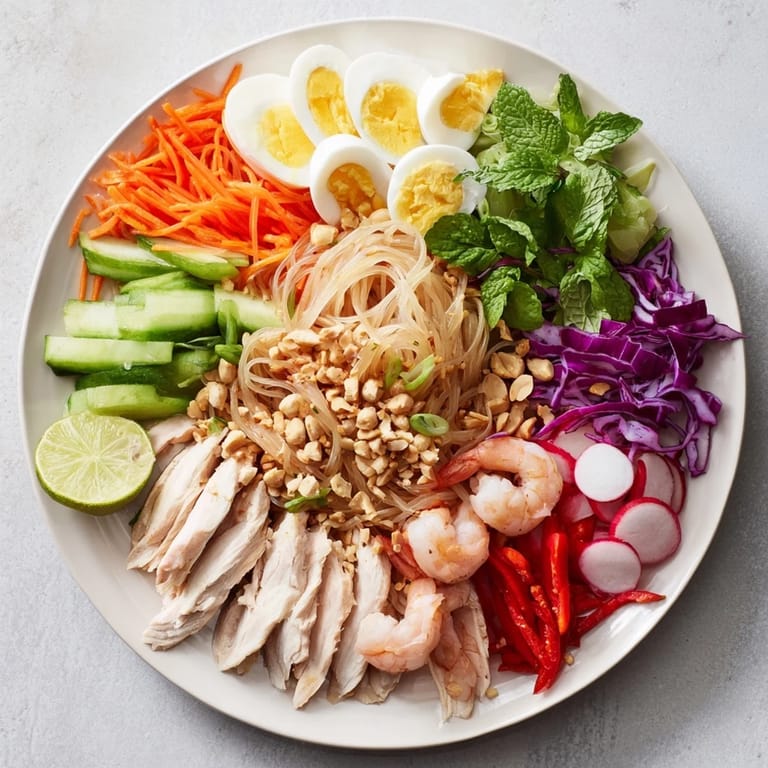
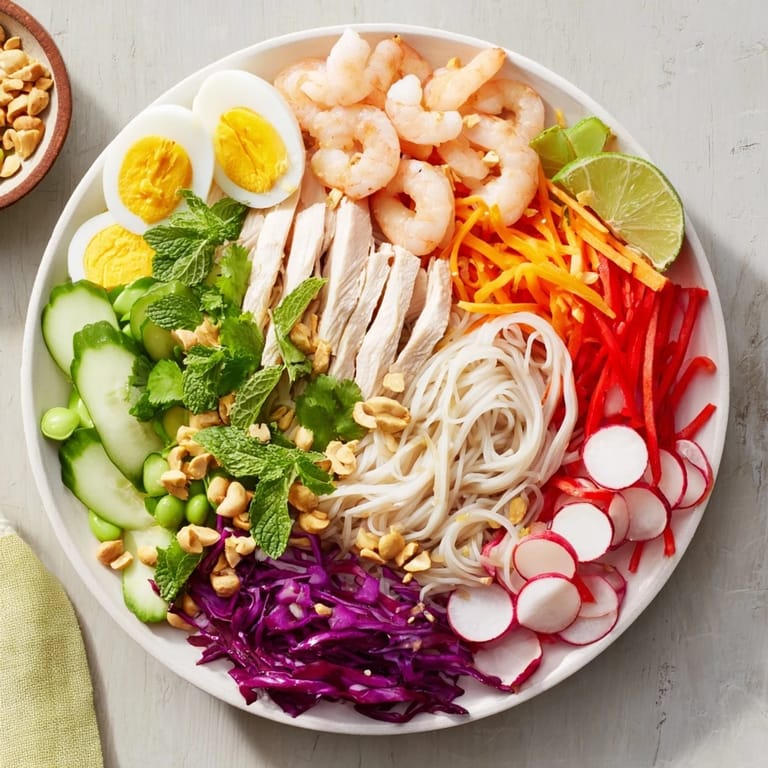
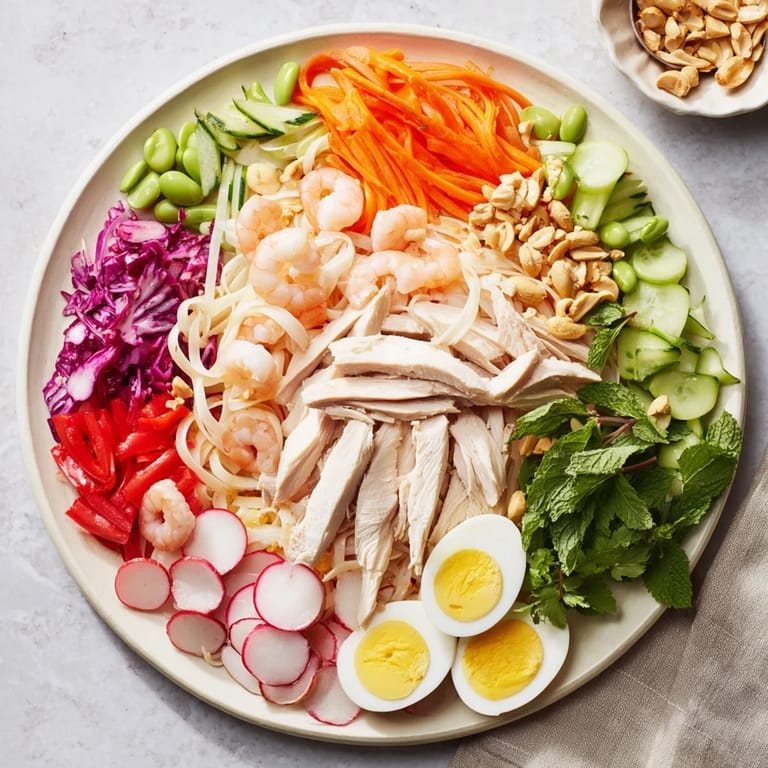
- Find your largest, most beautiful board or platter—this is your canvas. Start by placing a small bowl or four small bowls in the center for your dipping sauces. Then, working outward, arrange each ingredient in its own neat section. Some people like straight rows; others prefer fans or stacks. The key is visual rhythm—make sure colors aren't clumping. Arrange the noodles in a loose nest or scattered bed as a base or fill, then layer proteins, vegetables, and garnishes around them. Step back and look. It should make you smile.
- Finish with the delicate touches:
- Scatter the cilantro and mint over the top—you want them visible but not drowning everything. Sprinkle the peanuts and sesame seeds last, right before serving, so they stay crispy. Tuck lime wedges into any gaps. Everything should look abundant, colorful, and intentional.
- Invite people to build their own adventure:
- Set the board down and explain that everyone should noodle, then protein, then vegetables, then herbs, then sauce. Or they can ignore that entirely and do it their own way. The beauty is in the freedom. Watch people's faces as they take their first bite of their own creation.
 Save
Save There was a moment during that first dinner party when everything went quiet. Not awkward quiet—the kind of quiet that happens when people are fully present, fully enjoying. My friend, who's usually rushing through meals to get back to work, had built this elaborate noodle creation with cilantro and mint and three different sauces layered in each bite. She wasn't eating fast; she was savoring. When she looked up and smiled, I knew this recipe had become more than food. It was permission to slow down, to be intentional, to make something that mattered.
The Art of the Board
Arranging a noodle board is meditative if you let it be. I've learned that the board itself matters—wooden ones feel warmer and more inviting than glass, and the size should be generous enough that things don't look crowded. Leave small gaps between ingredients; it makes everything feel more deliberate. Think about color contrast; red cabbage next to cilantro, white egg next to dark cucumber, golden peanuts scattered across pale noodles. These small decisions are what transform a collection of ingredients into something that stops people mid-conversation. The board is a story, and you get to tell it visually.
Sauce Chemistry
The four sauces are your conversation partners—each one tells a different story. Soy sauce is clean and salty, peanut sauce is rich and warming, hoisin is deep and slightly sweet, and sweet chili is bright and approachable. I always encourage people to taste each one alone first, then start mixing. Some combinations are revelations—a little peanut sauce with hoisin becomes something entirely new. Others prefer to stick with one. The magic is that there's no wrong answer. You're not just eating; you're experimenting, learning your own preferences in real time. That's not something most meals offer.
Flexibility and Variations
This board bends to accommodate almost anyone. Vegetarians get tofu and double the edamame. People avoiding shellfish skip the shrimp or add more chicken. Gluten-sensitive guests get tamari instead of soy and checked sauce labels. Nut allergies mean you swap peanut sauce for something else entirely—sesame tahini works beautifully, or even a ginger-lime dressing. I've made this board for a vegan friend by adding roasted chickpeas and cashew cream. Every time, it felt equally special because the bones of the recipe are so strong. You're not compromising when you adapt; you're personalizing.
- Pickled vegetables or kimchi add a fermented depth that bridges everything together.
- Add crispy fried shallots or garlic for an extra textural layer and subtle caramelization.
- A drizzle of sriracha-infused mayo or a bowl of curry sauce opens entirely new flavor doors.
 Save
Save Every time I make this board, I'm reminded that cooking isn't just about feeding people; it's about giving them permission to be present. This noodle board does that effortlessly.
Recipe Questions & Answers
- → What types of noodles work best for this dish?
Rice noodles or soba noodles are ideal as they absorb flavors well and have a tender texture that complements the fresh vegetables and proteins.
- → Can I make a vegetarian version?
Yes, substitute the chicken and shrimp with firm tofu and include all the fresh vegetables and dipping sauces to maintain rich flavor and texture.
- → How should I arrange the components for best presentation?
Arrange noodles, proteins, and vegetables in neat rows or fans on a large board, placing a divided bowl with sauces centrally for visual balance and easy access.
- → What are some good sauce alternatives or additions?
Consider gluten-free tamari instead of soy sauce, or add pickled vegetables and kimchi for extra tang and complexity.
- → Which garnishes enhance the flavors here?
Fresh cilantro, mint leaves, chopped roasted peanuts, toasted sesame seeds, and lime wedges add freshness, crunch, and brightness to the bowl.