 Save
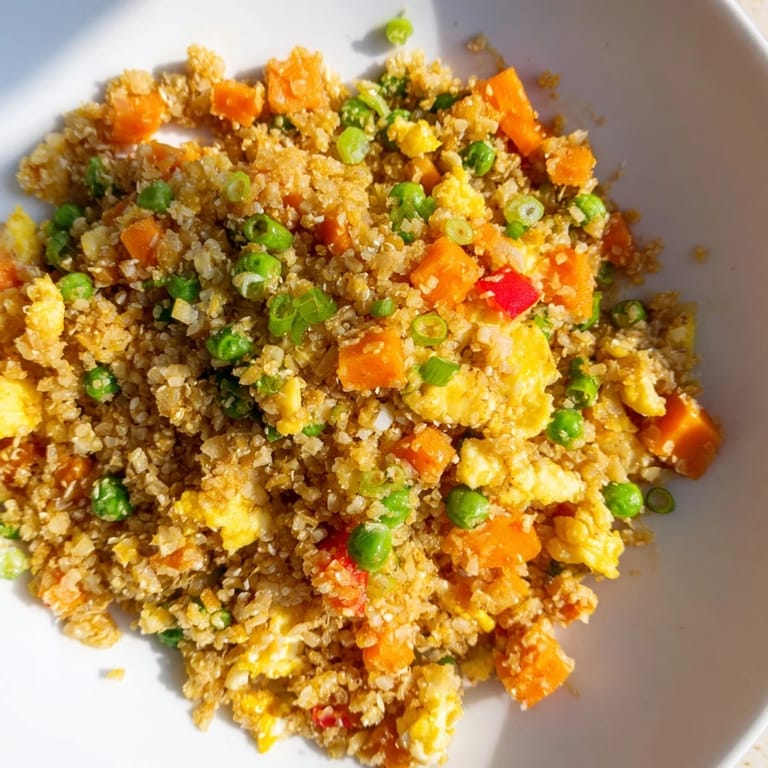
Save I discovered cauliflower fried rice by accident on a Tuesday evening when I had a head of cauliflower sitting in my crisper drawer and zero rice in the pantry. What started as a kitchen improvisation turned into something I crave constantly. That first night, the aroma of sesame oil and garlic filling my small apartment felt like a revelation, and I realized I'd stumbled onto something genuinely delicious that didn't require any grains at all. My partner took one bite and asked if I could make it every week, and honestly, I haven't looked back since.
I made this for my friend Sarah who was trying to cut carbs, and watching her face light up when she realized it was actually cauliflower rice was priceless. She kept asking how I made it taste so restaurant-quality, and the secret was really just not rushing it and letting the vegetables caramelize slightly in the pan. That meal became our thing, and now whenever she visits, this is what I make without even asking.
Ingredients
- 1 medium head cauliflower, cut into florets: This is your rice substitute, so pick a head that's fresh and dense, not one that's been sitting around looking sad. I learned the hard way that older cauliflower can taste sulfurous when riced, so aim for something that still has that bright, creamy color.
- 1 medium carrot, peeled and diced: These little orange pieces not only add sweetness and texture but also give the whole dish a more substantial feel without adding carbs.
- 1/2 cup frozen peas: Honestly, I keep these in my freezer at all times because they're like little flavor and color bombs that thaw perfectly in the hot pan without turning mushy.
- 1 small red bell pepper, diced: The color is gorgeous, but more importantly, it brings a slight sweetness that balances the umami from the soy sauce.
- 2 green onions, thinly sliced: Add these at the very end so they stay crisp and bright. They're the finishing touch that makes everything feel intentional and complete.
- 2 cloves garlic, minced: Fresh garlic is non-negotiable here because it's one of the few seasonings doing heavy lifting in terms of flavor.
- 1-inch piece fresh ginger, grated: This brings a subtle warmth that makes people ask what that amazing flavor is, and then they're surprised when you say ginger.
- 2 large eggs, lightly beaten: They scramble into little golden pieces that add protein and richness to every bite. Skip them if you're vegan and use tofu scramble instead.
- 2 tablespoons sesame oil or neutral oil, divided: Sesame oil adds incredible flavor but can burn, so I use a neutral oil for cooking and save a bit of sesame oil for the finish.
- 2 tablespoons low-sodium soy sauce or tamari: This is where most of the savory flavor comes from, so don't skip it or use less just because it sounds salty. A good soy sauce is the backbone here.
- 1 teaspoon toasted sesame oil, optional for finishing: This drizzle at the end transforms the dish from good to incredible with just one teaspoon.
- 1/4 teaspoon ground white or black pepper: White pepper is traditional in Asian cooking, but use whatever you have because the difference is subtle.
- Salt, to taste: You'll taste as you go, and this is important because soy sauce already has salt, so don't overdo it.
Tired of Takeout? 🥡
Get 10 meals you can make faster than delivery arrives. Seriously.
One email. No spam. Unsubscribe anytime.
Instructions
- Make your cauliflower rice:
- Rinse those cauliflower florets and pat them completely dry because any water hanging around will steam instead of sauté. Pulse them in a food processor until they look like actual rice grains, working in batches so you don't end up with some pieces powder-fine and others still chunky.
- Scramble the eggs first:
- Heat a tablespoon of oil in your skillet over medium-high heat and scramble the eggs until they're just barely set, then push them to a plate. You want them to stay tender because they'll sit while you cook everything else, and they'll finish cooking when you add them back.
- Build your aromatics:
- Add the remaining oil, then hit it with garlic and ginger for about thirty seconds until your whole kitchen smells amazing. This quick bloom releases all their best flavors into the oil so every vegetable that goes in gets that taste.
- Cook the vegetables:
- Toss in the carrots, pepper, and peas and let them get a little tender and slightly golden at the edges, which takes maybe two to three minutes. You want them cooked through but still with a tiny bit of snap left in them.
- Add the cauliflower rice:
- Now your star ingredient goes in, and you stir it frequently for about four to five minutes so it gets heated through and picks up all those flavors without turning into mush. If it starts sticking, that's actually fine because those golden, slightly caramelized bits are flavor.
- Bring it all together:
- Pour in the soy sauce and season with pepper and salt to taste, then add those eggs back along with the green onions. Everything gets tossed together for just about a minute on the heat so the flavors meld.
- Finish and serve:
- A drizzle of toasted sesame oil right before you serve it is the secret handshake that makes people wonder why their version never tastes quite this good. Serve it hot and watch people go back for seconds.
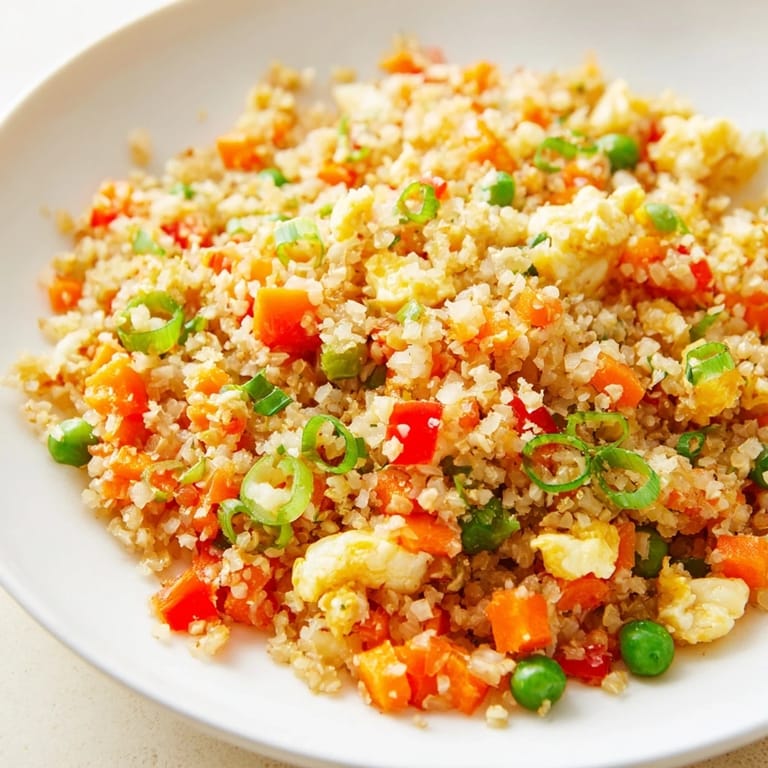 Save
Save I made this dish for my mom last summer when she was visiting, and she sat at my kitchen counter watching me work, asking questions about every step like she was learning a secret recipe. What she loved most wasn't even the food, but the moment when she tasted it and realized that cauliflower could taste this good, and that I'd made something she could actually eat that didn't feel like deprivation. That meal became a memory for us, proof that healthy eating doesn't have to mean boring food.
The Magic of Cauliflower Rice
The first time I made cauliflower rice by hand with a box grater instead of a food processor, my arms were tired and my knuckles were raw, and I decided right then and there that a food processor is absolutely worth the counter space. But more importantly, I learned that the texture of your rice matters tremendously because pieces that are too big stay crunchy in an unpleasant way, while pieces that are too small turn into mush. The sweet spot is somewhere between breadcrumb and actual rice grain, and once you find that, the whole dish comes together so much better.
Customizing Your Bowl
One weekend I made three different versions of this for a meal prep situation, and everyone who tried them had different favorites based on what protein I added. Tofu absorbed all those savory flavors beautifully, shrimp added a briny sweetness that felt luxurious, and leftover rotisserie chicken made it feel more like comfort food than health food. The vegetables and sauce are really just a canvas for whatever you want to build on top, so don't feel locked into the vegetarian version.
Serving Suggestions and Storage
I learned that a squeeze of fresh lime and a pinch of cilantro right before eating completely changes the vibe of this dish, making it feel bright and summery instead of heavy and savory. It keeps beautifully in the refrigerator for about four days, and reheats perfectly in a skillet with a tiny splash of water, though honestly it's almost better cold straight from the fridge as a lunch the next day.
- Pair it with a simple cucumber salad dressed with rice vinegar and sesame oil for a complete meal.
- Top it with a fried egg for breakfast or a late-night snack that actually feels satisfying.
- Store leftovers in an airtight container and reheat gently in a pan to keep the texture from getting soggy.
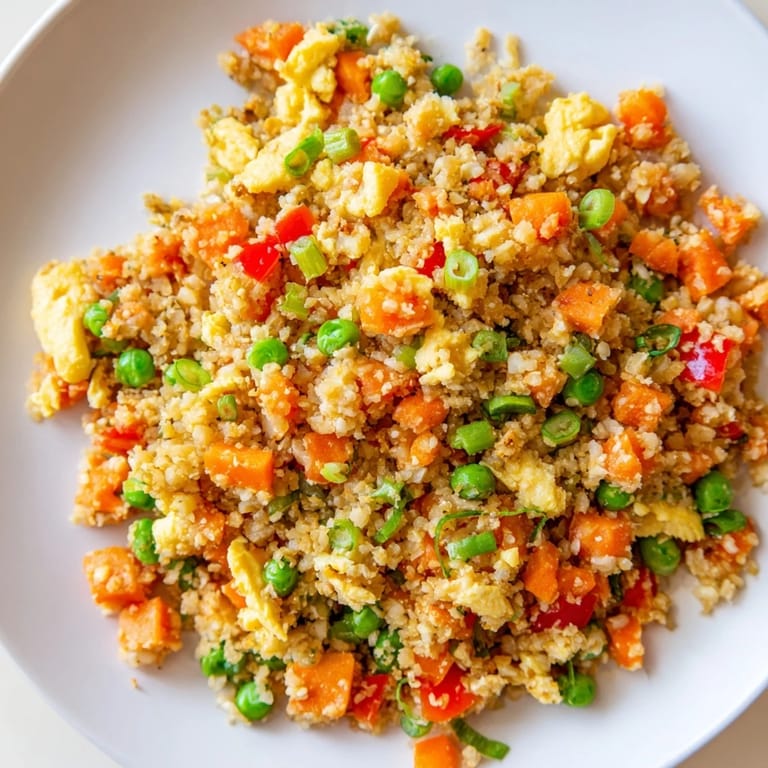 Save
Save This recipe taught me that sometimes the best kitchen discoveries come from working with what you have rather than following someone else's plan. It's become my go-to meal for nights when I want something that feels like takeout but is actually nourishing and quick.
Recipe Questions & Answers
- → How is cauliflower prepared to resemble rice?
Cauliflower florets are pulsed in a food processor or grated until they reach a grain-like texture similar to rice, suitable for sautéing.
- → Can eggs be replaced for a vegan version?
Yes, eggs can be omitted or substituted with tofu scramble to maintain texture and protein content.
- → What oils enhance the dish's flavor?
Sesame oil provides a nutty aroma, while neutral oils are used for sautéing to balance the flavors.
- → Which vegetables complement the cauliflower base best?
Carrots, peas, bell peppers, and green onions add color, texture, and freshness to the dish.
- → How can this dish be modified for gluten-free diets?
Using tamari instead of soy sauce ensures the dish remains gluten-free without compromising taste.
- → What cooking tools are essential for this dish?
A food processor or box grater for ricing cauliflower and a large nonstick skillet or wok for sautéing are key.