 Save
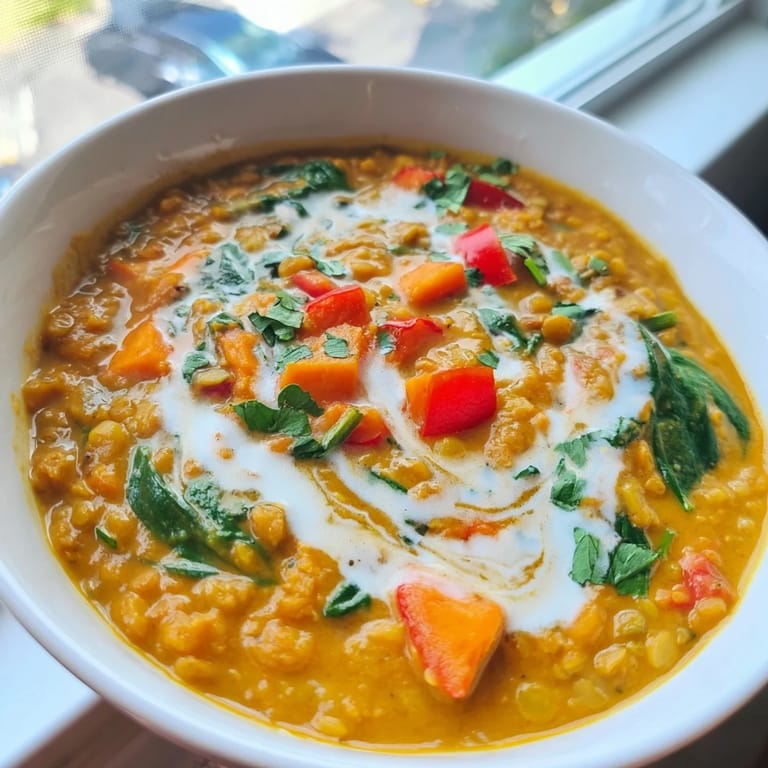
Save There's something magical about the moment red curry paste hits hot oil—that moment when your kitchen suddenly smells like Thailand, even though you're standing in your ordinary kitchen on an ordinary Tuesday. I discovered this soup by accident, really, when I had a can of coconut milk I'd been saving and a handful of vegetables that needed rescuing from the crisper drawer. What started as an improvised dinner became the kind of meal I now make whenever I need both comfort and brightness, the kind that warms you from the inside out.
I made this for my friend Kai one rainy evening when she arrived at my door saying she'd had the worst day and needed something that would fix it. Watching her eat that first spoonful and seeing her shoulders actually relax—that's when I understood this soup wasn't just dinner, it was quiet care in a bowl. Now whenever someone needs feeding, this is what I reach for.
Ingredients
- Red lentils: These little powerhouses dissolve into creamy strands, giving the soup its body and warmth without any cream whatsoever.
- Onion, garlic, and ginger: This trio is where the magic starts—they're the foundation that everything else builds on, so don't rush sautéing them.
- Red curry paste: This is your flavor anchor, bold and complex; I learned the hard way that quality matters here, so find one with real ingredients.
- Fresh vegetables (carrot, bell pepper, zucchini): They add brightness and texture, and they soften enough to meld with the broth but firm enough to remind you of garden freshness.
- Coconut milk: Use full-fat without hesitation—this is what transforms a soup from thin broth into something that coats your spoon and tastes luxurious.
- Vegetable broth: A good broth makes all the difference; if you have homemade on hand, this is the moment to use it.
- Spinach: Added at the very end, it wilts into tender submission and adds a final note of earthiness.
- Lime juice and soy sauce: These bright and salty notes are what make you want another spoonful immediately after finishing your bowl.
Tired of Takeout? 🥡
Get 10 meals you can make faster than delivery arrives. Seriously.
One email. No spam. Unsubscribe anytime.
Instructions
- Start with the aromatics:
- Heat your oil over medium heat, then add diced onion and let it soften for about three minutes—you're looking for it to turn translucent and lose that harsh raw bite. Once it smells sweet, add your minced garlic and ginger and stir constantly for just a minute, enough time to wake up those volatile oils but not long enough for them to burn.
- Bloom the curry paste:
- Add your red curry paste and turmeric to the pan and let it cook for a full minute or two, stirring constantly—this toasts the spices and deepens their flavor, transforming them from a raw paste into something rounded and complex. Trust your nose here; when it smells rich and fragrant rather than sharp, you'll know it's ready.
- Build the soup:
- Add your harder vegetables (carrot, bell pepper, zucchini) and sauté briefly until they're just starting to soften, then pour in your lentils, coconut milk, and broth. Bring everything to a boil, then immediately lower the heat and let it simmer gently for twenty to twenty-five minutes.
- Finish with finesse:
- When the lentils have broken down into creamy bits and the vegetables are tender enough to cut with your spoon, add your spinach and let it wilt for two minutes. Finish with fresh lime juice and taste carefully for salt, remembering that your soy sauce already brought saltiness to the party.
 Save
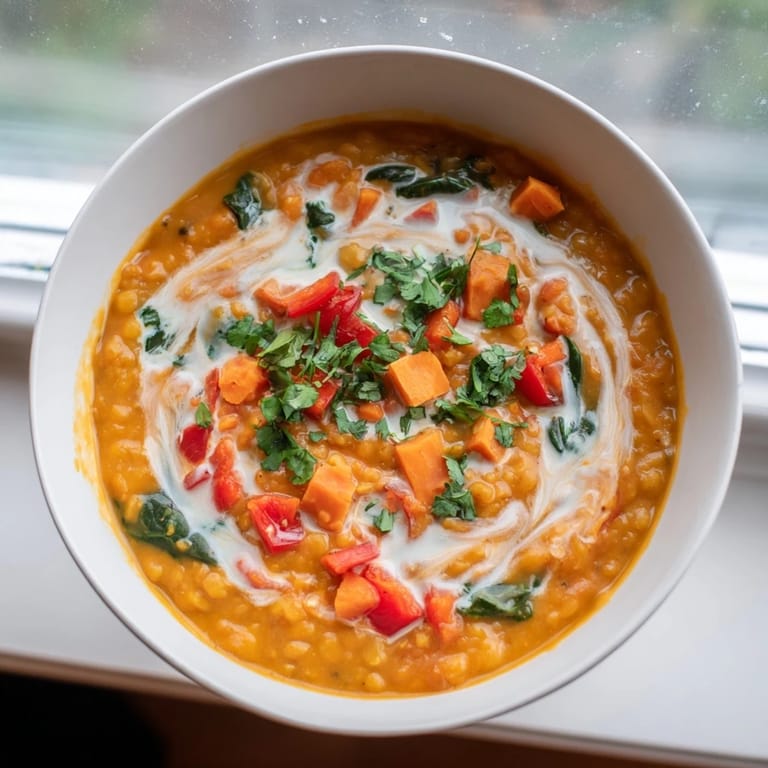
Save There's a moment, usually around minute thirty of cooking, when you catch the scent from across the room and realize you've created something worth the effort. This is the soup that teaches you that vegan cooking doesn't mean sacrifice—it means abundance in a different form.
The Texture Story
Red lentils have this special property where they dissolve partially while keeping their shape partially, creating a soup that's not quite broth and not quite stew but something entirely its own. The vegetables soften into the background while still maintaining their individual character, and the coconut milk rounds out all the rough edges, creating something that feels both light and deeply satisfying.
Spice and Heat
If you're sensitive to spice, start with two tablespoons of curry paste and build from there—it's far easier to add more heat than to cool down a soup that's gotten away from you. Conversely, if you love heat, you can add fresh Thai chilies, chili flakes, or just increase the curry paste and let it bring its full personality to the bowl.
Serving and Pairing Ideas
This soup drinks up carbohydrates beautifully—steamed jasmine rice is perfect for soaking up the coconut broth, and warm naan is wonderful for tearing and dunking. A simple green salad with a sharp vinaigrette cuts through the richness nicely, and leftover soup actually improves after a day in the fridge as the flavors continue marrying together.
- Always keep cilantro and fresh lime wedges on the table so people can adjust the final flavor to their preference.
- If you're making this ahead, store the soup and garnishes separately, and add the spinach fresh when you reheat.
- This soup freezes beautifully for up to three months, though the spinach will darken—add fresh spinach when you reheat instead.
 Save
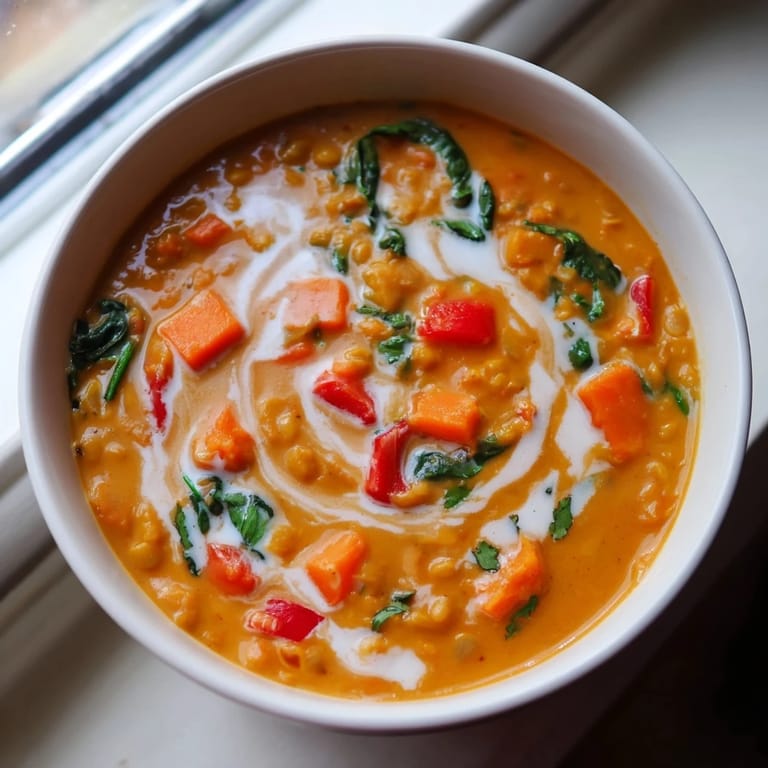
Save This is the kind of soup that asks for nothing but a good appetite and a willingness to let spices tell their story. Make it once, and you'll find yourself making it again whenever you need something that tastes like care.
Recipe Questions & Answers
- → What type of lentils work best?
Dried red lentils are ideal as they cook quickly and soften nicely, blending well with the curry base.
- → Can I adjust the spice level?
Yes, modify the amount of red curry paste or add chopped chilies to control heat intensity.
- → Is this dish gluten-free?
Yes, using gluten-free tamari or soy sauce ensures it is safe for gluten intolerances.
- → How do I get the best flavor?
Sautéing aromatics like onion, garlic, and ginger before simmering releases rich, complex flavors.
- → Can I add other vegetables?
Absolutely, vegetables like zucchini, kale, or bell peppers can be included to enhance texture and nutrition.