 Save
Save I still remember the first time I experienced a proper Mediterranean mezza platter—not from a recipe book, but at a small taverna in Athens, where the owner's grandmother casually arranged the most beautiful spread on a worn wooden board. There was no fuss, no pretense, just an honest collection of flavors and textures that somehow made everyone at the table slow down and linger over conversation. That moment taught me that the best entertaining isn't about perfection; it's about abundance, simplicity, and the invitation to gather. Now, whenever I create this platter at home, I'm recreating that feeling—the warmth of shared food, the generosity of options, the permission to eat with your hands and your heart.
I made this for my sister's surprise birthday gathering last spring, and what struck me most wasn't the compliments on the food, but how naturally everyone gravitated toward the platter. Strangers became friends over debate about which olive was superior. A quiet cousin who rarely speaks up suddenly had opinions about the ratio of feta to cucumber. Food became the bridge that did what small talk never could—it connected us without trying.
Ingredients
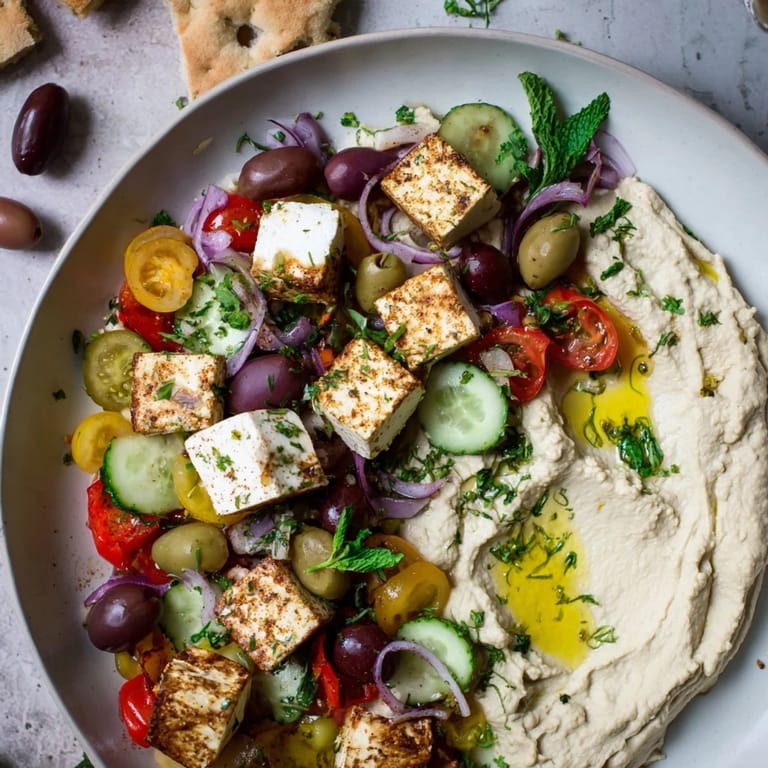
- Classic hummus: The creamy foundation that quietly holds everything together. If you can, choose hummus made with tahini that tastes alive—the difference between a dip and an experience is in those sesame notes.
- Baba ganoush: This smoky eggplant dip is the sophisticate of the platter. It looks like it took effort (it didn't), and it tastes like you have secrets.
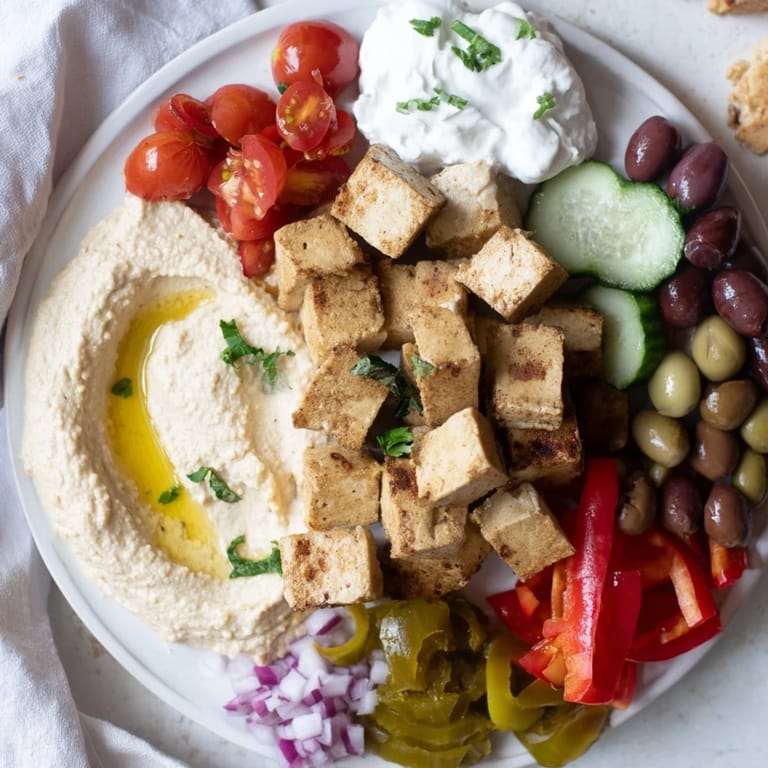
- Tzatziki: Cool, herbaceous, the palate cleanser. The cucumber and yogurt are doing something honest here.
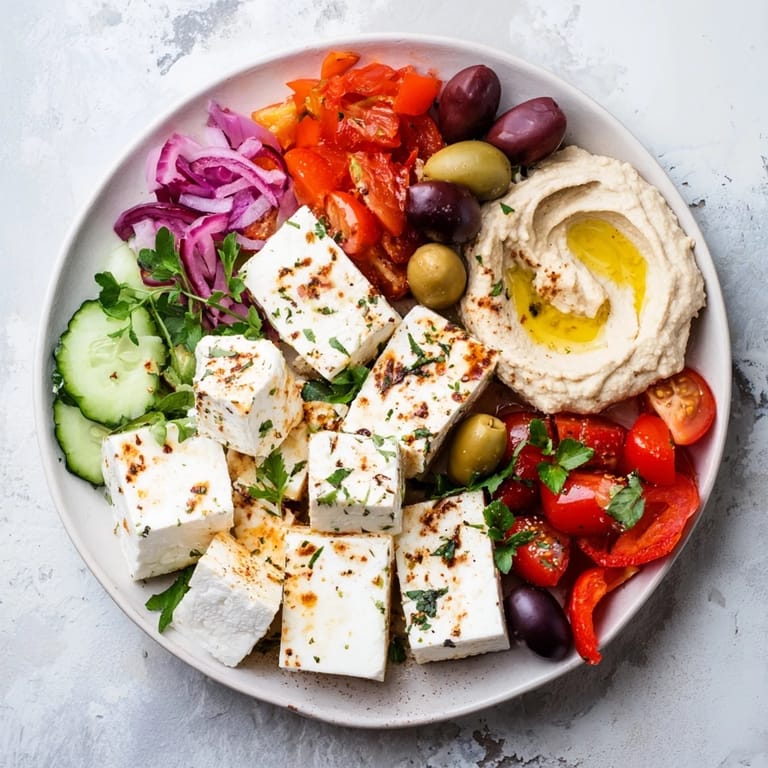
- Feta cheese, cut into rustic cubes: Don't overthink the cutting—rough, uneven pieces look more inviting. The saltiness plays beautifully against everything else on the board.
- Cherry tomatoes, halved: Choose ripe ones; they're your color and your burst of sweetness. Halving them makes them easier to eat with one hand while mingling.
- Cucumber, sliced into rounds: Cool and refreshing, they're the quiet voice in the conversation that everyone appreciates.
- Assorted olives (Kalamata, green, Castelvetrano): The variety teaches people that olives aren't monolithic. Each type has its own personality—briny, buttery, fruity. Let guests discover their preference.
- Roasted red bell pepper, sliced: Sweet and silky, it adds both color and sophistication without any effort on your part.
- Red onion, thinly sliced: A whisper of sharpness that keeps the palate interested. Don't skip it because you think it's just an accent—it's the cymbal crash that makes the whole orchestra memorable.
- Pita breads, cut into triangles: Your edible vehicle for the dips. Use gluten-free flatbread if needed—the spirit of the platter remains the same.
- Fresh parsley, roughly chopped: Don't be dainty. Rough chopping looks more generous and authentic.
- Fresh mint leaves, torn: The final breath of freshness. Tearing instead of cutting keeps the leaves looking alive.
- Extra-virgin olive oil: This isn't just an ingredient; it's a flavor statement. Use one you actually taste, because this is where it matters most.
- Sumac or zaatar, optional: These are the flourishes that make people ask what you did differently. They're small, but they shift everything toward intentional.
- Sea salt and freshly ground black pepper: Seasoning is not an afterthought here. It's the final editing that makes every element sing.
- Marinated artichoke hearts, dolmas, and toasted pine nuts: Optional additions that are like knowing someone's favorite song—they're the details that transform a good platter into the one people remember.
Tired of Takeout? 🥡
Get 10 meals you can make faster than delivery arrives. Seriously.
One email. No spam. Unsubscribe anytime.
Instructions
- Start with your canvas:
- Find your largest platter or board—this is where generosity begins. Wood looks warmer, ceramic looks more formal, but any large, flat surface works. The real magic happens in the next few minutes.
- Create the foundation:
- Arrange your three dips in small, distinct mounds around the platter. Think of them as the anchors that guide the eye. Use small bowls if you want them elevated, or create mounds directly on the board if you prefer that rustic, flowing look. Space them so there's room to breathe between each one.
- Build with cheese:
- Cluster the feta cubes in their own little gathering. They should catch the light, looking inviting and abundant. Uneven arrangement looks more natural than precise rows.
- Layer in the vegetables:
- Now comes the part that feels like painting. Arrange your cherry tomatoes, cucumber slices, olives, roasted pepper, and red onion in loose, organic mounds. Don't line them up like soldiers; let them tumble into each other. This is where the platter comes alive with color and movement.
- Add the bread:
- Tuck pita triangles into a separate pile, or fan them around the edge like they're inviting guests closer. Some should overlap slightly—this creates visual interest and the sense that there's plenty.
- Introduce the extras:
- If you're using artichoke hearts, dolmas, or pine nuts, scatter them in small clusters where they feel like treasures to discover, not obligations to eat.
- The finishing drizzle:
- Pour your best olive oil generously over the dips, the cheese, and throughout the vegetables. Don't be shy. This isn't just moisture; it's a flavor statement and a visual shine that says you cared enough to do this right. Watch it pool slightly in the hummus—that's beautiful.
- The final flourish:
- Scatter your chopped parsley and torn mint across the platter like confetti. Dust with sumac or zaatar if you're using it. Season with sea salt and black pepper to taste, remembering that people can always add more, but you want them to taste your intention from the first bite.
- Serve with presence:
- Set this on the table and step back. Let people gather around it. The best part of a mezza platter is watching how it disappears—not because people are hungry, but because everyone's too engaged in conversation to notice they've eaten.
 Save
Save My grandmother used to say that a mezza platter isn't really about the food at all—it's about giving people permission to be themselves at your table. No formal plating, no pressure to finish everything, just an abundance of choices and the understanding that everyone eats differently. Making this platter has become my way of honoring that philosophy, of saying to my guests, 'You belong here, and your preferences matter.'
Assembly Timing
The beauty of this platter is that almost everything can be prepped ahead. Wash and cut your vegetables the morning of your gathering, storing them in separate containers in the refrigerator. Make your dips the day before if you're using homemade ones. The actual assembly—the moment when you arrange everything on the board—should happen as close to serving time as possible. This prevents the vegetables from wilting and the bread from absorbing moisture. Think of assembly as the final fifteen minutes before guests arrive, when the kitchen transforms into something beautiful.
The Art of Arrangement
There's a reason restaurants charge premium prices for mezza platters, and it has nothing to do with the ingredients themselves. It's the arrangement. Here's what I've learned: odd numbers feel more natural than even ones, so if you have three dips, place them at different points on the board rather than in a straight line. Let colors naturally contrast—the green of the cucumber next to the purple of the Kalamata olives, the red of the tomatoes against the white of the feta. Empty spaces are not failures; they're rest for the eye. A crowded platter looks chaotic; a generous one with intentional gaps looks curated. The platter should feel like you took time without looking like you fussed over it.
Pairing and Customization
This platter is a foundation, not a mandate. If you're feeding vegetarians, you already have them covered. If you have vegan guests, swap the feta for a quality cashew cheese and use hummus and baba ganoush as your protein anchors. For meat lovers, add grilled halloumi, crispy falafel, or spiced lamb meatballs—let them become the stars while everything else plays a supporting role. Pair this with a crisp white wine, a light rosé, or even a cold sparkling water infused with lemon. I've learned that the drink should refresh, not compete.
- Make this platter the day before and add the bread just before serving to keep it from getting soggy
- If you're transporting this to a gathering, assemble it there if possible—platters don't travel well and tend to look rearranged by the time they arrive
- Remember that the first person to dip usually creates a beautiful crater in the hummus; embrace this as part of the experience, not a flaw
 Save
Save Every time I make this platter, I'm reminded that the best meals aren't about complexity—they're about permission. Permission to eat with your hands, to try something new, to sit longer than you planned, to be yourself. That's what a Mediterranean mezza does.
Recipe Questions & Answers
- → What dips are included in the platter?
The platter includes classic hummus, baba ganoush, and tzatziki, each adding distinct flavors and creamy textures.
- → Can this be made gluten-free?
Yes, by substituting pita triangles with gluten-free flatbread, the platter accommodates gluten-free diets.
- → What herbs enhance the flavors?
Fresh parsley and torn mint leaves provide herbaceous notes, while optional sumac or zaatar adds a subtle tang.
- → Are there any vegetarian options?
This spread is naturally vegetarian, featuring ingredients like feta cheese and assorted vegetables, with vegan alternatives possible by swapping certain elements.
- → How should the platter be served?
Arrange dips, cheeses, vegetables, and breads attractively on a serving board, drizzle with olive oil, sprinkle herbs, and serve immediately for easy sharing.