 Save
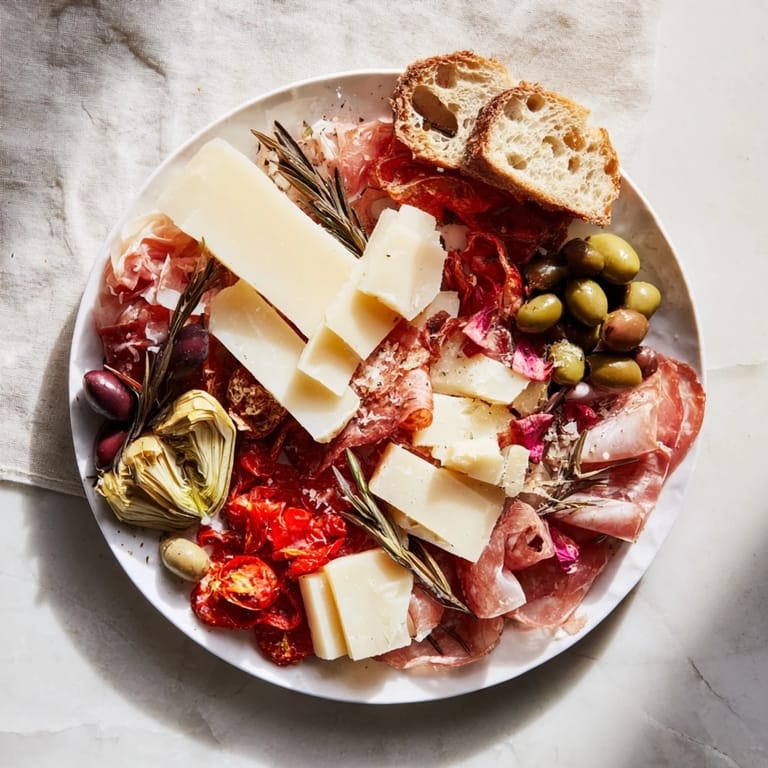
Save I'll never forget the summer I spent in Tuscany, sitting on a weathered stone terrace overlooking rolling vineyards. My host's grandmother casually assembled a board for lunch—no fuss, no recipe, just her hands knowing exactly which cheeses to break, how to pile the prosciutto, where the olives should go. That board taught me something profound: the most elegant meals aren't complicated, they're just honest. This rustic Italian farmhouse board captures that exact spirit—a celebration of quality ingredients gathered together without pretense, the kind of spread that makes everyone at the table slow down and actually taste what's in front of them.
I served this board at my neighbor's birthday gathering, and something magical happened. Instead of everyone retreating to separate corners with small plates, they stayed clustered around the board, passing things to each other, discovering new flavor combinations with every reach. That's when I realized this isn't just appetizer food—it's an experience that brings people together in the most genuine way.
Ingredients
- Parmigiano-Reggiano (200 g), broken into large chunks: This isn't just cheese, it's the backbone of Italian cooking. Breaking it into irregular pieces instead of slicing tells your guests this is rustic, authentic, not fussy. The crystalline texture becomes a textural revelation when paired with creamy Taleggio.
- Pecorino Toscano (200 g), cut into wedges: Where Parmigiano is nutty and complex, Pecorino brings a sharper, more assertive flavor. The contrast between these two is what makes the board interesting—you're creating a conversation between cheeses.
- Taleggio (150 g), torn into rustic pieces: This is the creamy heart of the board. Slightly pungent and wonderfully soft, it's the cheese people keep reaching for because it melts on the tongue. Tearing it by hand gives it an intentional, artisanal appearance.
- Prosciutto di Parma (150 g), loosely piled: The quality here matters profoundly. Real Prosciutto di Parma has a delicate sweetness and silky texture. Pile it loose and casual—tight rolls look formal, and that's not the spirit we're after.
- Finocchiona salami (120 g), thickly sliced: This Tuscan salami studded with fennel seeds brings an unexpected herbaceous note. Slice it thick so people can taste its true character, not thin paper slices that disappear.
- Coppa (120 g), arranged in rustic folds: Rich and marbled with fat, coppa adds unctuousness. The folds create visual interest and make it easy for guests to grab what they want without looking awkward.
- Rustic Italian loaf, torn into rough pieces: Ciabatta or pane toscano works beautifully. Tear it by hand into uneven pieces—the ragged edges catch olive oil and become little pockets of flavor. This bread should taste like grain and air, not heavy or dense.
- Castelvetrano olives (1 cup): These buttery, mild green olives are the diplomatic choice. They don't overpower, they complement. Keep them in a small bowl so guests can help themselves without the board becoming chaotic.
- Sun-dried tomatoes in olive oil, drained (1 cup): These bring concentrated sweetness and a subtle tang. Drain them well so they don't weep onto the cheese. Their deep color adds visual drama to the board.
- Marinated artichoke hearts, quartered (1 cup): The vinegar in the marinade cuts through the richness of the cheese and meats beautifully. Quartering them makes them easier to grab and prevents them from feeling like a separate element.
- Fresh grapes or figs, halved (1 small bunch): This is where the board becomes a landscape. The fruit brings sweetness and moisture, a palate cleanser between bites of salty cured meat. Grapes feel lighter and more abundant; figs feel more luxurious and seasonal.
- Extra-virgin olive oil (1/4 cup), for drizzling: This final drizzle isn't just for taste—it's finishing touch that shows you care. Use something you genuinely love; it's the last flavor people will taste from the board.
- Fresh rosemary sprigs, for garnish: These aren't decoration—tear a few needles off and chew them between bites. They cleanse the palate and reinforce that countryside feeling.
- Coarse sea salt and cracked black pepper: Don't use regular table salt. The larger crystals of sea salt burst differently on the tongue, and the black pepper should have visible cracks, showing it was freshly ground.
Tired of Takeout? 🥡
Get 10 meals you can make faster than delivery arrives. Seriously.
One email. No spam. Unsubscribe anytime.
Instructions
- Choose Your Canvas:
- Start with a large wooden board or platter—ideally something with character, worn from use. Wood naturally absorbs flavors and feels inviting in a way ceramic never quite does. If using wood, wipe it lightly with olive oil beforehand; it deepens the color and protects the surface.
- Begin with Cheese:
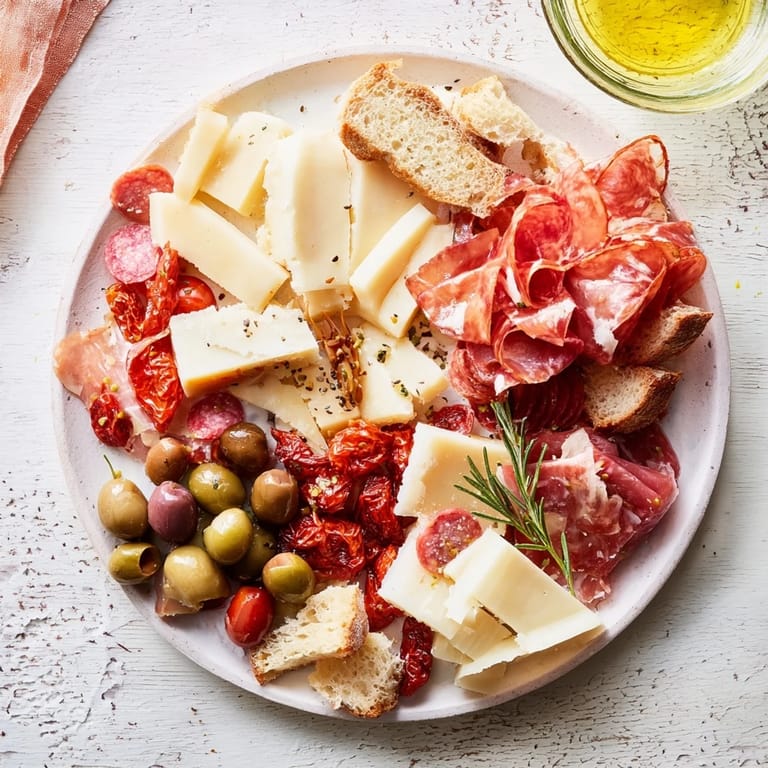
- Arrange the cheeses first, because they anchor everything else. Break the Parmigiano into irregular chunks—uneven pieces look more generous and authentic than neat cubes. Cut Pecorino into wedges as if you're slicing a wheel. Tear Taleggio into pieces that vary in size. Leave space between them; crowding makes the board feel claustrophobic. Step back and look at the color balance—you want the pale straw of Parmigiano, the creamy white of Taleggio, and the pale yellow of Pecorino scattered throughout.
- Layer the Cured Meats:
- This is where you create visual movement. Loosely pile the prosciutto in one area—don't arrange each slice perfectly, let them fold and overlap naturally. In another section, arrange the salami slices in slightly overlapping circles, like roof tiles. Fold the coppa into rustic waves and place it where it contrasts with the cheeses. The meats should look abundant, not sparse. You're aiming for a sense of generosity.
- Scatter the Bread:
- Tear the loaf into rough, uneven pieces with your hands. Some should be larger than others. Scatter these around the board, tucking some between cheeses and meats. The bread is the thread that ties everything together, so don't relegate it to one corner.
- Fill the Gaps with Abundance:
- Now take your olives, sun-dried tomatoes, artichokes, and fruit. Fill the remaining spaces, but do it generously and in clusters. Create small piles rather than spreading everything thinly. A cluster of olives in one area, sun-dried tomatoes in another, artichokes elsewhere—this creates visual interest and makes it easy for guests to find what they want.
- Finish and Season:
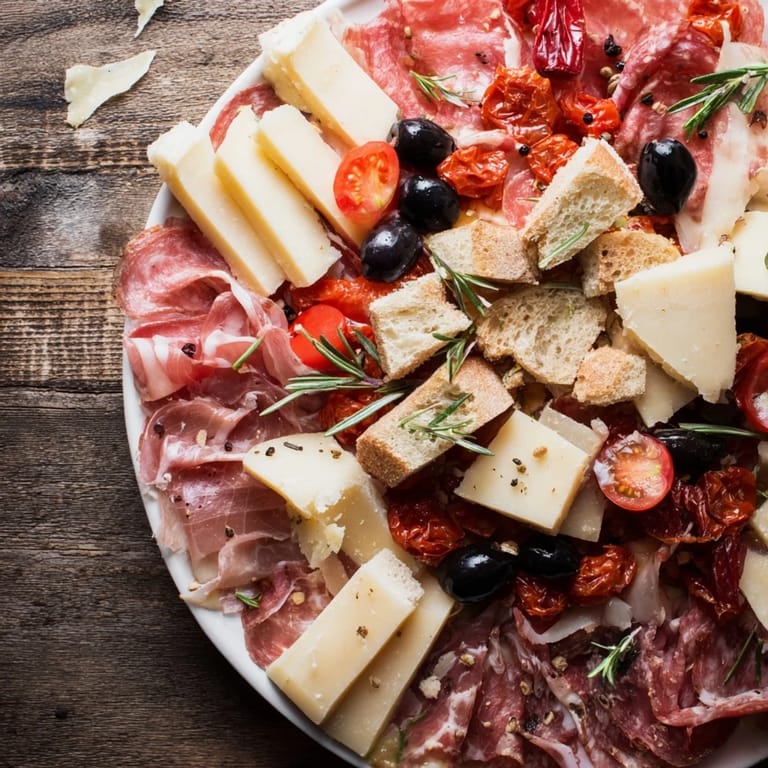
- Drizzle the olive oil lightly over the bread and across the cheeses—you want enough to glisten, not pool. Tuck rosemary sprigs into the arrangement, letting them peek out naturally. Finally, sprinkle coarse sea salt and cracked black pepper across the board. The salt should catch the light. Taste a tiny piece of cheese to decide how much pepper to add—you're enhancing, not overwhelming.
- Serve with Intention:
- Bring the board to the table immediately. Set out small plates, forks, and napkins nearby, but keep the board as the center of attention. This is meant to be shared, touched, explored together.
 Save
Save There was a moment, serving this board to my father for the first time, when he took a piece of Taleggio, a thin slice of prosciutto, a grape, and ate them together. He closed his eyes. When he opened them, he said, 'This tastes like Italy.' I realized then that a board like this isn't about impressing people with technique—it's about giving them permission to slow down and actually pay attention to what they're eating.
Building Your Perfect Board
The beauty of this dish is its flexibility. If you can't find Taleggio, try Fontina or even a creamy Brie. If Finocchiona isn't available, Soppressata works beautifully. The framework stays the same—three cheeses with different textures, three cured meats with different flavor profiles, bread, olives, something acidic, something sweet, finishing oil, and herbs. Once you understand this structure, you can build variations based on what's available and what you love. The first time I made this without following a rigid recipe was transformative. I stopped thinking of it as a recipe and started thinking of it as a conversation about what makes good food good.
The Wine Pairing Question
A robust Chianti or Sangiovese is the obvious choice, and for good reason. The tannins cut through the richness of the cheese and cured meats, while the acidity cleanses the palate. But here's what I've learned from experimenting: a crisp white like Pinot Grigio actually works beautifully, especially if your board leans toward the Taleggio and fruit. Even a light rosé makes sense during summer months. The real rule is: drink what you enjoy. This board is forgiving enough to work with almost any wine.
Timing and Presentation Secrets
Assemble this board as close to serving time as possible. Cheese oxidizes slightly once cut, meats can dry out, and bread begins to firm up. Twenty minutes before guests arrive is perfect timing. If you're making it for a party where people will graze over an hour, keep a backup of cured meats and olives nearby so you can refresh the board halfway through. The visual abundance is part of the appeal, so keeping it looking fresh matters. Here are three final thoughts that changed my approach to boards like this:
- Use odd numbers when clustering ingredients—three piles of olives feel more intentional than four
- Leave some space visible on the board; it makes the arrangement feel generous rather than crowded
- The first person to eat from the board sets the tone—serve yourself first, take what appeals to you, and others will follow naturally
 Save
Save This board is a reminder that sometimes the most memorable meals are the ones with the fewest ingredients and the least fuss. Gather what you love, arrange it with intention, and let people do what they do best—eat together and talk about life.
Recipe Questions & Answers
- → What cheeses are included on the board?
Parmigiano-Reggiano, Pecorino Toscano, and Taleggio cheeses are featured in rustic chunks and wedges.
- → Which cured meats complement this board?
Prosciutto di Parma, Finocchiona salami, and Coppa are arranged in layered, rustic folds for flavor and texture.
- → How should the bread be prepared for the board?
Tear a large rustic Italian loaf, such as ciabatta, into rough, uneven pieces to scatter around the board.
- → What accompaniments enhance the flavors?
Castelvetrano olives, sun-dried tomatoes in olive oil, marinated artichoke hearts, fresh grapes or figs, and a drizzle of extra-virgin olive oil add bright and savory notes.
- → Are there suggestions for pairing beverages?
This lavish board pairs wonderfully with robust Chianti or Sangiovese wines to elevate the tasting experience.
- → Can the cheeses be substituted?
Yes, Gorgonzola or Asiago can be used as alternatives for variety and different flavor profiles.