 Save
Save My neighbor Maria once stood in my kitchen doorway watching me wrestle with store-bought ravioli, shaking her head with that knowing smile. She didn't say a word, just rolled up her sleeves and showed me how her nonna made them every Sunday in Abruzzo. The dough came together under her weathered hands like it had been waiting all along, and when we finally sat down to eat, the difference was so obvious I actually laughed out loud. That afternoon changed how I thought about pasta forever. Now I make these whenever I need to remember that the best things take a little time.
I made these for my sister's birthday last spring when she asked for something that felt special but not fussy. We set up a little assembly line at the kitchen counter, filling and cutting ravioli while catching up on months of missed phone calls. She kept sneaking bites of the filling straight from the bowl, claiming quality control, and by the time we finished we had flour everywhere and sore cheeks from laughing. When we finally ate them that night, she said it was the best gift I'd ever given her. I think she meant the afternoon, not just the ravioli.
Ingredients
- All-purpose flour: The foundation of tender pasta dough that becomes silky when kneaded long enough, and using regular flour works better than you'd think.
- Eggs: They bind everything and give the dough that golden color, and room temperature eggs mix in more smoothly if you remember to take them out early.
- Ricotta cheese: Use whole milk ricotta for the creamiest filling, and if it looks watery, drain it in a fine mesh strainer for 20 minutes first.
- Fresh spinach: It wilts down to almost nothing so don't be shy with it, and really squeeze out all the water or your filling will be soupy.
- Parmesan cheese: Freshly grated makes a noticeable difference in flavor, and the rind can go right into your marinara while it simmers.
- Nutmeg: Just a whisper of it brings warmth without announcing itself, but go easy because too much turns bitter fast.
- Marinara sauce: Homemade is lovely but a good jar works beautifully when you're already making pasta from scratch.
Tired of Takeout? 🥡
Get 10 meals you can make faster than delivery arrives. Seriously.
One email. No spam. Unsubscribe anytime.
Instructions
- Make the Pasta Dough:
- Pile your flour on the counter and make a well like a little volcano, crack the eggs right into the center with the salt, then use a fork to slowly pull flour into the eggs until it starts looking shaggy. Once it comes together, knead it with the heels of your hands, folding and pressing until the dough feels smooth and springs back when you poke it, which takes about 8 to 10 minutes and a little shoulder work.
- Prepare the Filling:
- Wilt your spinach in a hot pan or steamer until it collapses, then let it cool enough to handle before squeezing it dry in a kitchen towel like you're wringing out a washcloth. Mix it with the ricotta, Parmesan, egg yolk, nutmeg, salt, and pepper until everything is evenly combined and tastes well-seasoned.
- Roll the Pasta:
- Cut your rested dough in half and keep one piece covered while you work with the other so it doesn't dry out. Roll it through your pasta machine starting at the widest setting and working down, or use a rolling pin and some elbow grease to get it thin enough to almost see your hand through, about 1/16 inch.
- Shape the Ravioli:
- Lay one sheet of pasta on a floured surface and drop teaspoons of filling in neat rows about 2 inches apart, then brush water around each mound before draping the second sheet over the top. Press firmly around each filling pocket to seal out air bubbles, then cut them into squares with a knife or fluted cutter and crimp the edges with a fork.
- Cook the Ravioli:
- Bring a big pot of well-salted water to a gentle boil, not a rolling one, and slide in your ravioli in batches so they have room to move. They'll sink at first then float to the top after 3 to 4 minutes, and that's when you know they're ready to scoop out with a slotted spoon.
- Make the Marinara Sauce:
- Warm olive oil in a saucepan over medium heat, add minced garlic and let it sizzle just until fragrant without browning, then pour in your marinara and let it simmer gently for 5 minutes. Taste and adjust the salt and pepper so it's balanced and bright.
- Serve:
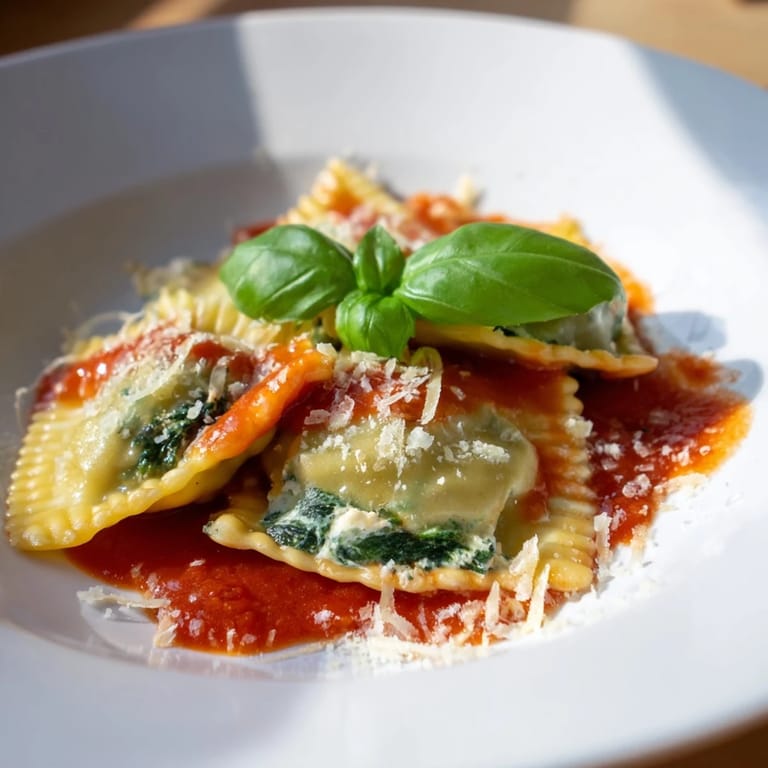
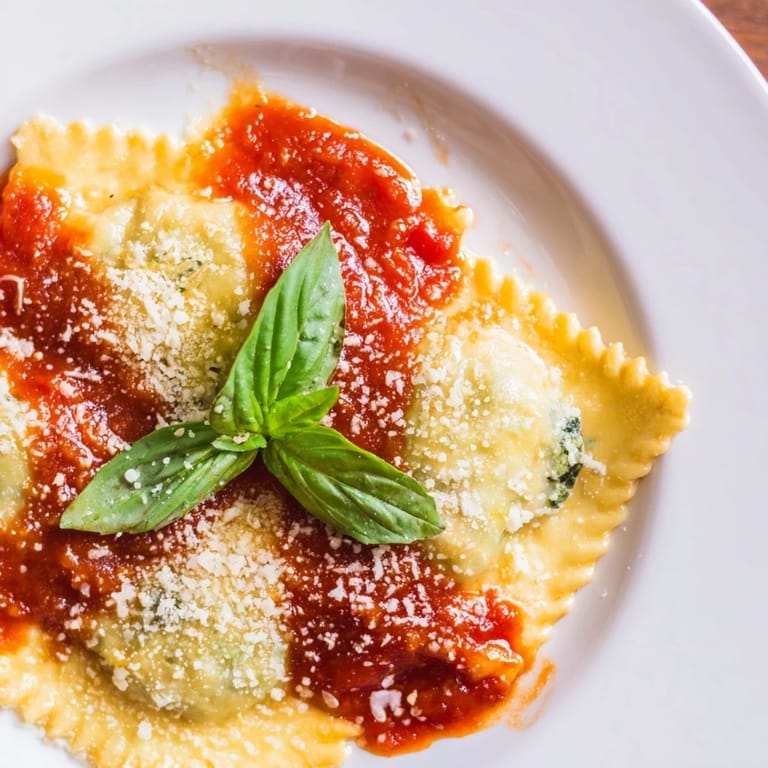
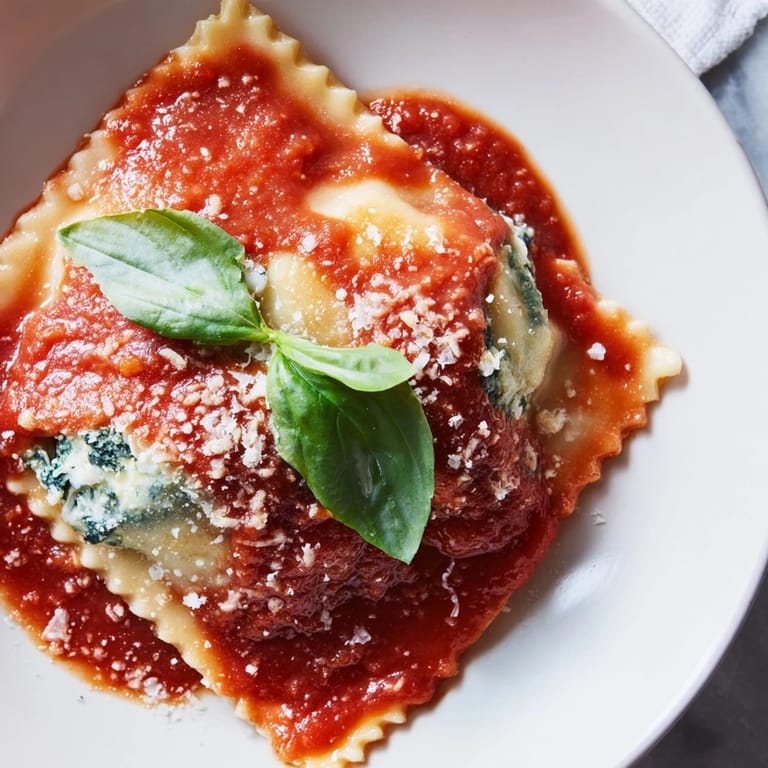
- Spoon a little sauce onto each plate to make a bed for the ravioli, arrange them on top, then spoon more sauce over and finish with torn basil and a generous grating of Parmesan. Serve immediately while everything is hot and the cheese is just starting to melt into the sauce.
 Save
Save One night I served these to friends who didn't know I'd made the pasta myself, and the table went quiet in that good way where everyone stops talking to focus on their plate. Someone finally asked where I ordered them from, and when I admitted I made them that afternoon, the whole mood shifted to something warmer. We ended up sitting around the table for hours, talking and laughing over second helpings, and I realized that cooking something with your hands changes how people receive it. It wasn't just dinner, it was an offering, and they felt it.
Storing and Freezing
If you're making these ahead, lay the shaped ravioli on a parchment-lined baking sheet dusted with flour and freeze them until solid, then transfer to a freezer bag where they'll keep for up to three months. You can cook them straight from frozen, just add an extra minute or two to the boiling time and resist the urge to stir them too much. Cooked ravioli don't reheat as well, so I always freeze them uncooked and boil them fresh when I'm ready to eat. The filling can be made a day ahead and kept covered in the fridge, which actually makes assembly faster when you're ready to roll.
Choosing Your Sauce
Marinara is classic and lets the delicate filling shine, but brown butter with sage is stunning if you want something richer and a little fancy. A simple cream sauce with a squeeze of lemon works beautifully too, or even just good olive oil, garlic, and a handful of cherry tomatoes blistered in a hot pan. I've served these with pesto in the summer when basil is everywhere, and the bright herby flavor feels lighter than tomato sauce. Whatever you choose, keep it simple so the ricotta and spinach can still be the stars.
Customizing the Filling
This filling is a gentle base that welcomes all kinds of additions once you get comfortable with the technique. I've stirred in sautéed mushrooms, fresh herbs like basil or parsley, or even a spoonful of caramelized onions for sweetness. Lemon zest is magic here, just a little grated rind brightens everything without making it taste citrusy. If you want it richer, swap half the ricotta for mascarpone, or add a handful of mozzarella for extra melt.
- Try adding sun-dried tomatoes for a pop of tangy sweetness.
- A pinch of red pepper flakes in the filling gives a subtle warm kick.
- Swap spinach for kale or chard if that's what you have on hand.
 Save
Save There's something about making pasta that feels like a conversation with everyone who's ever done it before you, hands in flour, patience tested, and pride earned. These ravioli will fill your kitchen with the kind of comfort that lingers long after the dishes are done.
Recipe Questions & Answers
- → Can I use frozen spinach instead of fresh?
Yes, frozen spinach works well. Thaw it completely and squeeze out excess moisture before chopping and mixing with the ricotta filling. This ensures the filling stays creamy without becoming watery.
- → How far in advance can I prepare the ravioli?
You can shape ravioli up to 4 hours ahead and refrigerate on a floured baking sheet. For longer storage, freeze them in a single layer for 2 hours, then transfer to freezer bags for up to 3 months. Cook directly from frozen, adding 1-2 extra minutes.
- → What pasta machine or tools do I need?
A rolling pin works perfectly for home cooks. For efficiency, a pasta machine simplifies rolling to consistent thickness. A ravioli cutter or knife creates uniform shapes, though hand-cutting works fine. A fork helps seal edges securely.
- → Can I make the pasta dough by hand?
Absolutely. Mix flour and salt, create a well, add eggs, and gradually incorporate flour using a fork. Knead on a clean surface for 8-10 minutes until smooth and elastic. Resting the dough for 30 minutes is essential for easier rolling.
- → What wine pairs best with this dish?
A crisp white wine like Pinot Grigio complements the creamy ricotta and marinara beautifully. Sauvignon Blanc or Vermentino are excellent alternatives, cutting through the richness with refreshing acidity.
- → How do I prevent the ravioli from bursting while cooking?
Ensure edges are well-sealed by pressing firmly with a fork. Don't overfill—use only a teaspoon per ravioli. Cook at a gentle boil rather than a rolling boil, and avoid moving them around. They're done when they float to the surface.