 Save
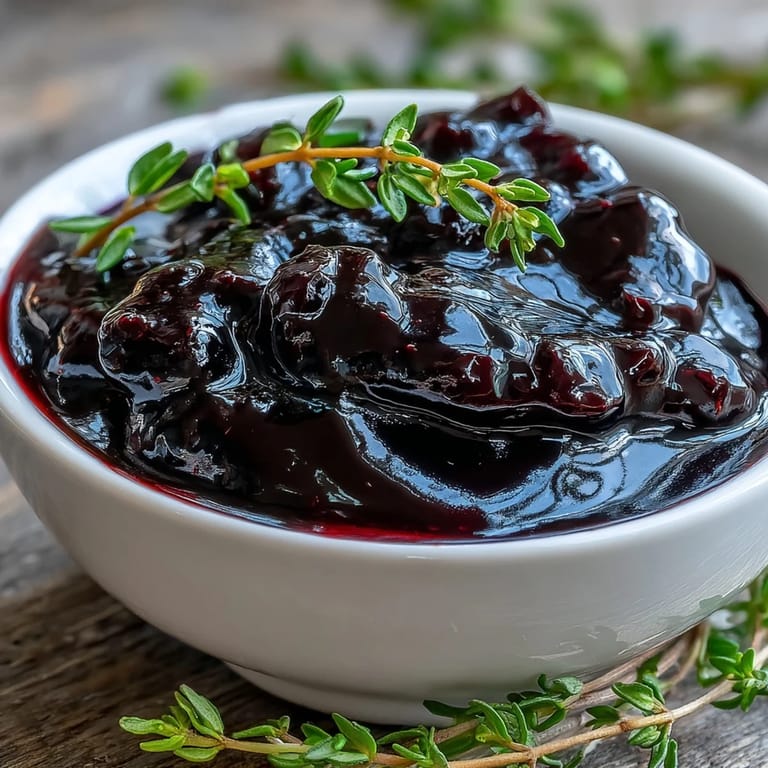
Save I discovered black currant reduction quite by accident on a rainy Sunday when a dinner guest mentioned they'd never had duck with anything but orange sauce. Something about that challenge made me raid the pantry, and there they were—a forgotten bag of frozen black currants from last summer's farmers market visit. The wine was already breathing on the counter, and within thirty minutes, I had a glossy, jewel-toned sauce that made everyone pause mid-bite and ask what it was. That's when I knew this recipe was worth perfecting.
My brother brought his new partner to dinner one autumn, and I wanted to impress without fussing. I made a simple roasted duck breast and this reduction, and watching their faces when they tasted it together—that perfect moment when flavors click—reminded me that the best meals aren't complicated, just thoughtfully composed.
Ingredients
- Fresh or frozen black currants (1 cup / 150 g): These tart berries are the soul of the sauce; frozen works beautifully and is often fresher than fresh, so don't hesitate to use them straight from the freezer.
- Dry red wine (1 cup / 240 ml): A wine you'd actually drink matters here—nothing cheap or cooked-tasting, as it concentrates as the sauce reduces.
- Chicken or vegetable stock (1/2 cup / 120 ml): This softens the wine's intensity and adds body without overpowering the fruit.
- Balsamic vinegar (2 tbsp / 30 ml): The secret depth-builder that makes people wonder what you added; it rounds out the bright acidity from the currants.
- Small shallot, finely chopped: Shallots melt into the sauce in a way onions won't, adding gentle sweetness rather than bite.
- Fresh thyme sprig and bay leaf: These aromatics anchor the sauce in savory territory and prevent it from tasting like jam.
- Granulated sugar (2 tbsp / 25 g): A small amount amplifies the berries' natural sweetness without making the sauce cloying.
- Freshly ground black pepper and fine sea salt (1/4 tsp each): Season boldly at the end after tasting; reduction intensifies all flavors, so early seasoning often becomes too salty.
- Cold unsalted butter, cubed (2 tbsp / 30 g): The final whisking-in creates that silky, glossy finish that makes the sauce cling beautifully to meat.
Tired of Takeout? 🥡
Get 10 meals you can make faster than delivery arrives. Seriously.
One email. No spam. Unsubscribe anytime.
Instructions
- Start with the shallot:
- Melt the first tablespoon of butter over medium heat and watch the shallot soften—it should smell sweet and tender within a couple of minutes, never brown or crispy. This gentle sauté removes any raw bite and creates a flavor foundation.
- Build your reduction base:
- Pour in the wine, stock, vinegar, berries, and herbs all at once, stirring so everything combines. The mixture will look loose and thin; that's exactly right. Bring it to a gentle boil and you'll notice the black currants beginning to release their color into the liquid.
- Let it concentrate:
- Lower the heat and simmer uncovered for fifteen to twenty minutes, stirring occasionally so nothing sticks to the bottom. You're looking for the liquid to reduce by about half—it should look noticeably thicker and coat the back of a spoon when you drag your finger across it. The berries will soften completely and the whole sauce will smell concentrated and rich.
- Strain for smoothness:
- Fish out the thyme sprig and bay leaf with a spoon, then press the warm sauce through a fine mesh strainer into a clean pan. Use the back of a spoon to push the softened berries through, extracting every drop of flavor and leaving the tough skins behind.
- Mount with butter:
- Return the strained sauce to low heat and add those cold butter cubes one or two at a time, whisking constantly until each piece melts and emulsifies into the sauce. You'll watch it transform from glossy to silky, and the color deepens to a rich burgundy. This is when it becomes special.
- Taste and adjust:
- Once the sauce is glossy and smooth, taste it carefully and adjust salt, pepper, or add a splash more vinegar if you want sharper notes. Serve warm drizzled over your protein.
 Save
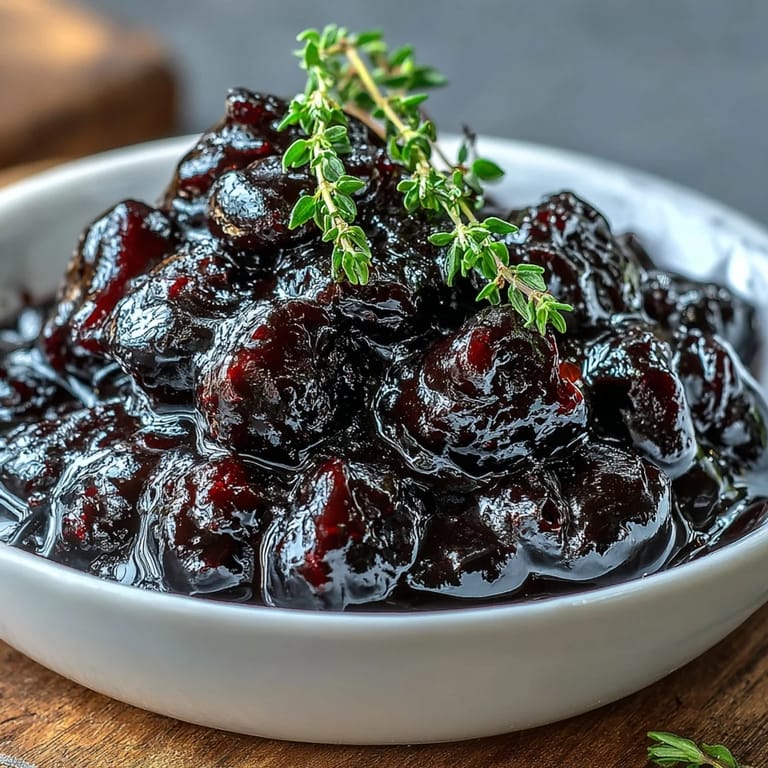
Save Years ago, I made this sauce for a dinner party and strained it so gently I left half the fruit behind in the strainer. The resulting sauce was thin and disappointing, and I learned that pressing matters—you're not making it cloudy, you're extracting what you've earned. Now I press confidently and the sauce rewards that confidence.
Why This Sauce Changes Everything
A great sauce doesn't just sit on the plate—it becomes part of the meat itself, binding flavors together in a way nothing else can. This black currant reduction does that because the berries are tart enough to cut through richness, the wine adds sophistication, and the butter makes it all silk. It's the difference between eating dinner and remembering dinner.
Timing and Make-Ahead Wisdom
I often make this sauce the day before and simply reheat it gently before serving, which actually lets the flavors marry and deepen overnight. If you're serving it fresh, make it while your meat rests—the timing works perfectly, and you can keep it warm while you slice. The only rule is never let it boil once the butter is whisked in, or it will break and separate.
Pairing and Variations
Duck breast is the classic partner for this sauce, but it sings with venison, pork tenderloin, or even a rib-eye steak if you want to surprise yourself. For deeper complexity, substitute a quarter cup of crème de cassis for the same amount of wine—it adds a darker, almost chocolatey undertone that makes venison particularly stunning. A splash of sherry vinegar instead of balsamic brings brightness without the molasses note.
- Try a spoonful alongside aged charcuterie or pâté for an elegant starter course.
- If you love it tart, add vinegar to taste rather than at the end; it lets you control the final balance.
- The sauce freezes beautifully for up to three months, so make extra when currants are in season.
 Save
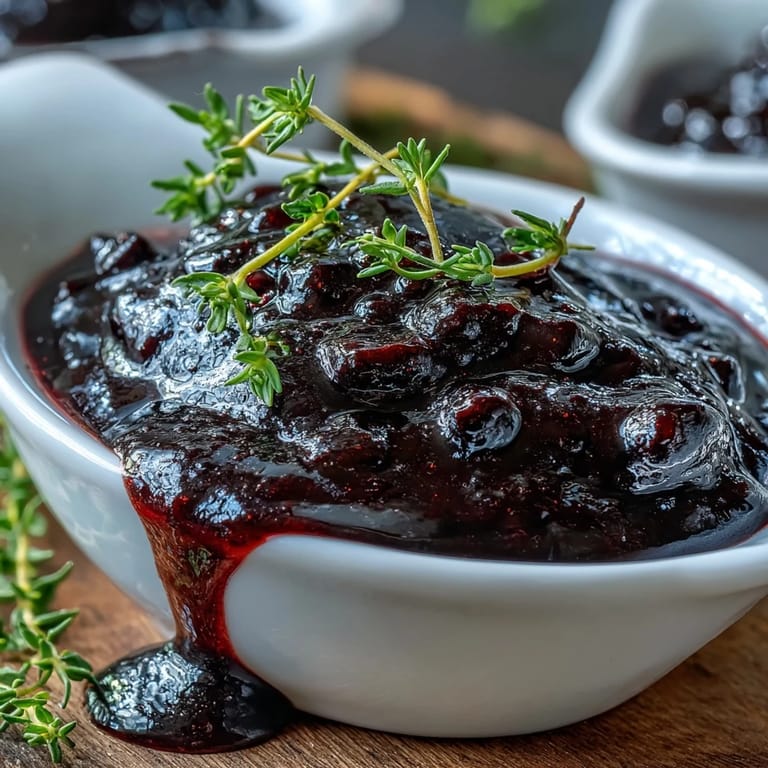
Save This sauce taught me that elegance in cooking often comes from simplicity and patience, not complexity or fuss. Make it once and it becomes part of your regular rotation.
Recipe Questions & Answers
- → What meats pair best with black currant reduction?
Duck breast, roasted pork tenderloin, venison, and lamb create exceptional pairings. The sauce's tart sweetness complements rich, fatty cuts perfectly.
- → Can I use frozen black currants?
Absolutely. Frozen currants work just as well as fresh. Thaw them slightly before adding to the pan to ensure even cooking.
- → How long will the reduction keep?
Store in an airtight container in the refrigerator for up to 5 days. Gently reheat over low heat, whisking to restore the glossy texture.
- → What's the purpose of straining the sauce?
Straining removes skins, seeds, and cooked aromatics for a velvety smooth texture. Press firmly through the mesh to extract all those concentrated flavors.
- → Can I make this dairy-free?
Omit the butter finish or substitute with a plant-based alternative. The sauce will still be delicious, though slightly less glossy.
- → What wine works best?
A dry red wine like Pinot Noir, Cabernet Franc, or Burgundy provides excellent balance. Avoid overly tannic wines that might overpower the delicate currants.