 Save
Save There's a moment in late summer when a bottle of black currant juice catches your eye at the market, and you wonder what on earth you'd use it for. That's exactly what happened to me, standing in the produce section with my hands full, when a friend mentioned she'd been making the most incredible vinaigrette with it. Within days, I was whisking together this deep ruby dressing, and suddenly every salad in my kitchen tasted like it belonged in a French bistro.
I made this for a potluck dinner where everyone brought salads, and mine was gone first—that moment when someone asks for the recipe before they've even finished their plate is hard to forget. My neighbor, who claimed she never ate salad at home, came back for seconds, and I realized this vinaigrette had the kind of personality that changes minds.
Ingredients
- Black currant juice, unsweetened: This is the star, and using unsweetened juice means you control the sweetness balance yourself—it's the difference between a vinaigrette that tastes natural and one that feels overly candied.
- Red wine vinegar or apple cider vinegar: Either works, though red wine vinegar gives you a deeper, more sophisticated edge that feels right with black currant's earthiness.
- Fresh lemon juice: Don't skip this or use bottled—it brightens everything and prevents the dressing from tasting too heavy.
- Extra virgin olive oil: The quality here actually matters since it's one of just five main ingredients, so splurge a little if you can.
- Dijon mustard: Acts as an invisible helper that binds everything together and adds a gentle spice without announcing itself.
- Honey or maple syrup: Optional, but keep some nearby—you might find you need just a touch to round out the tartness.
- Shallot, finely minced: Use the smallest shallot you can find, and mince it so fine it almost dissolves into the dressing rather than floating around like uninvited guests.
- Sea salt and black pepper: Freshly ground pepper makes a genuine difference here; pre-ground just tastes tired by comparison.
Tired of Takeout? 🥡
Get 10 meals you can make faster than delivery arrives. Seriously.
One email. No spam. Unsubscribe anytime.
Instructions
- Combine the liquid base:
- In a medium bowl, whisk together the black currant juice, vinegar, lemon juice, mustard, honey if you're using it, minced shallot, salt, and pepper until everything looks even and well mixed. You'll notice the color shifting to a deep, almost burgundy tone as you whisk.
- Emulsify with oil:
- This is where patience pays off—drizzle the olive oil in slowly while whisking continuously, and you'll feel the dressing thicken and come together as the oil incorporates. It's like watching something transform in real time, and it only takes about a minute.
- Taste and adjust:
- This step matters because every batch of juice tastes slightly different—you might need more salt, a pinch more sweetness, or an extra grind of pepper. Trust your palate here.
- Bottle and store:
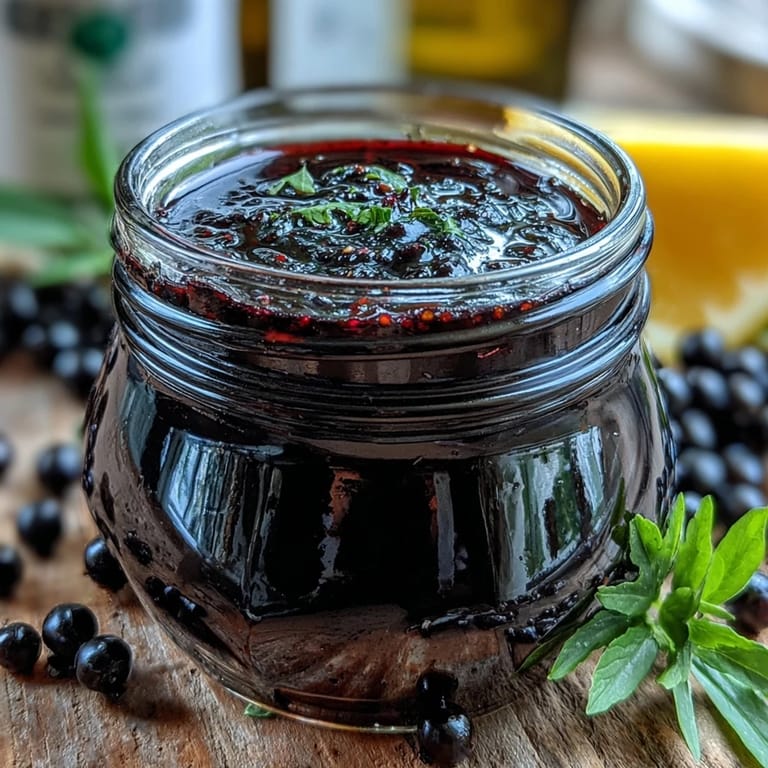
- Use it right away if you're serving dinner tonight, or transfer it to a jar and refrigerate for up to a week. Just remember to shake it well before pouring since the oil and vinegar will naturally separate.
 Save
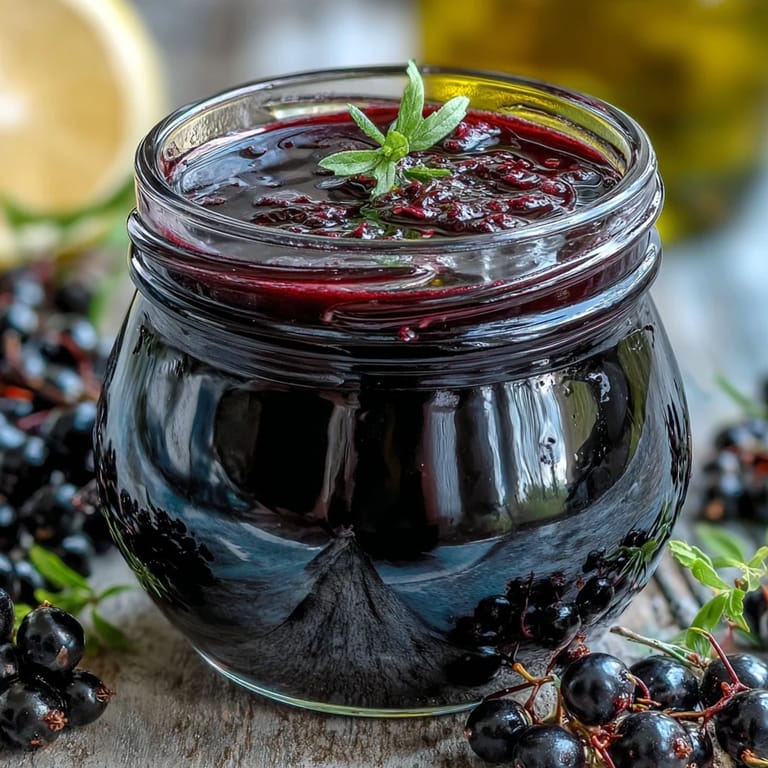
Save There's something almost magical about how this vinaigrette made my partner actually request salad for dinner instead of just eating it to be polite. It became the dressing we made repeatedly, and eventually our weekly farmer's market trips shifted to include whatever greens looked best paired with it rather than the other way around.
The Black Currant Advantage
Black currant has this mysterious quality where it tastes tart without being sour, fruity without being sweet, and slightly peppery underneath it all. Once you taste it in a vinaigrette, you realize why Europeans have been using it for centuries—it has the backbone to stand up to bitter greens, roasted vegetables, and even grains without disappearing. The juice is concentrated enough that you don't need much, which means a little bottle goes surprisingly far.
What This Vinaigrette Loves
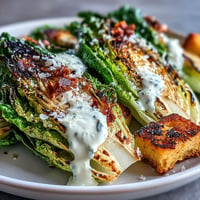
This dressing shines over mixed greens with goat cheese, but it's equally at home drizzled over roasted beets, farro, or even grilled vegetables. I've poured it over warm potatoes, tossed it with raw kale, and even used it as a glaze for roasted salmon. The boldness means it doesn't get lost on anything you throw at it.
Swaps and Extensions
If black currant juice vanishes from your store, pomegranate or cranberry juice create a similar effect, though each brings its own personality to the dressing. I've also experimented with adding a tiny splash of balsamic for depth, or a whisper of whole-grain mustard for texture. The base is forgiving enough that you can treat it like a template.
- Strain through a fine mesh sieve for a smooth, restaurant-quality finish.
- Make a double batch and keep it on hand all week since it actually improves slightly as flavors meld.
- Always shake the jar vigorously before pouring since the oil will separate during storage.
 Save
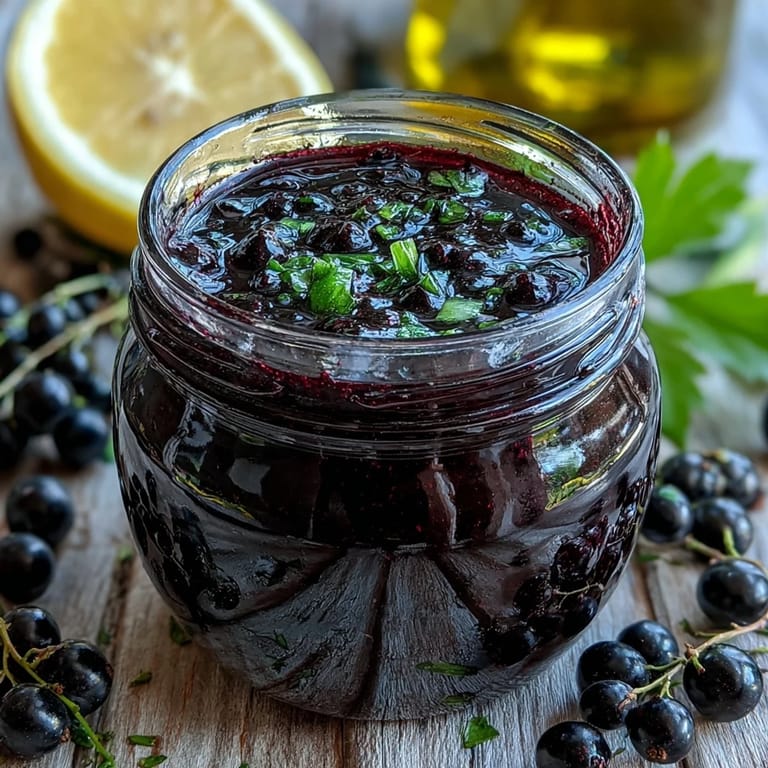
Save This vinaigrette has become one of those recipes I make without thinking, the kind that tastes like home. It's proof that the best dishes aren't always complicated—sometimes they're just the right combination of things, whisked together with a little intention and care.
Recipe Questions & Answers
- → How long does black currant vinaigrette keep?
Store in an airtight jar in the refrigerator for up to one week. The olive oil may solidify slightly when cold but will return to liquid at room temperature. Always shake well before serving to recombine the ingredients.
- → What can I use instead of black currant juice?
Pomegranate or cranberry juice work beautifully as substitutes. Both provide similar tartness and deep color, though pomegranate offers a slightly sweeter profile while cranberry brings more sharp acidity.
- → Why add honey or maple syrup?
The sweetener balances the natural tartness of black currant juice and vinegar. Use sparingly as the dressing should remain tangy. Adjust based on personal preference and the sweetness of your currant juice.
- → Should I strain out the shallot pieces?
Straining through a fine mesh sieve creates a completely smooth texture, ideal for delicate greens. Leave the shallot in if you prefer added texture and more pronounced flavor in every bite.
- → What salads pair best with this vinaigrette?
Mixed greens with goat cheese, spinach salads, and roasted beet combinations shine with this tart dressing. It also complements grain-based bowls, roasted vegetables, and proteins like grilled chicken or salmon.
- → Can I make this vinaigrette in advance?
Absolutely. Making it a day ahead actually allows flavors to meld beautifully. The shallot especially benefits from time to infuse its subtle sweetness throughout the dressing.