 Save
Save The roux was burning, and I did not care. My friend Rene had warned me about stirring constantly, about the color of peanut butter, about patience, but the smell had already filled my tiny kitchen. A neighbor actually knocked on my door to ask what was cooking. That roux went past chocolate into something almost menacing, but that batch of étouffée became legendary in my apartment building.
I made this for my dads birthday last year. He spent his twenties in New Orleans and has been talking about good étouffée for decades. The way he closed his eyes after the first bite told me everything. He asked for seconds, then thirds, then requested the recipe. Now he makes it more than I do.
Ingredients
- Vegetable oil: The foundation of your roux, neutral enough to let the flour shine
- All-purpose flour: This transforms from simple white powder into the magic that holds everything together
- Onion, bell pepper, celery: The holy trinity of Cajun cooking, do not skip any of them
- Garlic: Minced fresh, never powdered, added after the roux to prevent burning
- Shrimp: Peeled and deveined, about one pound gives you the perfect protein ratio
- Seafood stock: Homemade is wonderful, but a good store-bought version works perfectly fine
- Worcestershire sauce: That umami punch that makes people ask what is in this
- Cajun seasoning: Adjust to your heat tolerance, but do not be shy with it
- Cayenne pepper: The background heat that sneaks up on you
- Bay leaf: One is enough, it infuses while simmering then gets discarded
Tired of Takeout? 🥡
Get 10 meals you can make faster than delivery arrives. Seriously.
One email. No spam. Unsubscribe anytime.
Instructions
- Make the roux:
- Heat oil in your heavy pot over medium, whisk in flour gradually, and stir without stopping until it turns deep chocolate brown, about 15 to 20 minutes. The smell will change from floury to nutty to rich.
- Add the trinity:
- Toss in your onion, bell pepper, and celery once the roux reaches that perfect color. Cook until the vegetables soften and the roux is no longer so thick.
- Wake up the garlic:
- Stir in the minced garlic for just one minute until you can smell it throughout the kitchen.
- Add the liquid:
- Pour in the seafood stock gradually, stirring constantly to incorporate it smoothly with the roux. The mixture will thicken beautifully as it heats through.
- Season and add shrimp:
- Add your shrimp, Worcestershire, Cajun seasoning, cayenne, bay leaf, salt, and pepper. Stir well to distribute everything evenly.
- Simmer together:
- Let it bubble gently on low heat for 20 to 30 minutes, stirring occasionally, until the sauce coats the back of your spoon and the shrimp turn pink.
- Taste and serve:
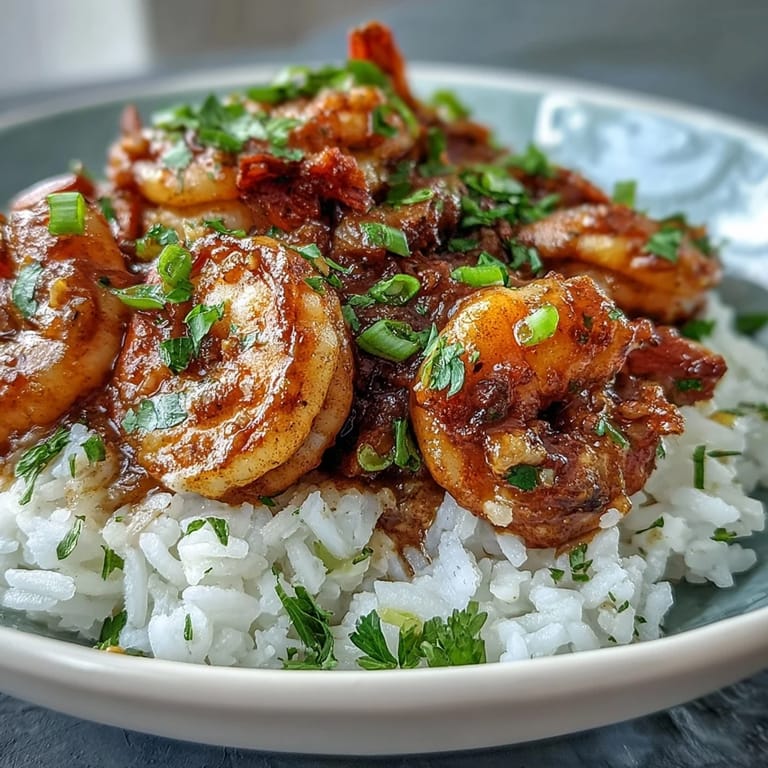
- Adjust the seasoning if needed, fish out that bay leaf, and ladle generously over hot rice with green onions and parsley on top.
 Save
Save This recipe appeared on my table during the hardest winter of my life. Something about the slow stirring, the building of flavors, the warmth of it all felt like therapy in a bowl. Now whenever I make it, I think about how food can hold you together when everything else feels like it is falling apart.
The Roux Journey
Learning to make a proper roux changed my entire approach to cooking. The transformation from simple flour and fat into something complex and deeply flavorful feels almost magical. I have learned to respect the process, give it time, and trust that patience pays off in ways that rushing never can.
Stock Choices
Good seafood stock makes a difference you can taste. I keep shrimp shells in my freezer until I have enough to make a quick stock, but honestly, a quality store-bought version produces excellent results. Chicken stock works in a pinch, though seafood gives the most authentic flavor.
Serving Suggestions
A crusty baguette for soaking up that sauce is non-negotiable in my house. Some buttered French bread turns this into a meal that feels complete and satisfying. I also like a simple green salad with sharp vinaigrette to cut through the richness.
- Hot sauce on the table lets guests adjust their own heat level
- A cold beer or iced tea balances the spice perfectly
- Lemon wedges brighten everything right before eating
 Save
Save Some dishes feed the body, and some feed something deeper. This étouffée does both, every single time.
Recipe Questions & Answers
- → What is the key to a great Étouffée?
The foundation of a truly great Étouffée is a properly made roux. It's a mixture of oil and flour cooked slowly until it reaches a deep golden-brown, like milk chocolate. This process creates a rich, nutty flavor and a thickening agent for the stew. Patience is key when making the roux to prevent burning.
- → Can I use proteins other than shrimp?
Absolutely! While shrimp and crawfish are traditional, you can easily adapt this dish. Chicken, sausage, or even mushrooms make excellent substitutes. For chicken or sausage, brown them before adding to the simmering sauce to ensure they are cooked through and flavorful.
- → How can I adjust the spice level?
The spice level is easily customizable. For a milder dish, reduce or completely omit the cayenne pepper. If you prefer more heat, feel free to add an extra pinch of cayenne or a dash of your favorite hot sauce during the final seasoning adjustment.
- → What is the 'holy trinity' in Cajun cooking?
The 'holy trinity' refers to the aromatic vegetable base used in many Cajun and Creole dishes: diced onion, green bell pepper, and celery. These three ingredients are sautéed together to build a layer of fundamental flavor for the dish.
- → Can Étouffée be made ahead of time?
Yes, Étouffée often tastes even better the next day! The flavors have more time to meld and deepen. Allow it to cool completely before storing it in an airtight container in the refrigerator for up to 3-4 days. Reheat gently on the stovetop.
- → Is this dish naturally gluten-free?
No, the traditional preparation uses all-purpose flour for the roux, which contains gluten. However, you can easily make it gluten-free by substituting a certified gluten-free flour blend for the roux and ensuring your seafood or chicken stock is also gluten-free. The taste and texture will remain excellent.