 Save
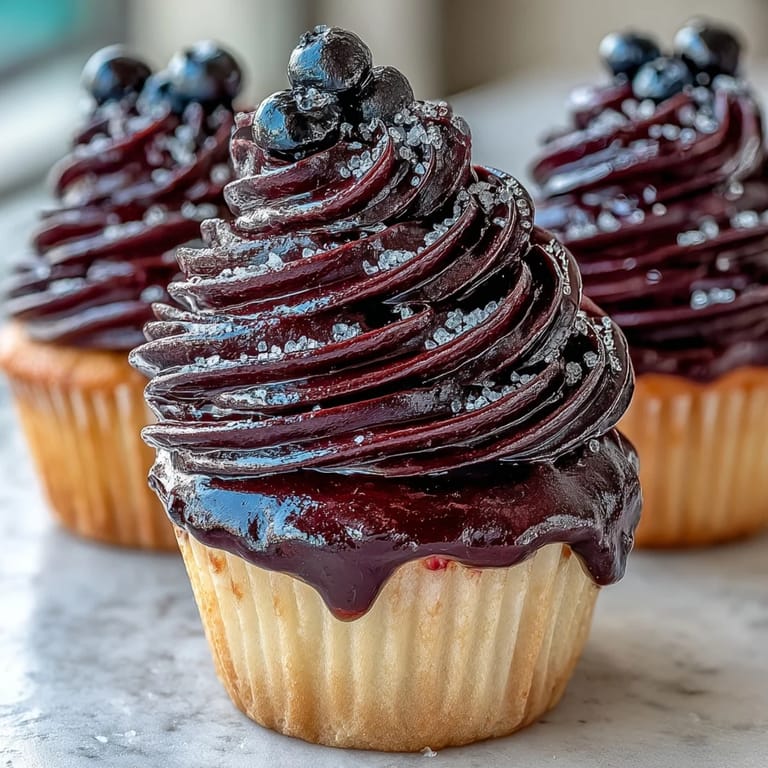
Save Black currant frosting caught me off guard at a Parisian pâtisserie window—that deep plum-purple color practically glowed under the morning light. The pastry chef told me the secret was letting the jam cool completely, and I've been obsessed ever since. What started as curiosity has become my go-to frosting for any occasion that needs a little sophistication. It's tangy enough to keep things interesting, sweet enough to feel like dessert, and strangely addictive.
I made three batches of this the night before my sister's engagement dinner, and the kitchen smelled like a berry bramble—warm, jammy, a little bit wild. When people bit into those cupcakes and their eyes went wide, I realized frosting could actually be the star of the show, not just the supporting act. That moment taught me that taking five extra minutes to cool your jam properly isn't a hassle, it's the difference between good and memorable.
Ingredients
- Black currant jam or preserves (seedless if possible): This is your flavor foundation—seedless jam gives you that smooth, luxurious texture, but if you only have regular jam on hand, pushing it through a fine sieve for two minutes does wonders.
- Water: Just a tablespoon to loosen the jam so it swirls into the butter without lumps.
- Unsalted butter, softened: Room temperature is non-negotiable here—cold butter won't cream properly, and you'll end up with grainy frosting that no amount of beating will fix.
- Powdered sugar, sifted: Sifting really matters when you're building something this delicate—it breaks up clumps and makes incorporation silky.
- Vanilla extract: A teaspoon is enough to round out the tartness without announcing itself.
- Salt: Just a pinch, but it's the difference between frosting that tastes flat and frosting that tastes intentional.
- Lemon juice (optional): Add this only if your jam tastes overly sweet—one teaspoon is usually enough to bring back that brightness.
- Fresh black currants for garnish (optional): If you can find them, they're worth the splurge; they add a jewel-like finish and remind everyone this isn't ordinary vanilla frosting.
Tired of Takeout? 🥡
Get 10 meals you can make faster than delivery arrives. Seriously.
One email. No spam. Unsubscribe anytime.
Instructions
- Warm and cool your jam:
- Combine the black currant jam with water in a small saucepan and heat it gently over low heat, stirring until it loosens into a pourable consistency—about 2 to 3 minutes. The kitchen will smell incredible. Let it cool completely on the counter; this step prevents the jam from melting your carefully creamed butter.
- Cream your butter:
- In a large bowl, beat softened butter on medium speed for 2 to 3 minutes until it's pale, fluffy, and almost mousse-like. This is where you're building air into the frosting, so don't skip this step or rush it.
- Add sugar gradually:
- Sift in the powdered sugar a little at a time, beating on low speed after each addition so it doesn't cloud your kitchen in a white cloud. This patience pays off in smoothness.
- Season and extract:
- Mix in vanilla extract and a small pinch of salt, beating until fully incorporated and the frosting smells like something you'd sneak tastes of.
- Fold in the cooled jam:
- Pour in the cooled black currant reduction and beat on medium-low until it's completely blended throughout—you want even color, no streaks of purple swirled with white. Scrape down the sides of the bowl as you go.
- Taste and adjust brightness:
- If you want extra zing, add lemon juice a teaspoon at a time, beating gently to distribute it. Taste with a clean spoon and trust your instincts.
- Rest if needed:
- If the frosting looks too soft to hold its shape, pop it in the refrigerator for 10 to 15 minutes. You want it spreadable but not droopy.
- Frost your creation:
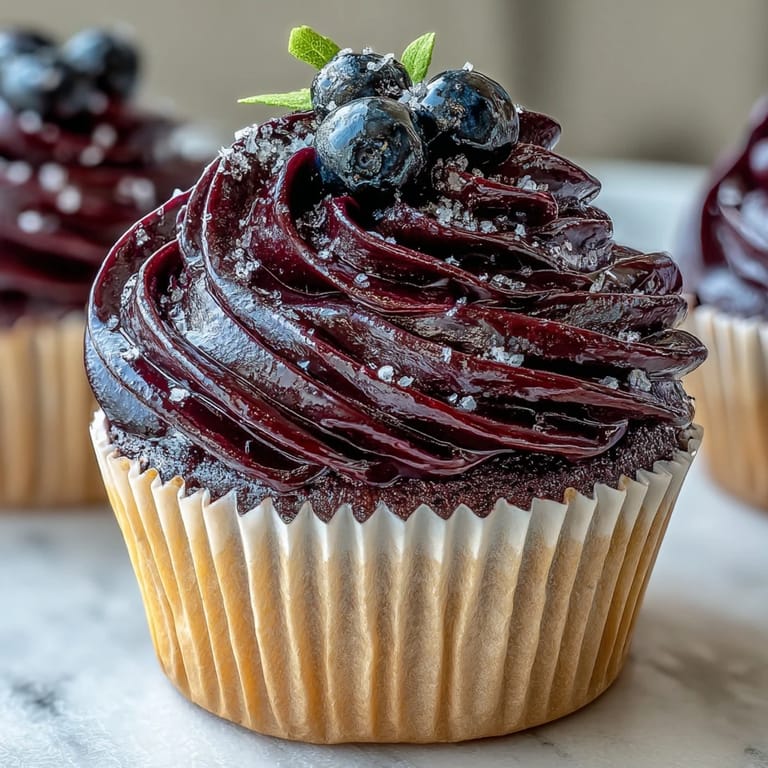
- Apply to cooled cupcakes, layer cakes, or petit fours using a spatula, offset knife, or piping bag, depending on your mood. Top with fresh black currants if you've got them.
 Save
Save A friend brought her grandmother to my birthday dinner, and the grandmother took one bite of a black currant cupcake, closed her eyes, and said it reminded her of childhood summers in Scotland. That's when I understood that frosting isn't just decoration—it can be a time machine. It can make someone feel like they're somewhere else, somewhere they love.
Texture Secrets That Actually Matter
The difference between frosting that feels like silk and frosting that feels grainy comes down to three things: sifting your sugar, creaming your butter long enough, and not rushing the jam incorporation. I've made this frosting thick enough for piping and loose enough for smooth spreading just by adjusting how long I beat it. If you're ever unsure whether it's the right consistency, remember that it'll firm up slightly in the fridge, so err on the side of slightly soft.
Pairing This Frosting With Cake
Vanilla cake is the obvious choice—the frosting's tartness plays beautifully against vanilla's sweetness. But don't sleep on chocolate cake, especially something dark and almost bitter; the currant brings brightness that cuts through richness. Lemon cake is another winner; the citrus and fruit flavors are cousins, so they understand each other. I've even used this on a delicate almond sponge, and the combination felt almost sophisticated enough for a fancy wedding.
Storage and Make-Ahead Magic
You can make this frosting up to five days ahead if you refrigerate it properly in an airtight container. When you're ready to use it, let it sit on the counter for 15 to 20 minutes to soften, then give it a quick re-whip with your mixer to bring back its fluffiness. Room temperature storage works for up to a day if your kitchen isn't warm, but in summer months I always refrigerate to be safe. Here's what I've learned matters most:
- Always bring frosted baked goods to room temperature before serving so the frosting tastes creamy instead of dense.
- If your frosting gets too soft while you're working, a quick 5-minute chill in the freezer (not the fridge) will firm it up without overdoing it.
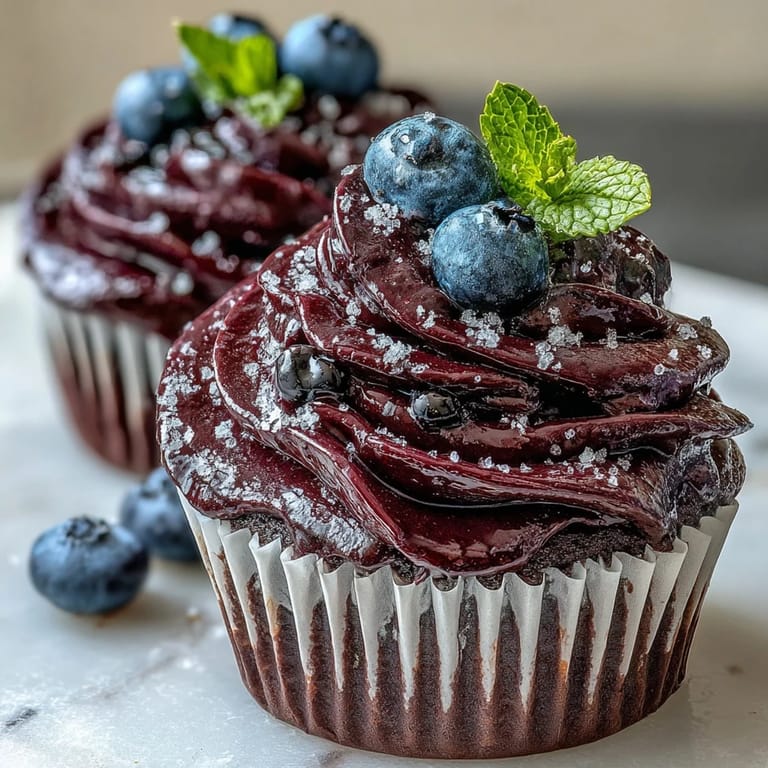
- Fresh black currants as garnish are stunning but also optional—this frosting is beautiful on its own.
 Save
Save Black currant frosting is one of those recipes that reminds you why you bake in the first place—because you get to create something beautiful that makes people smile. Every time you make it, you'll get a little faster and a little more confident, and that's the best kind of kitchen magic.
Recipe Questions & Answers
- → Can I use fresh black currants instead of jam?
Fresh black currants can be cooked down with sugar to create a homemade reduction, but this adds significant time. Using seedless jam or preserves provides consistent flavor and texture without the extra cooking step.
- → How do I store this frosting?
Keep covered at room temperature for up to 1 day, or refrigerate for up to 5 days. When refrigerated, bring to room temperature and re-whip with an electric mixer before using to restore creamy texture.
- → Why is my frosting too soft or runny?
The consistency depends on butter temperature and jam reduction thickness. If too soft, chill for 10–15 minutes. If too stiff, add a splash of milk or cream. Always use room-temperature butter for best results.
- → Can I make this frosting ahead of time?
Yes, prepare up to 2 days in advance and refrigerate. Let it come to room temperature, then re-whip until smooth and fluffy. The flavors actually develop and meld better after resting.
- → What flavors pair well with black currant frosting?
This tangy-sweet topping complements vanilla, lemon, almond, and chocolate bases beautifully. It also works well with spiced cakes like ginger or carrot, cutting through rich flavors with bright acidity.
- → Can I freeze this frosting?
Freezing is possible but may affect texture slightly. Wrap tightly and freeze for up to 1 month. Thaw overnight in the refrigerator, then bring to room temperature and re-whip thoroughly before using.