 Save
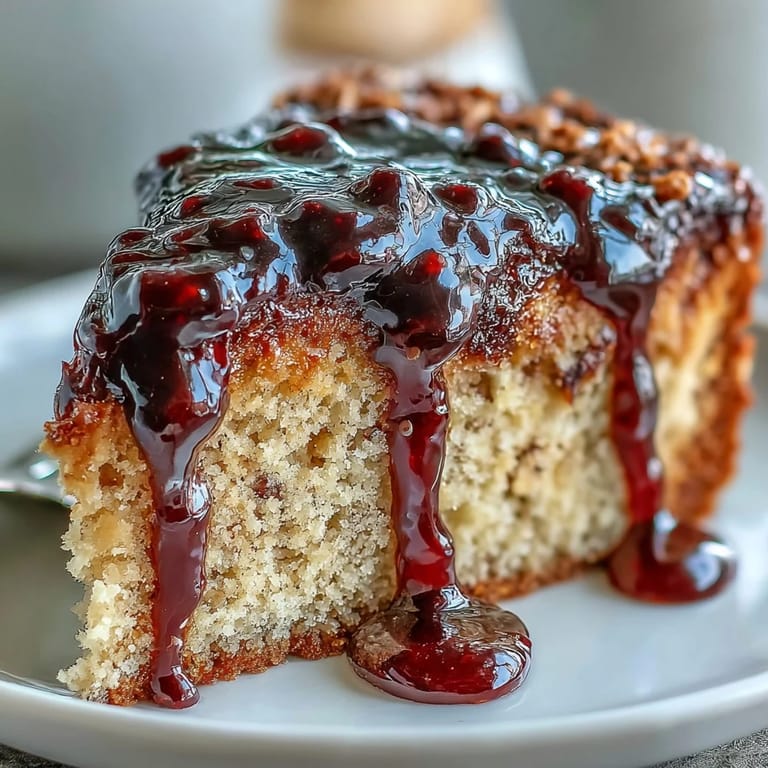
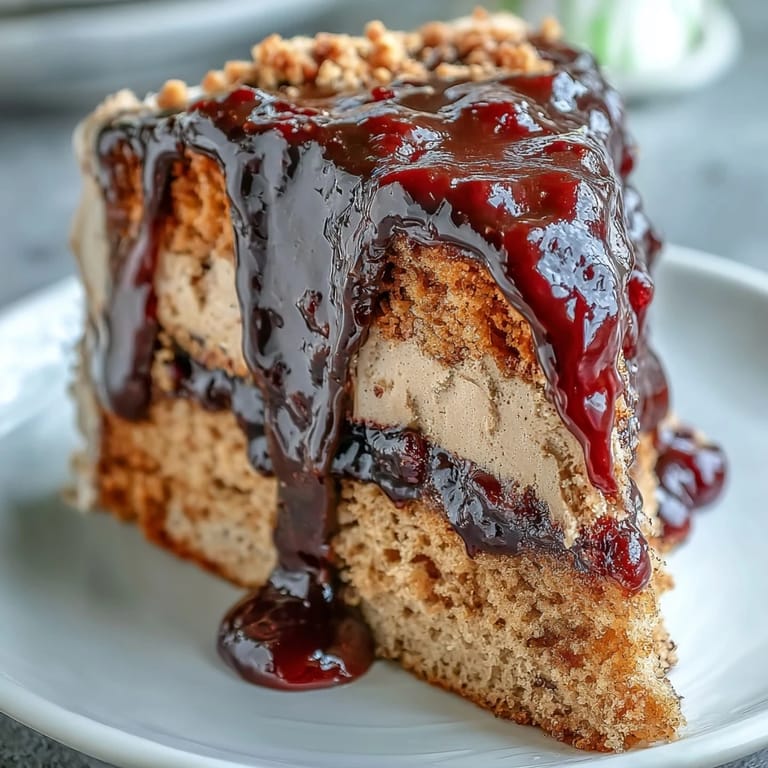
Save My sister brought a jar of black currants home from a farmers market one summer, and I had no idea what to do with them beyond jam. That evening, while thinking about childhood lunch boxes, it hit me: why not build an entire cake around the flavors everyone already loves? The result was this peanut butter cake with its surprise black currant center, and honestly, it became the dessert I make whenever I want to feel a little clever in the kitchen.
I baked this for my best friend's birthday last spring, and watching her face light up when she tasted that black currant layer hiding in the middle made me realize why I love cooking for people so much. There's something magical about layering flavors in a way no one expects, and the sound of her fork hitting the plate as she went back for seconds told me everything.
Ingredients
- All-purpose flour (1 1/2 cups): The foundation that keeps your cake tender, not dense—whisking it with the leavening agents prevents overmixing later.
- Baking powder and baking soda (1 tsp and 1/2 tsp): Together they create that perfect crumb structure; using both gives you lift without bitterness.
- Salt (1/4 tsp): A pinch that you won't taste but absolutely need, as it highlights the peanut butter flavor instead of letting it fade.
- Unsalted butter and creamy peanut butter (1/2 cup and 3/4 cup): The dynamic duo that makes this cake sing; creamy works better than chunky here so nothing interferes with the silky crumb.
- Granulated sugar (1 cup): Beat it long with the butter and peanut butter until you see the mixture lighten, which means air is incorporated for a tender cake.
- Eggs (2 large): Add them slowly and beat well after each one so they emulsify properly into the batter.
- Vanilla extract (1 tsp): A small amount that rounds out all the flavors without screaming vanilla.
- Whole milk (1/2 cup): The moisture you need; alternating it with flour keeps you from overdeveloping gluten.
- Black currant jam (1/2 cup): The hidden treasure layer; choose a good quality preserve so those berries actually taste like something.
- Fresh or frozen black currants (1 cup): For the sauce, they break down into something glossy and beautifully tart.
- Lemon juice (1 tsp): The final note that brightens the sauce and prevents it from tasting one-dimensional.
Tired of Takeout? 🥡
Get 10 meals you can make faster than delivery arrives. Seriously.
One email. No spam. Unsubscribe anytime.
Instructions
- Get your oven ready:
- Preheat to 350°F (175°C) and grease your 8-inch cake pan, then line the bottom with parchment. This step takes two minutes and saves you from cake stuck to metal, which is always disappointing.
- Mix your dry ingredients:
- Whisk flour, baking powder, baking soda, and salt in a medium bowl until everything is evenly distributed. Set it aside and don't overthink this part.
- Cream the butter and peanut butter:
- In a large bowl, beat them together until the mixture looks smooth and creamy, about two to three minutes. You're breaking down those butter solids so they disperse evenly throughout the batter.
- Build the sweet base:
- Add sugar and keep beating until the mixture turns pale and fluffy, roughly three to four minutes. This is where the magic starts, as air bubbles form that will give your cake its tender texture.
- Add eggs one at a time:
- After each egg goes in, beat well so it fully incorporates before adding the next one. Rushing this step means you might end up with a grainy texture instead of a silky one.
- Mix in vanilla:
- A quick stir is all you need here, just a single teaspoon that whispers in the background.
- Alternate flour and milk:
- Start with a third of the flour mixture, then half the milk, then another third of flour, then the remaining milk, then the last of the flour. This technique prevents overworking the batter, which would make your cake tough instead of tender.
- Assemble in the pan:
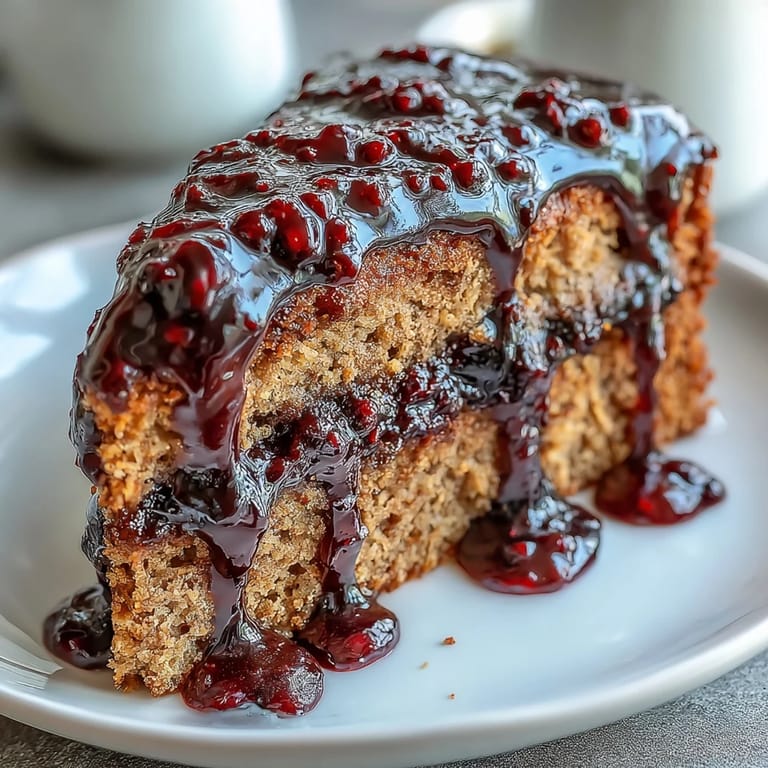
- Spread half the batter into your prepared pan, then spoon the black currant jam over it, leaving about a half-inch border all around. Gently spread the remaining batter on top, being careful not to swirl the jam up into it.
- Bake until golden:
- Bake for 30 to 35 minutes, checking around minute 28 by inserting a toothpick in the center. When it comes out clean or with just a few moist crumbs (not wet batter), you're done.
- Cool with patience:
- Let the cake sit in the pan for 10 minutes so it firms up enough to handle, then turn it onto a wire rack. This cooling time is crucial and worth the wait.
- Make the black currant sauce:
- In a small saucepan, combine the black currants, sugar, and water over medium heat. Bring to a boil, then lower the heat and simmer for 8 to 10 minutes until the mixture turns syrupy and the berries have mostly broken down, then stir in the lemon juice and let it cool slightly.
- Serve with drama:
- Slice the cake and drizzle each piece generously with the black currant sauce. The warm sauce against the cool cake is exactly what makes this dessert memorable.
 Save
Save There's a moment in baking when you pull something out of the oven and the kitchen smells so good that you forget you're tired or it's been a long day. This cake does that, with the nutty warmth of peanut butter mixing with the tartness of black currants still bubbling in the pan, and suddenly dessert becomes an event instead of just something sweet.
The Story Behind Black Currants
Black currants have always been a little mysterious in American kitchens, probably because they were banned for decades to protect certain crops, and by the time they made their comeback, most people had forgotten they existed. Once I started using them, though, I realized how much deeper and more complex they taste than regular berries, with an almost medicinal earthiness that sounds weird on paper but works beautifully in a cake. They bridge the gap between sweet and savory in a way that makes peanut butter shine instead of overwhelming the plate.
Why This Cake Works as a Grown-Up Dessert
As a kid, peanut butter and jelly sandwiches were pure comfort, but turning those flavors into a cake made me realize how that combination can actually be sophisticated when you respect the ingredients and balance them properly. The jam center feels like a secret, the sauce adds complexity, and suddenly you're not eating nostalgic shortcut food anymore, you're eating dessert that happens to taste like a favorite memory.
Making It Your Own
This recipe is flexible enough that you can swap out the black currant jam for raspberry or blackberry if that's what you find at the market, and the sauce will taste different but equally delicious. Some bakers brush a light simple syrup between the layers for extra moisture, which I now do automatically because it keeps the cake tender even if it sits around for a day. The most important thing is tasting as you go and trusting your instincts about when the cake is done baking, since every oven runs a little differently.
- If black currants are hard to find, frozen ones work perfectly fine and sometimes taste even better because they're picked at peak ripeness.
- The sauce can be made a day ahead and reheated gently just before serving, which takes pressure off you when people are arriving.
- This cake pairs surprisingly well with cold milk or a dessert wine, so serve it however makes you happy.
 Save
Save There's something deeply satisfying about bringing a dessert to the table that makes people pause mid-conversation and ask what they're tasting. This cake does exactly that, and once you've made it once, it becomes the dessert you reach for whenever you want to feel both comforting and a little bit clever.
Recipe Questions & Answers
- → Can I use natural peanut butter instead of creamy?
Natural peanut butter can work, but creamy commercial peanut butter yields better results. Natural varieties tend to separate and may affect the cake's texture. If using natural peanut butter, stir thoroughly and consider adding an extra tablespoon of flour to maintain proper batter consistency.
- → What if I can't find black currant jam?
Raspberry, blackberry, or grape jam make excellent substitutes. The tartness of raspberries particularly complements the rich peanut butter. You can also mix equal parts raspberry and blackberry jams to approximate black currant's unique flavor profile.
- → How should I store this cake?
Keep the cake covered at room temperature for up to 2 days. For longer storage, refrigerate in an airtight container for up to 5 days. The currant sauce should be stored separately in the refrigerator and reheated gently before serving. Bring chilled cake to room temperature for best texture.
- → Can I make this cake gluten-free?
Yes, substitute the all-purpose flour with a 1:1 gluten-free baking blend that includes xanthan gum. The texture remains remarkably similar. Always verify that your baking powder, vanilla extract, and other ingredients are certified gluten-free to avoid cross-contamination.
- → Why is there a border when spreading the jam?
Leaving a ½-inch border prevents the jam from leaking out during baking and creating sticky edges. It also helps the top layer of batter adhere properly to the bottom, ensuring even baking and structural integrity when slicing.
- → Can I make this as cupcakes instead?
Absolutely! Fill cupcake liners halfway with batter, add a teaspoon of jam in the center, then cover with more batter. Reduce baking time to 18-22 minutes. The sauce makes a perfect drizzle over the frosted tops.