 Save
Save My friend Maria showed up at my door one sweltering July afternoon with a bag of black currants from her garden, insisting I had to taste what she'd been making. She handed me a spoonful of something frozen and impossibly bright, and it was like summer had crystallized on my tongue—sharp, fruity, almost electric. That first granita moment made me understand why Italians swear by this simple frozen dessert; it's not trying to be anything other than what it is, and somehow that's everything.
I made this for a dinner party in August when everyone was too hot to sit still, and the moment those icy forks scraped across the granita, the whole table went quiet. Someone asked if I'd bought it from an Italian gelato place, and I let them believe that for about thirty seconds before admitting the truth. There's something about serving something this simple and pure that makes people slow down and actually taste.
Ingredients
- Fresh or frozen black currants (500 g, about 3 cups): These little dark berries pack an almost tart punch that balances beautifully with sugar. Fresh currants have a subtle earthiness, while frozen ones are often more intensely flavored and work just as well here.
- Granulated sugar (150 g, or 3/4 cup): This might seem like a modest amount, but it's carefully calculated to sweeten without overwhelming the currant's natural tang. You can adjust slightly if your currants taste particularly tart or sweet.
- Water (400 ml, or 1 2/3 cups): Cool water keeps the flavor pure and lets the currants shine. This proportion creates a syrup that freezes to that signature granita texture—neither too icy nor too dense.
- Freshly squeezed lemon juice (1 tablespoon): This small amount wakes up the black currant flavor and adds brightness; it's the whisper of acidity that makes everything taste more vivid.
Tired of Takeout? 🥡
Get 10 meals you can make faster than delivery arrives. Seriously.
One email. No spam. Unsubscribe anytime.
Instructions
- Prepare your currants with care:
- Rinse them under cool running water, rubbing gently with your fingers. If you're using fresh currants, pinch off the stems—they're bitter and you want none of that.
- Build the base syrup:
- Combine the currants, sugar, and water in a medium saucepan over medium heat. Let it come to a gentle simmer, stirring every minute or so until the sugar completely dissolves and the currants begin to split open, releasing their juice. This takes about 10 minutes, and you'll smell the deep, fruity aroma as they soften.
- Cool and blend:
- Pour the warm mixture into your blender (or use an immersion blender right in the pan) and puree until completely smooth. If you're using a regular blender, let the mixture cool for a few minutes first so you don't burn yourself.
- Strain for silky texture:
- Pour the puree through a fine-mesh sieve into a large bowl, using the back of a spoon to press the fruit down and extract every drop of juice. The seeds and skins stay behind; what you're after is that pure, deep purple liquid.
- Add the finishing touch:
- Stir in the lemon juice, which should make the color seem to brighten slightly and add a subtle spark to the flavor.
- Begin the freeze:
- Pour the mixture into a shallow metal baking dish—the wide surface area is crucial for getting that signature granita texture. Metal freezes faster and more evenly than ceramic or glass.
- Scrape and fluff:
- After 45 minutes, take a fork and scrape across the surface, breaking up any ice crystals that have formed around the edges. Return it to the freezer and repeat this process every 30 to 45 minutes for about 4 hours total, until the whole thing is frozen but still has that light, fluffy texture rather than being solid and dense.
- Serve at its peak:
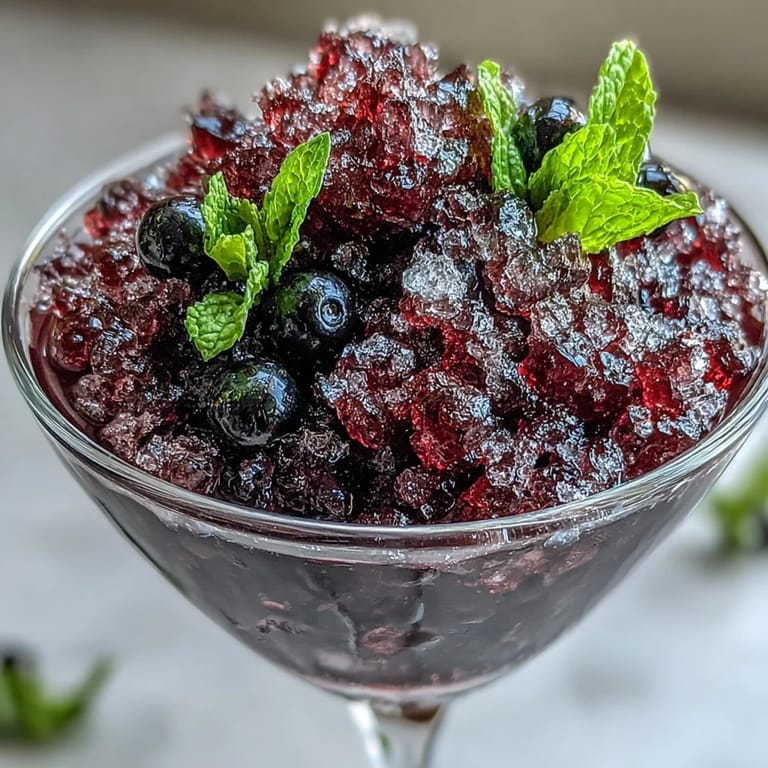
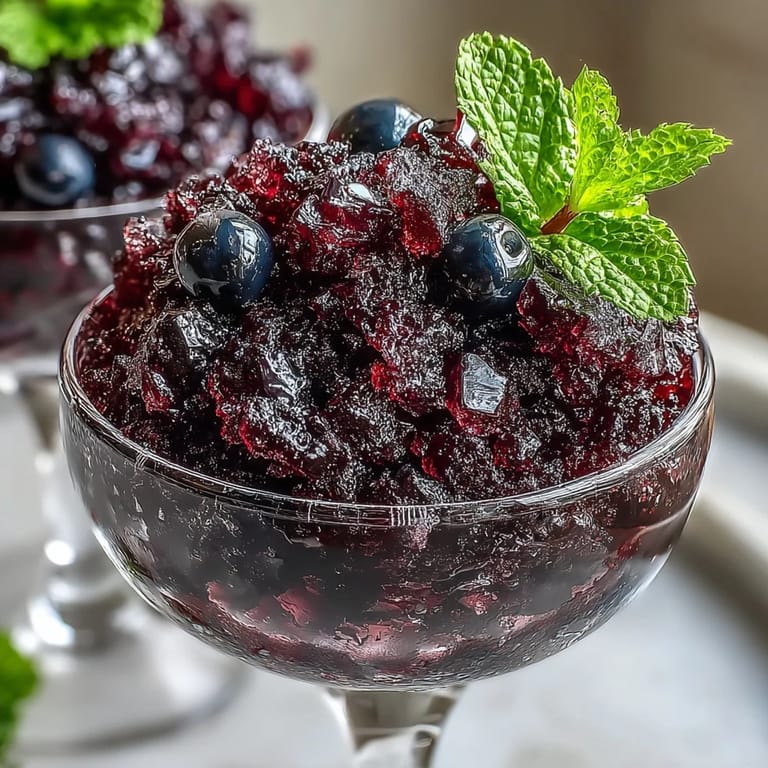
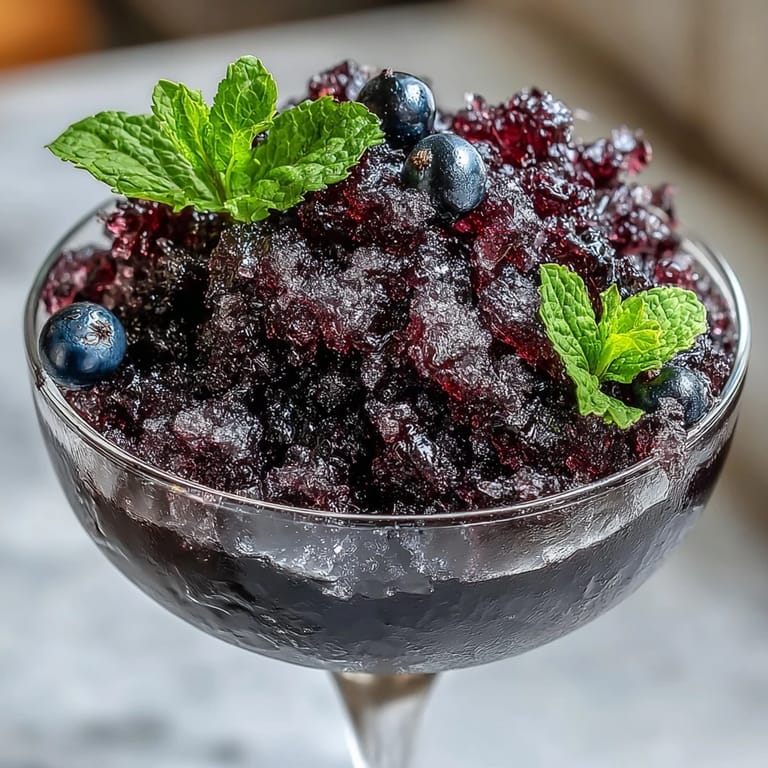
- Scoop into chilled glasses or bowls immediately before serving. The granita should glisten and feel almost cloud-like on your tongue.
 Save
Save I've learned that granita is a dish that rewards patience and small gestures. My daughter now asks me to make it during her finals week in May, when the stress gets heavy, and there's something about sitting outside with a bowl of something so cold and bright that makes everything feel a little more manageable. It became our small summer ritual.
When Black Currants Aren't Easy to Find
Frozen black currants work beautifully in this recipe and often taste more intensely flavored than fresh ones. If your area doesn't have a summer farmers market or you're making this in winter, frozen is genuinely your friend. Some grocery stores carry them in the frozen fruit section; others might require a specialty food shop or an online order. The flavor remains bold and delicious, and your granita will be just as elegant. Thaw them first if using frozen, or add an extra minute or two to the simmering time to account for the cold starting point.
Variations and Flavor Twists
This recipe is versatile enough to play with once you understand the basic technique. Some cooks add a splash of crème de cassis—the black currant liqueur—just before freezing, which adds sophistication and a subtle boozy note that emerges only after you taste it. Others infuse the water with fresh mint or a vanilla bean during the initial simmer, which adds complexity without overwhelming the fruit. You could also swap the lemon juice for lime juice if you want something slightly brighter, though you'll lose a tiny bit of elegance doing so. The black currant is the star here, so any additions should play a supporting role rather than competing for attention.
Serving and Storage Moments
Granita is meant to be served immediately after you've scraped and fluffed it one last time, when it's at that perfect cloud-like consistency. If you're making it ahead, you can freeze it completely (which is actually easier than trying to catch it at that exact moment), then fluff it with a fork for a minute or two just before serving, and it will transform back into something fresh and light. Serve it in glasses that have been chilled in the freezer for at least 15 minutes, and if you want to be fancy about it, garnish with a few fresh mint leaves or a scattering of whole black currants. The granita will keep for up to two days in the freezer, but honestly, it tastes best on the day you make it.
- Keep your serving glasses in the freezer ahead of time so the granita stays at its optimal temperature longer.
- A small cookie or biscuit on the side offers a nice textural contrast, though purists will tell you it doesn't need anything.
- If your granita becomes too hard or dense in storage, you can always blend it briefly and refreeze, though it will lose some of that signature fluffy quality.
 Save
Save This granita taught me that sometimes the most memorable dishes are the simplest ones, made better by a little attention and a lot of care. Serve it when you want to feel like you've traveled somewhere cooler and more elegant than your own kitchen.
Recipe Questions & Answers
- → What makes granita different from sorbet or ice cream?
Granita has a coarser, crystalline texture achieved by repeatedly scraping the freezing mixture with a fork. Unlike ice cream, it contains no dairy or fat. Compared to sorbet, granita is icier and less smooth, creating a unique mouthfeel that's both refreshing and light.
- → Can I use frozen black currants instead of fresh?
Absolutely. Frozen black currants work perfectly and may even break down more easily during simmering. There's no need to thaw them first—simply add them directly to the saucepan with the sugar and water. The result will be just as flavorful and vibrant.
- → How long does homemade granita last in the freezer?
You can store this in the freezer for up to 2 days. Before serving, simply fluff it again with a fork to restore the crystalline texture. For longer storage, cover tightly with plastic wrap or transfer to an airtight container to prevent ice crystals from forming.
- → What's the purpose of lemon juice in this mixture?
Lemon juice serves two purposes: it brightens the overall flavor and balances the natural sweetness of black currants with acidity. Additionally, the acid helps preserve the vibrant purple color and enhances the freezing process, ensuring a smoother crystalline structure.
- → Can I make this faster by freezing in ice cube trays?
While ice cube trays freeze faster, they won't produce the authentic granita texture. The shallow baking dish allows for gradual freezing from all sides, which is essential for creating those signature crystals. Patience during the freezing process is key to achieving the proper fluffy consistency.
- → Is granita served as a dessert or palate cleanser?
Granita works beautifully in both roles. Its light, refreshing nature makes it an ideal palate cleanser between courses, especially after rich or heavy dishes. It's equally delightful served as a standalone dessert, particularly during warm weather when something cold and tangy hits the spot.