 Save
Save My daughter came home from school asking if I could make something that looked like a butterfly for her snack time, and I suddenly remembered a platter my neighbor had made years ago at a summer barbecue—simple, playful, and somehow every kid at that party gravitated toward it without being told. That afternoon, I arranged some cheddar slices, grabbed a few salami rounds, and watched her face light up when she realized what we'd built together. The Butterfly Migration was born not from a recipe book but from a kitchen moment where food became art, and art became something everyone wanted to eat.
I made a batch for a casual potluck once, fully expecting it to sit untouched while everyone huddled around the pasta salad, but instead I watched adults pausing mid-conversation to grab a piece, smiling at the whimsy of it. That's when I realized this wasn't just a kids' thing—it was permission to play a little, to remember that eating together doesn't always have to be serious.
Ingredients
- Orange cheddar cheese, sliced (200 g): The vibrancy is half the magic here—sharp cheddar has enough personality that it stands out visually and flavor-wise, but milder varieties work if that's your preference.
- Salami, sliced or shaped (60 g): This is your butterfly's backbone, literally and figuratively; the saltiness plays perfectly against the cheese and makes the whole thing feel intentional, not accidental.
- Black olives, pitted and sliced (50 g): These tiny discs become your butterfly's wing patterns, and slicing them yourself (rather than buying pre-sliced) gives you control over how they look.
- Fresh chives or pretzel sticks (2–4): The antennae are where personality shows—chives are delicate and real, while pretzel sticks add crunch and a little cheeky humor.
Tired of Takeout? 🥡
Get 10 meals you can make faster than delivery arrives. Seriously.
One email. No spam. Unsubscribe anytime.
Instructions
- Start with a blank canvas:
- Pull out your largest platter—the size matters because your butterfly needs room to breathe and show off. A white or neutral-colored platter makes the cheese colors pop even more.
- Build the wings:
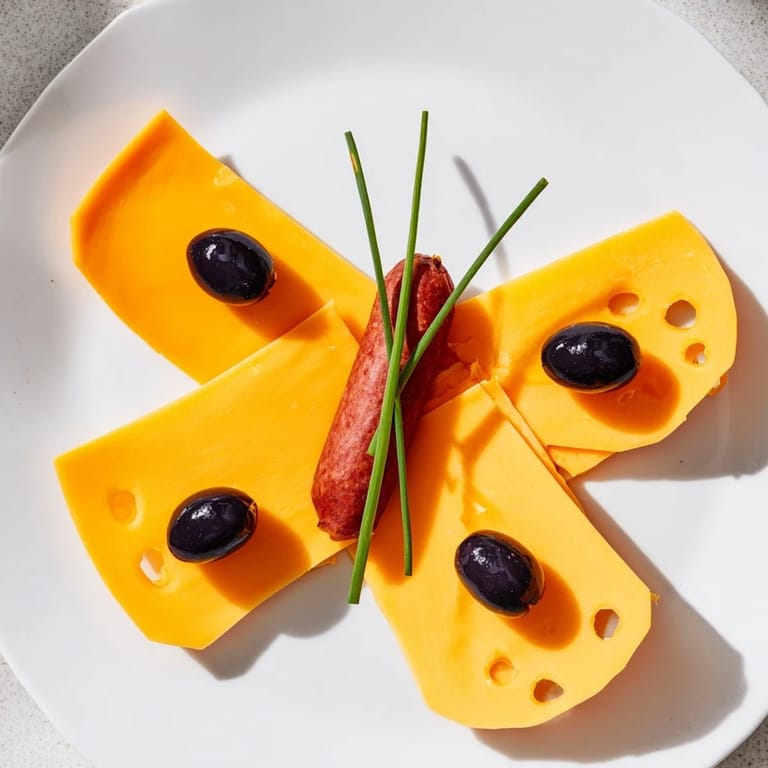
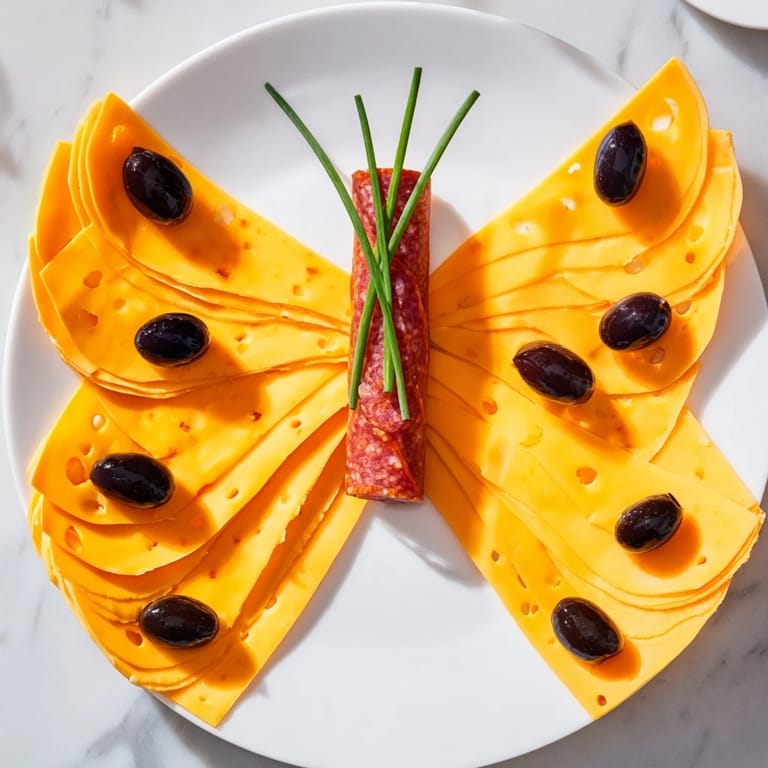
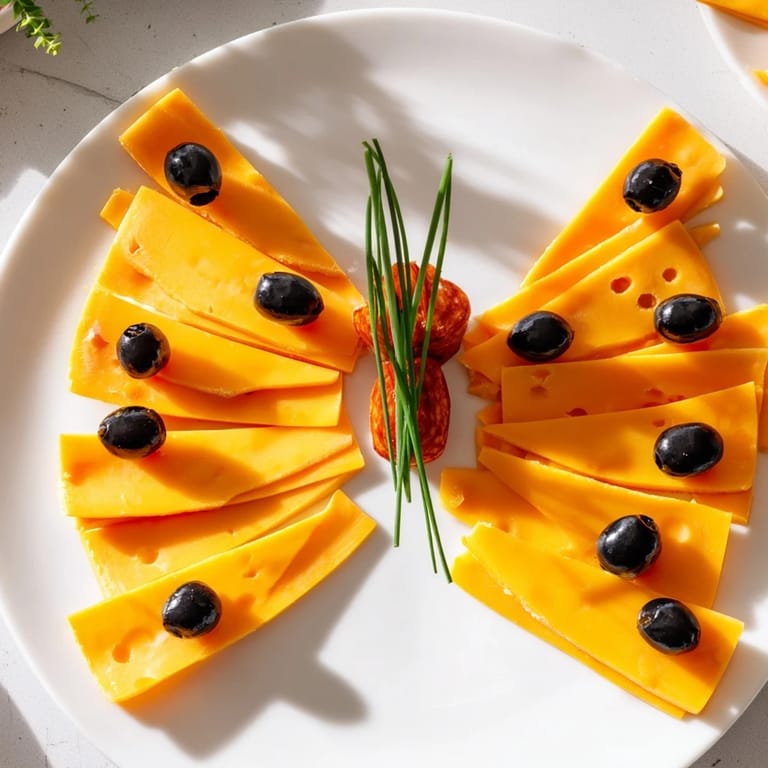
- Lay out your cheddar slices in two fan shapes facing away from the center, like they're about to take flight. Don't worry about perfection; gentle overlaps actually make it look more organic and less cookie-cutter.
- Plant the body:
- Stack your salami rounds in the middle vertically or arrange a single log down the center—this is what holds the whole composition together. Step back and squint; this is where you'll know if it looks like a butterfly or just like lunch.
- Add the markings:
- Scatter your olive slices across the cheese wings in whatever pattern feels right. Some people go for symmetry, others go chaotic; both look wonderful because butterflies in nature don't follow rules either.
- Crown it with antennae:
- Poke your chives or pretzel sticks into the top of the salami body at a gentle angle. This final touch is what transforms it from clever cheese arrangement into something unmistakably alive.
 Save
Save There's something profound about watching people approach food that looks like it took effort when it barely took any time at all. This butterfly sits at that exact intersection where the magic isn't in difficulty but in thoughtfulness, and somehow that's more satisfying than complicated.
Flavor Pairing Thoughts
The salty-sharp combo of salami and aged cheddar naturally complements the brine from the olives, and when someone grabs a piece with all three elements together, there's this tiny moment of balance that feels intentional. If you want to push it further, serve it alongside something acidic like pickled vegetables or a tangy dip—it cuts through the richness and makes people reach for more.
Cheese and Salami Swaps
Orange cheddar is the classic for a reason, but I've had equally beautiful results with Colby Jack (slightly milder and sweeter) or even white aged cheddar if you want a more elegant look. Salami comes in varieties from spicy to mild, so pick one that matches your crowd's heat tolerance. Turkey salami keeps things lighter, and vegetarian versions exist if you're feeding plant-based guests; the geometry works just the same.
Serving and Storage Ideas
Serve it as soon as it's assembled because cheese and salami both soften slightly at room temperature, and the visual sharpness is part of the charm. If you need to prep ahead, build it on a board you can cover and refrigerate, then pull it out about fifteen minutes before serving so nothing is too cold and stiff.
- Offer small crackers or crudités on the side for people who want something to scoop with.
- Make the antennae last so they stay crisp and don't get wilted by the cheese oils.
- If it's a kids' party, warn them the olives have pits and to watch their teeth—or pit them extra carefully yourself.
 Save
Save This recipe is a reminder that cooking doesn't always mean heat and complexity—sometimes it means seeing possibility in simple things and trusting that beauty and taste can arrive together, even when everything takes fifteen minutes.
Recipe Questions & Answers
- → How do you shape the cheddar cheese wings?
Slice the cheddar and fan them out on a platter in two opposing wing shapes to mimic butterfly wings.
- → What is used to create the butterfly's body?
Sliced salami rounds or a salami log are placed vertically in the center to form the body.
- → How are the wing patterns created?
Black olive slices are dotted on the cheddar wings to produce decorative markings.
- → What can be used for the butterfly antennae?
Fresh chives or thin pretzel sticks are inserted atop the salami to resemble antennae.
- → Are there suggestions for ingredient substitutions?
You can substitute turkey or vegetarian salami and mix cheeses like Colby Jack or pepper jack for variation.