 Save
Save There's something magical about the moment when raw carrots transform into silk in a pot, their sweetness deepening as they surrender to heat and coconut cream. I discovered this soup on a grey afternoon when my kitchen smelled like nothing in particular, and I wanted to change that immediately. The spices came together almost by accident, a pinch of this and that from my spice cabinet, but the result was so warming and alive that I've made it the same way ever since. It's the kind of soup that tastes both exotic and deeply comforting, like someone who knows exactly what you need.
I made this for a friend who'd just moved into a new apartment with nothing but boxes and a hunger for something real. She sat on her kitchen counter while I cooked, and by the time the blender finished, the aroma had settled into every corner of that bare space like a welcome home gift. There's power in feeding someone during a transition, and this soup, with its gentle spice and creamy richness, felt exactly right for that moment.
Ingredients
- Olive oil: Just a tablespoon to start the flavor foundation, nothing more needed because the coconut milk brings its own richness.
- Medium onion: Chopped and softened slowly, it becomes the sweet base that carries everything else.
- Garlic cloves: Two is enough to whisper garlic without shouting, especially since ginger will add its own bold presence.
- Carrots: About 600 grams or five medium ones, peeled and sliced so they cook evenly and blend into velvet.
- Small potato: This isn't about potatoes at all, it's about creating body and creaminess when blended, making the soup feel luxurious without cream.
- Vegetable broth: 750 milliliters of it, the foundation that lets everything else shine without competing voices.
- Coconut milk: Full-fat is non-negotiable here, it's where the soul of this soup lives, thick and luxurious and real.
- Ground ginger: One teaspoon of the dried version, or a tablespoon of fresh grated if you want that bright, alive quality.
- Ground coriander: Half a teaspoon to add a subtle citrus undertone that lifts the whole thing.
- Ground cumin: Another half teaspoon for earthiness and warmth that feels like a hug in a bowl.
- Chili flakes: A quarter teaspoon if you want a gentle heat, completely optional if you prefer it mild.
- Salt and black pepper: Taste as you finish, these do the actual balancing work that makes everything sing.
- Fresh cilantro or parsley: A handful chopped, though optional, it adds a brightness that feels almost essential once you taste it.
- Toasted coconut flakes: A sprinkle for texture and a nod to the coconut milk hiding inside.
- Lime juice: A squeeze at the end that somehow makes everything taste more like itself, more alive.
Tired of Takeout? 🥡
Get 10 meals you can make faster than delivery arrives. Seriously.
One email. No spam. Unsubscribe anytime.
Instructions
- Start with heat and patience:
- Warm the olive oil in your pot over medium heat, then add the chopped onion and let it soften for three to four minutes, watching it turn from opaque and sharp to translucent and sweet. You'll smell the sweetness developing before you see the color change.
- Wake up the aromatics:
- Add the minced garlic and ginger, cooking for just one minute until the kitchen fills with that nose-clearing, appetite-starting fragrance that means you're on the right track.
- Build the vegetable foundation:
- Stir in the sliced carrots and diced potato, cooking them together for two to three minutes so they start to get to know each other before the liquid arrives.
- Toast the spices:
- Sprinkle in the coriander, cumin, and chili flakes if you're using them, stirring everything together so the spices coat the vegetables and start releasing their oils into the pot.
- Simmer into tenderness:
- Pour in the vegetable broth, bring it to a boil, then lower the heat, cover the pot, and let it simmer for twenty minutes until the carrots and potato are so soft they practically dissolve when you press them with a spoon. This is when the magic happens and the vegetables become willing participants in becoming soup.
- Invite the coconut:
- Stir in the coconut milk and let it warm through for two to three minutes, being careful not to boil it because boiling breaks something precious in coconut milk, turning it grainy. Just let it become part of the family, swirling and warming.
- Blend into smoothness:
- Remove from heat and use an immersion blender to purée everything into silk, or work in careful batches with a countertop blender if that's what you have, letting the heat and texture do the final transformation.
- Season to your truth:
- Taste and adjust with salt, pepper, and a squeeze of lime juice, remembering that seasoning is personal and what tastes right to you is exactly what's right.
- Finish and serve:
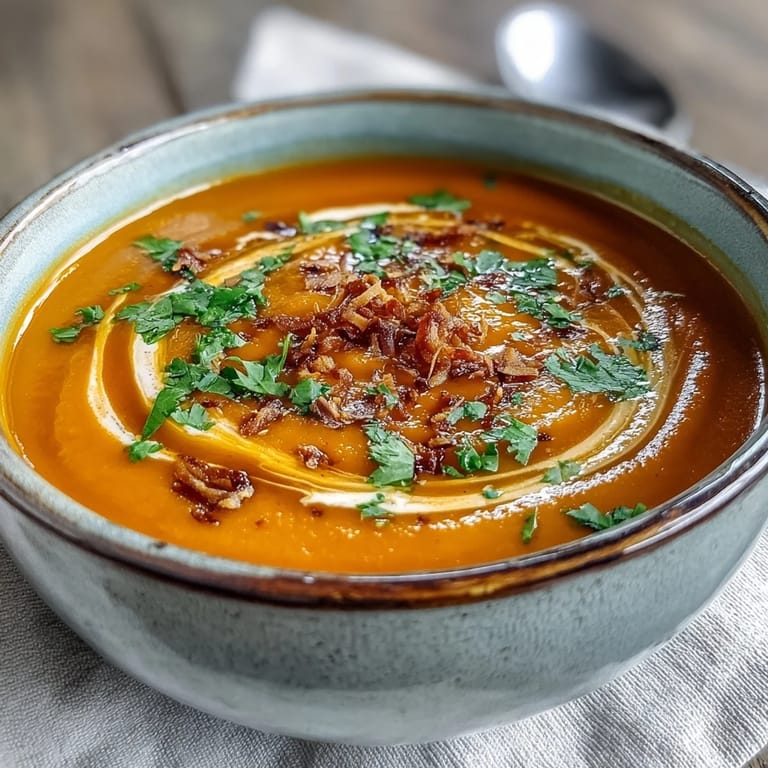
- Ladle into bowls and top with whatever speaks to you, whether that's cilantro for brightness, toasted coconut flakes for texture, or nothing at all if you want to taste the soup in its clearest form.
 Save
Save This soup has a way of becoming something people ask for, something they remember tasting and want to taste again. It's proof that simple ingredients treated with attention become something that feels like a gift.
When to Roast Instead of Simmer
If you have time and oven space, roasting the carrots before simmering them changes the whole flavor profile into something deeper and more caramelized. Toss them in a bit of olive oil, spread them on a sheet pan, and roast at 400 degrees for twenty minutes until the edges start to brown and the sugar in the carrots concentrates and darkens. Then add those roasted carrots to your soup instead of raw ones, and the whole thing tastes like it took twice as long to make. The sweetness becomes more sophisticated, less bright, more like caramel living in cream.
Variations That Feel Like New Discoveries
A chopped apple added with the vegetables brings a subtle sweetness that plays against the spices in a way that feels almost secret, like you discovered something the original recipe didn't know about itself. You could also add a handful of spinach or kale in the final minute of cooking, letting it soften just barely before blending, for a soup that's somehow both richer and lighter at once. Some people swear by adding a tablespoon of peanut butter for depth, and while it sounds unusual, it actually works because the earthiness complements the coconut and spice in unexpected ways.
What to Serve Alongside
This soup wants accompaniment, something to anchor it and make a meal. Crusty bread torn into pieces and dipped into the bowl is the obvious choice, but steamed jasmine rice makes it feel like a complete dish, each spoonful mixing soup and rice into something more substantial. You could also serve it with warm naan or even over rice in a shallow bowl, letting the soup soak into the grain and create something almost risotto-like.
- A squeeze of fresh lime juice over the top right before eating brightens everything and adds a finishing touch that tastes intentional.
- Toasted coconut flakes scattered on top add texture that matters, the small crunch against the smooth soup.
- A pinch of fresh cilantro makes it feel like something you'd order at a restaurant, not just something you made at home.
 Save
Save This soup is proof that the simplest ingredients, treated with attention and spiced with intention, become something that nourishes more than just hunger. Make it for yourself when you need comfort, or make it for someone else when you want them to know they matter.
Recipe Questions & Answers
- → Can I make this soup ahead of time?
Absolutely. This soup actually develops deeper flavors when made ahead and stored in the refrigerator for up to 3 days. The texture remains perfectly smooth when reheated gently.
- → Is this soup freezer-friendly?
Yes, it freezes beautifully. Cool completely before transferring to airtight containers. It will keep well in the freezer for up to 3 months. Thaw overnight in the refrigerator before reheating.
- → What can I use instead of coconut milk?
Heavy cream creates a similar richness, or you can use cashew cream for a dairy-free alternative. For a lighter version, replace half the coconut milk with additional vegetable broth.
- → How do I achieve the smoothest texture?
Simmer vegetables until completely tender—they should easily break apart with a fork. Blend thoroughly with an immersion blender, taking extra time to ensure no lumps remain. A countertop blender works even better for ultra-smooth results.
- → Can I add protein to make it a complete meal?
Certainly. Stir in cooked red lentils during the final minutes, or top with toasted chickpeas and pumpkin seeds. Pan-seared tofu cubes or shredded chicken also work well as garnishes.