 Save
Save I still remember the first time I truly understood French hospitality—it wasn't through a formal dinner, but through a simple cheese board served at a tiny bistro tucked away on Rue de Rivoli. The owner, Madame Laurent, arranged a few perfect ingredients with such care that it felt like a love letter on a plate. There were no fancy techniques or complicated steps, just the quiet confidence of someone who knew that good food needs nothing more than quality and intention. That afternoon, I learned that elegance isn't about excess; it's about knowing exactly what matters and letting it shine.
Years later, I recreated that board for friends on a Saturday evening, and something magical happened. As people built their own little bites—a sliver of Brie with fig, a crisp baguette with Comté and mustard—the conversation deepened. Nobody checked their phones. Nobody rushed through. That's when I realized this simple platter had become my go-to answer for 'how do I make people feel welcomed and cared for without spending hours in the kitchen?'
Ingredients
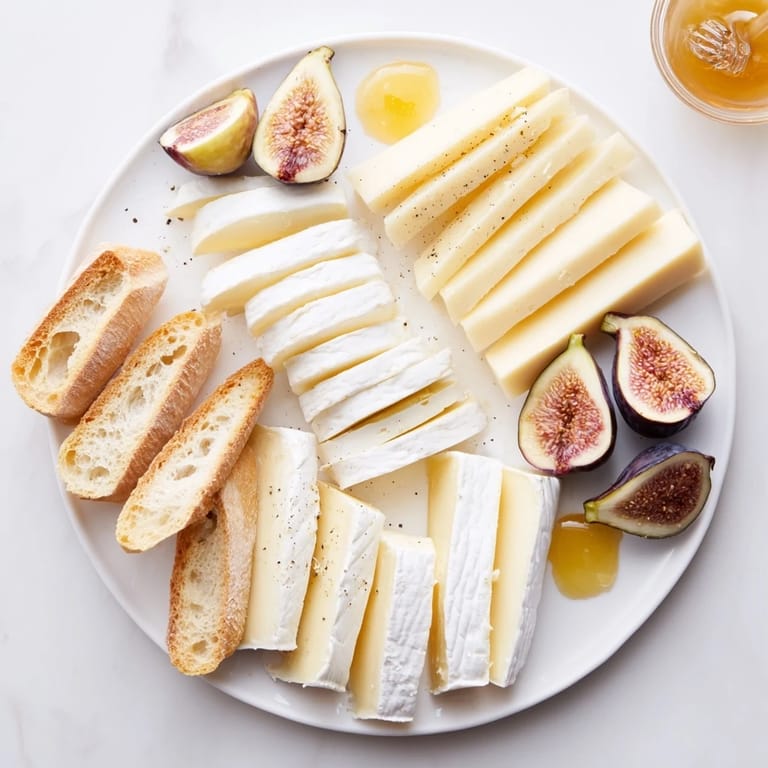
- 2 long fresh French baguettes: The foundation of everything. Get them from a bakery that actually knows what they're doing—you want that crispy exterior and tender, open crumb inside. Slice them no more than an hour before serving, or they'll start to harden.
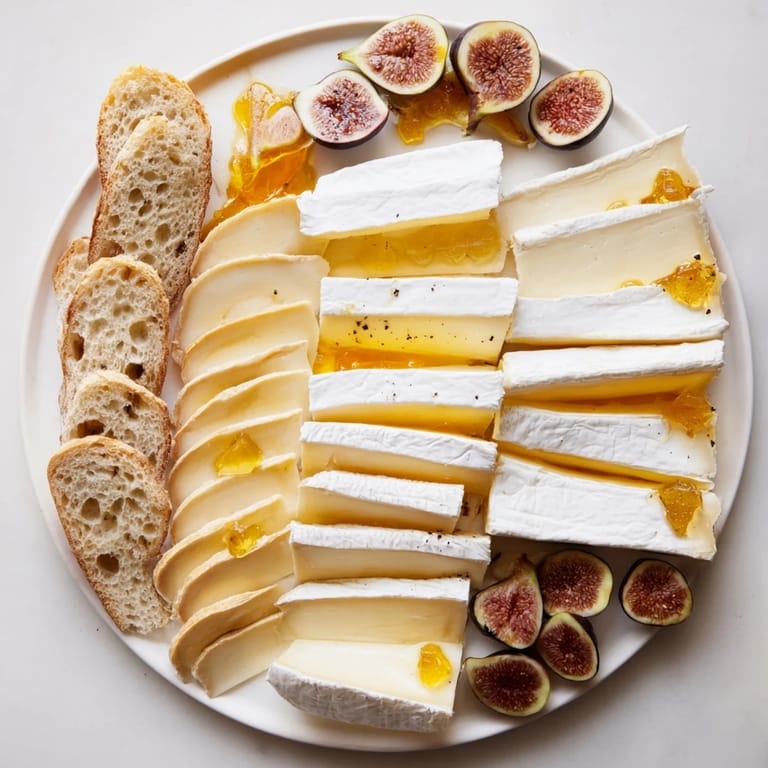
- 150 g Brie cheese, sliced and fanned: This is the creamy, approachable heart of the board. The slight warmth of your kitchen will soften it just enough to spread, so don't pull it from the fridge too early. When you fan the slices, they catch the light in the most elegant way.
- 150 g Comté cheese, sliced and fanned: Nutty, complex, and substantial—it's the sophisticated voice on the board. Comté ages beautifully and has enough character to stand on its own or paired with that whole grain mustard.
- 100 g Chèvre (goat cheese), sliced: Tangy and delicate. This one's for the adventurous eaters at your table, and honestly, it's the first thing to disappear.
- 12 fresh figs or grapes: The natural sweetness here is crucial—it's your counterpoint to the salty, rich cheeses. Figs feel more luxurious, but grapes work beautifully if that's what you have.
- 50 g unsalted butter, softened: This should be just soft enough to spread with a small knife. If it's cold, it'll tear the delicate bread. If it's too soft, it's messy. Room temperature is the sweet spot.
- 2 tbsp high-quality honey: Not just any honey—get something good. Acacia or wildflower, something with complexity. This is your touch of pure indulgence.
- 1 tbsp whole grain Dijon mustard: This is the secret weapon that ties everything together. The little seeds give texture and that sophisticated bite that makes people say 'what is that?'
- Flaky sea salt and freshly ground black pepper: Season thoughtfully, not generously. You want people to taste the cheese, not the salt.
Tired of Takeout? 🥡
Get 10 meals you can make faster than delivery arrives. Seriously.
One email. No spam. Unsubscribe anytime.
Instructions
- Slice the baguettes with intention:
- Using a sharp bread knife, cut your baguettes on the diagonal into slices about a quarter-inch thick. The angle matters—it creates those elegant elongated shapes. As you slice, you'll hear that satisfying crackle of the crust. Don't slice too thin or they'll break when people try to build their bites. Arrange them around the edge of your platter, leaving plenty of breathing room. Think of it like composing a painting where negative space is just as important as what you're putting down.
- Fan the cheeses like a master:
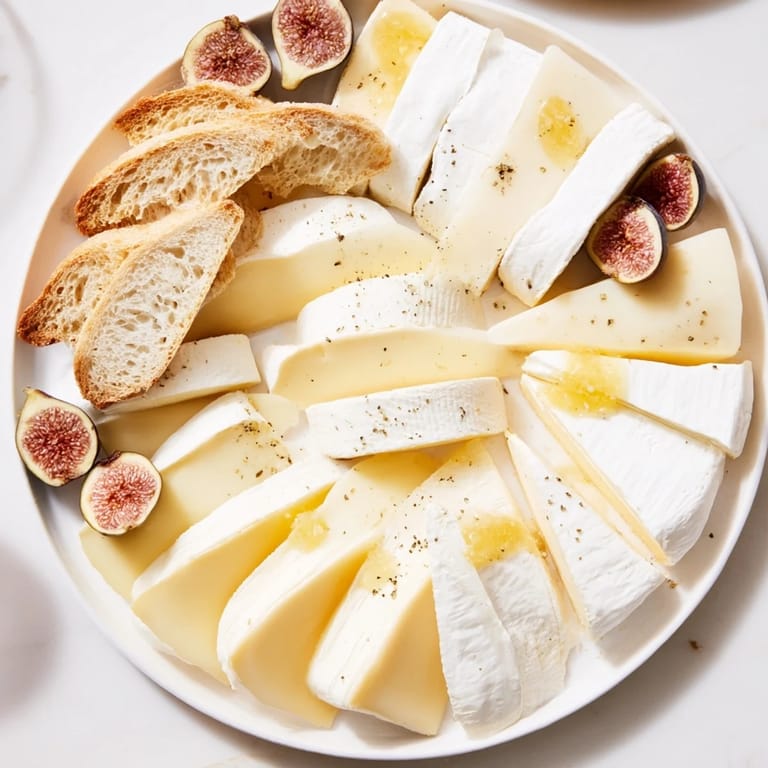
- Start with your Brie. Slice it cleanly and lay each slice at a slight angle, overlapping just barely, so they fan out like a peacock's tail. Do the same with the Comté, keeping it separate so the flavors and colors create distinct zones on the platter. Your Chèvre can be simpler—just a few neat slices beside the other cheeses. Take a step back and look at it. Does it feel intentional? That's the moment you know you're onto something.
- Nestle the fruit like little jewels:
- Small clusters of figs or grapes should go in the gaps between cheese and bread. These aren't just flavor additions—they're visual anchors. Fresh figs especially look like tiny works of art, so give them space to be seen and admired.
- Place your condiments with confidence:
- If you have small ramekins, that's lovely—the butter in one, honey in another, mustard in its own. But honestly? A small dollop of each directly on the platter, spaced intentionally, is just as beautiful and more intimate. It invites people to be a little messier, a little more adventurous.
- The final flourish:
- A whisper of flaky sea salt over the cheeses—just enough that you can see it catching the light. A few grinds of black pepper. If you have fresh thyme or rosemary, a small sprig adds that bistro elegance. Step back and look. Your platter should feel abundant yet calm, fancy yet approachable.
- Serve and encourage exploration:
- Bring it to the table while everything is still at its best and encourage your guests to build their own bites. Hand them small plates and watch them create their own versions of what you've imagined. That's when the magic really happens.
 Save
Save One evening, a guest who claimed to 'not really like cheese' ended up eating half the Comté and asking for the recipe for my 'special honey butter.' There was no special honey butter—just good ingredients treated with respect. That moment crystallized why I keep coming back to this board: it's proof that simple, thoughtful food can reach people in ways that complexity never will.
The Art of Arrangement
The plating here isn't random, though it might look effortless. In French bistro culture, there's a philosophy that every element should earn its place. The baguette anchors the composition, the cheeses create rhythm through their different colors and shapes, and the fruit adds pops of color and sweetness. Think about how your eye travels across the platter. Does it flow naturally? Can someone see all their options? A good cheese board should feel like a landscape—varied, interesting, with plenty to discover. I learned this by doing it wrong first: cramming things too tightly, using too many varieties, making it feel cluttered instead of composed. Less is always more here.
Wine Pairing and Serving
A chilled Sancerre, Champagne, or even a crisp Sauvignon Blanc transforms this from a nice snack into an experience. The acidity cuts through the richness of the cheese and makes you want another bite. I've also had success with a light Pinot Noir if your guests lean that direction. The key is keeping everything cold—serve your platter on a chilled plate if possible, and don't let it sit out for more than 45 minutes before the flavors and textures start to fade. The bread will lose its crisp, the cheese will warm and become greasy, and you'll want to have eaten it all anyway.
Making It Your Own
This is a template for a feeling, not a rigid rule. Swap the Comté for Gruyère. Use sliced pears instead of figs. Add some marcona almonds or candied walnuts. The moment you understand the bones of the composition—bread, cheese, fruit, condiments, negative space—you can play with it forever. I've made this board with what I had on hand a hundred times, and it's never been the same twice, yet it's always felt right. That's the beauty of a French approach to cooking: it's about knowing the principles so deeply that you can break the rules and still land somewhere elegant.
- Stone fruits like apricots and peaches work beautifully in summer versions.
- A few candied pecans or walnuts add a textural surprise without stealing the show.
- Try a smear of fig jam or quince paste for another dimension of flavor.
 Save
Save This board has become my answer to almost everything—too busy to cook, need to impress last minute, want to gather people around something beautiful. It whispers French sophistication while screaming 'I have time for you, I care about this moment.' That might be the real recipe here.
Recipe Questions & Answers
- → What cheeses are used in this platter?
The platter includes Brie, Comté, and chèvre (goat cheese), each sliced and arranged for visual appeal.
- → How should the bread be prepared?
Slice the fresh French baguettes diagonally into thin, even pieces to create a beautiful arrangement on the platter.
- → Can the accompaniment fruits be substituted?
Yes, figs or grapes can be replaced with sliced pears or apples for seasonal variation.
- → What is the purpose of the honey and mustard on the platter?
Honey adds a touch of sweetness while whole grain Dijon mustard introduces subtle tang, complementing the cheese assortment.
- → How can I elevate the presentation further?
Garnish with fresh herbs like thyme or rosemary and serve alongside chilled Sancerre or Champagne for a true bistro feel.