 Save
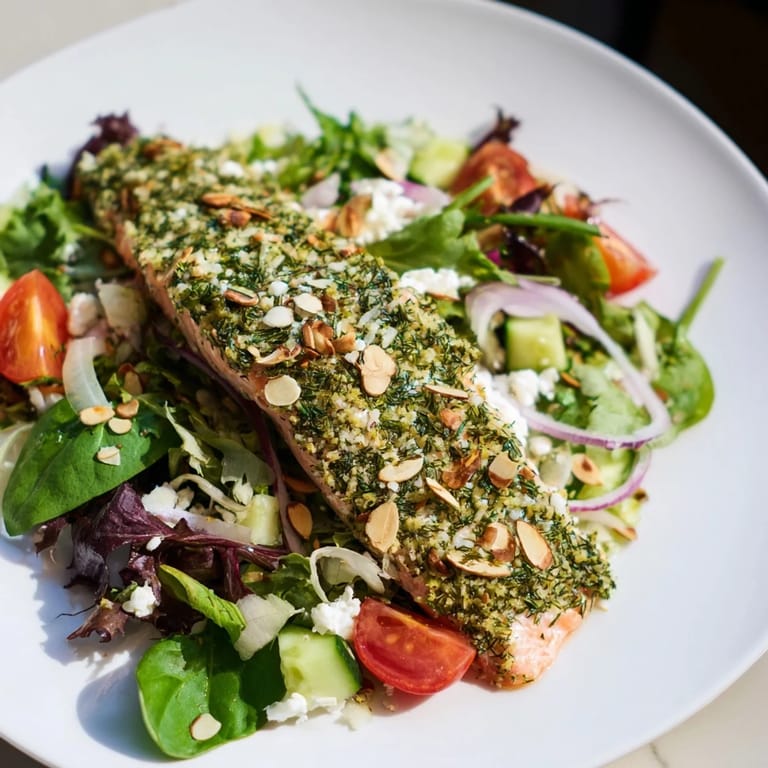
Save There's something magical about the moment salmon hits a hot oven and the kitchen fills with the aroma of fresh herbs and roasting fish. I discovered this particular combination on a weeknight when I was tired of the same old dinner routine and decided to layer everything I loved onto one plate—warm, flaky salmon cradled in cool, crisp greens. It turned out to be the kind of meal that feels both comforting and elegant, simple enough for a Tuesday night but impressive enough to serve friends. The herb crust keeps the fish moist while that zesty vinaigrette brings everything into balance. Now it's become my go-to when I want something nourishing without spending hours in the kitchen.
I made this for a friend who'd just moved and was eating cereal for dinner, standing at her kitchen counter with nothing unpacked but her silverware. Watching her face light up when she tasted that first bite—the herb-crusted salmon giving way to tender flesh, the greens still crisp underneath—reminded me why I love cooking for people. It wasn't fancy, but it felt like care on a plate.
Ingredients
- Salmon fillets (4, about 150g each), skinless: Look for fillets that are roughly uniform in thickness so they cook evenly; if they're thicker on one end, gently press them flat before seasoning.
- Olive oil (2 tbsp for the herb paste, plus 3 tbsp for the vinaigrette): Use a good quality oil you actually enjoy tasting, as it makes a real difference in the raw vinaigrette.
- Dijon mustard (2 tsp for salmon, 1 tsp for vinaigrette): This emulsifies the dressing and adds that subtle sharpness that makes people ask what the secret ingredient is.
- Lemon juice (1 tbsp) and white wine vinegar (1 tbsp): Fresh lemon is best, but bottled works fine if that's what you have; the acid brightens everything.
- Fresh herbs (parsley, dill, chives, 1 tbsp each): Chop them right before using so they don't lose their color and fresh punch; dried herbs will work but use about one-third the amount.
- Garlic powder (1 tsp): This distributes more evenly than minced garlic and won't burn in the oven.
- Mixed salad greens (120g or 4 cups): Use whatever makes you happy—peppery arugula, tender spinach, crisp romaine, or a mix; just avoid iceberg unless you love the texture of water.
- Cherry tomatoes (1 cup, halved): Halving them by hand (not quartering in a food processor) keeps the seeds and juices intact where they belong.
- English cucumber (1/2, sliced): The seedless variety stays crisp longer and doesn't water down your salad.
- Red onion (1/4, thinly sliced): The thin slices mellow slightly as they sit, so don't be afraid of the initial sharpness.
- Walnuts or almonds (1/4 cup, toasted): Toasting them yourself for just five minutes in a dry pan transforms them from bland to nutty; store-bought roasted works if you're short on time.
- Feta cheese (60g or 1/4 cup, crumbled): The salty, tangy contrast against the salmon is worth keeping, but skip it if dairy isn't your thing.
- Honey or maple syrup (1 tsp): Just a touch to balance the acidity and help the dressing coat the greens evenly.
- Salt and pepper: Taste as you go; salted olive oil already in the recipe means you need less than you'd think.
Tired of Takeout? 🥡
Get 10 meals you can make faster than delivery arrives. Seriously.
One email. No spam. Unsubscribe anytime.
Instructions
- Heat your oven and prep:
- Set your oven to 200°C (400°F) and line a baking sheet with parchment paper while it comes to temperature. This only takes a few minutes, but it's worth doing first so nothing catches you off guard once the salmon hits the heat.
- Build the herb crust:
- In a small bowl, stir together the olive oil, Dijon mustard, lemon juice, parsley, dill, chives, garlic powder, salt, and pepper until you have a paste that looks like wet sand with green flecks. You'll know it's right when it clings to a spoon instead of running off.
- Season your salmon:
- Pat the salmon fillets dry (this helps the herb paste stick), then arrange them on your prepared sheet and spread the herb mixture across the top of each fillet in an even layer. Don't be shy—it all contributes to flavor and forms a protective crust.
- Bake until just cooked through:
- Slide the sheet into the oven for 12 to 15 minutes, depending on the thickness of your fillets; the salmon is ready when it's opaque inside and flakes gently with a fork but still has a slight shimmer of moisture. Overcooked salmon turns mealy, so watch it closely toward the end.
- Build your salad bed:
- While the salmon bakes, combine your greens, halved tomatoes, cucumber slices, thinly sliced red onion, nuts, and feta (if using) in a large bowl, tossing gently so nothing gets bruised. The greens can sit like this without wilting for a good ten minutes, so no stress if the salmon runs a minute or two over.
- Whisk the vinaigrette:
- In a small bowl, whisk together the extra-virgin olive oil, white wine vinegar or lemon juice, honey or maple syrup, and Dijon mustard until slightly emulsified. Taste it and adjust the salt and pepper; it should taste balanced and bright, not too sharp and not too sweet.
- Dress and plate:
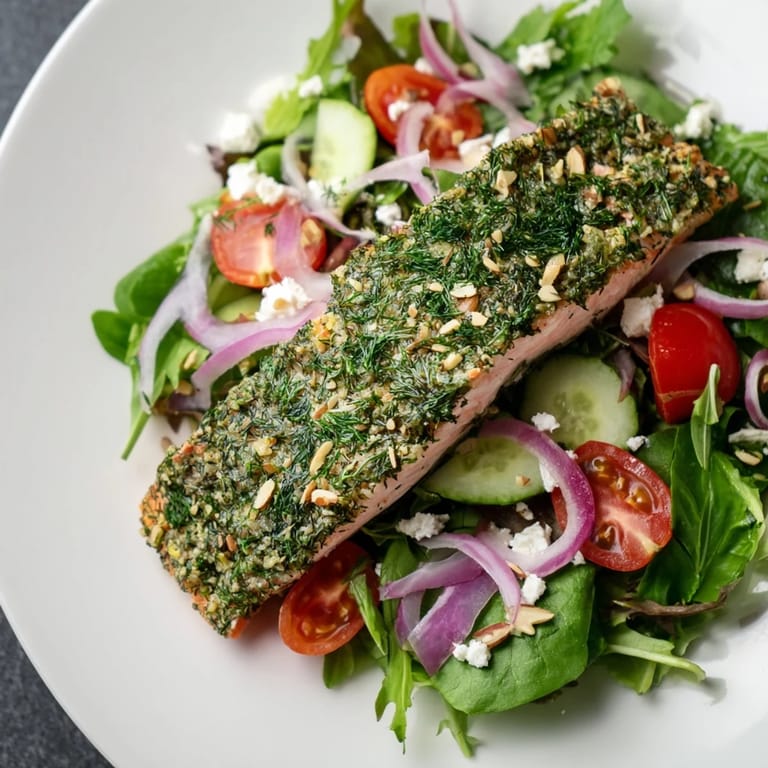
- Pour the vinaigrette over your salad and toss gently with your hands or salad tongs until every leaf is coated without bruising the greens. Divide the salad among four plates, top each with a warm herb-crusted salmon fillet, and serve immediately while the fish is still warm.
 Save
Save The first time I made this for myself alone, I sat down expecting a quick lunch and found myself lingering over it, taking time between bites. That's when I realized the best meals aren't always about impressing anyone else—sometimes they're about showing yourself that you deserve something thoughtful for dinner.
Why the Herb Crust Matters
I used to bake salmon plain with just salt and pepper, and it was fine, but the herb crust changed everything. Those fresh herbs don't just add flavor—they create a protective layer that keeps the heat from drying out the delicate flesh underneath. The mustard in the paste acts as an emulsifier, helping the oil cling to the fish so the herbs stay put instead of falling off. It's a small technique that turns a simple piece of fish into something memorable.
Customizing Your Greens and Toppings
This salad is forgiving in the best way. Some nights I add sliced avocado for creaminess, other times I toss in cooked quinoa to make it heartier. I've stirred in shredded beets when I had them, added roasted chickpeas for extra protein, or layered in thinly sliced radishes for a peppery crunch. The herb-crusted salmon anchors everything, so you can build the rest around whatever you're craving or what's actually in your fridge.
Pairing and Leftovers
A crisp Sauvignon Blanc pairs beautifully with this, or sparkling water with a squeeze of lemon if you're skipping wine. If you somehow have salmon left over (which hasn't happened to me yet, but theoretically), it's delicious cold the next day, though the texture shifts slightly. I actually prefer to save the vinaigrette separate and use it with a fresh batch of greens rather than trying to reheat the salad itself.
- Make the herb paste up to a few hours ahead and store it covered in the fridge, then spread it on the salmon just before baking.
- The vinaigrette keeps for three or four days in a jar in the fridge, so you can have it on hand for weeknight salads.
- If you can't find English cucumber, regular cucumber works fine but drain off the excess liquid so your salad doesn't get soggy.
 Save
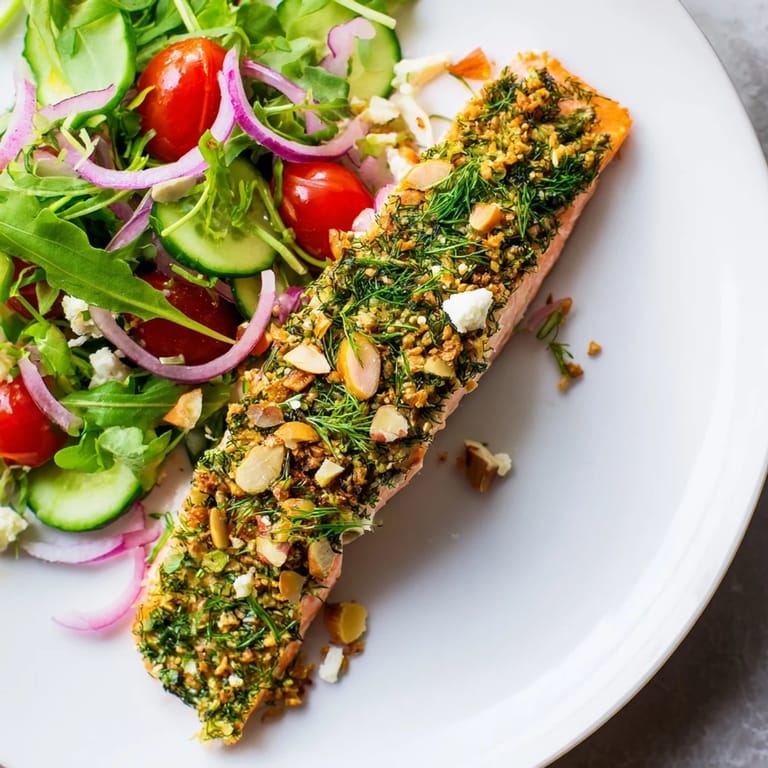
Save This meal reminds me why I cook at all—not for perfection, but for those moments when the table feels full of something good. It's the kind of dish that tastes like you actually care.
Recipe Questions & Answers
- → What herbs are used for the crust?
Fresh parsley, dill, and chives combine with garlic powder and Dijon mustard to create a flavorful herb crust.
- → Can I substitute salmon with another fish?
Yes, trout or other firm white fish can be used as an alternative without compromising taste or texture.
- → What salad greens work best for this dish?
A mix of arugula, spinach, and romaine provides a crisp base with varied textures and flavors.
- → How is the vinaigrette prepared?
The vinaigrette is whisked from extra-virgin olive oil, white wine vinegar or lemon juice, honey or maple syrup, Dijon mustard, and seasoned with salt and pepper.
- → Are nuts mandatory in the salad?
Nuts like toasted walnuts or almonds are optional but add a nice crunch and depth to the salad.
- → What is the cooking time for the salmon?
The salmon bakes for 12 to 15 minutes at 200°C (400°F) until it flakes easily with a fork.