 Save
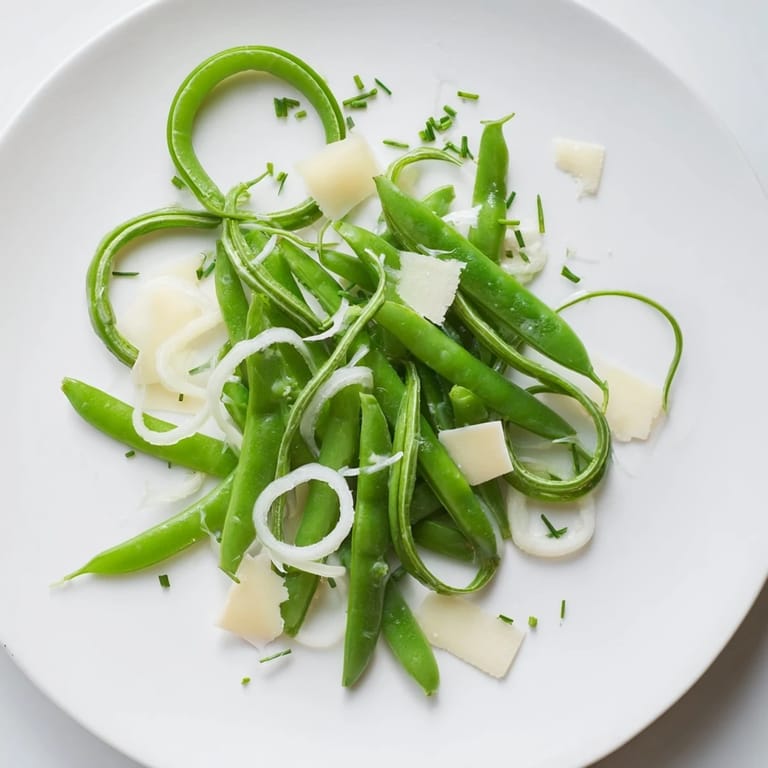
Save There's something almost architectural about arranging vegetables into those long, winding tangles on a plate—it feels less like cooking and more like creating a small, edible garden. The English Ivy came to life one spring afternoon when I was tired of salads that felt monotonous, so I grabbed whatever bright greens were in the crisper and decided to blanch them until they were just tender enough to coil across a platter like vines climbing a wall. The sharp white cheddar was a last-minute thought, a way to add bite and richness without drowning everything in heavy dressing, and somehow it all clicked.
I made this for a dinner party where everyone arrived expecting something heavy, and instead they got this bright, almost playful plate that somehow felt both sophisticated and completely unpretentious. One guest asked if the vegetables were arranged that way because it was "trendy," and I had to laugh—it was really just the most natural way to serve them, like they wanted to be woven together.
Ingredients
- Snap peas: These are your stars here, sweet and snappy; look for ones that are bright green and feel firm to the touch, and trim the ends so they cook evenly.
- Green beans: They provide earthiness and substance; blanching them alongside the snap peas keeps the cooking time synchronized and the flavors harmonious.
- Sharp white cheddar: Don't reach for mild—you need that tang and bite to stand up to the bright acidity of the dressing and the sweetness of the vegetables.
- Shallot: Thinly slice it raw to add a gentle onion note without overwhelming the delicate greens.
- Extra virgin olive oil: Use one you actually like tasting, because there's nowhere to hide here; it's one of only a handful of ingredients doing the flavor work.
- Fresh lemon juice: Bottled will work in a pinch, but fresh juice from a real lemon makes the entire dressing brighter and more alive.
- Dijon mustard: This is your emulsifier and your flavor anchor, bringing a subtle warmth that doesn't announce itself loudly.
- Honey: Just enough to round out the acidity and give the dressing a whisper of sweetness that balances the sharp cheese.
- Fresh chives: These shouldn't be an afterthought; they add a gentle onion whisper and beautiful green flecks that make the whole thing feel finished.
Tired of Takeout? 🥡
Get 10 meals you can make faster than delivery arrives. Seriously.
One email. No spam. Unsubscribe anytime.
Instructions
- Blanch your vegetables:
- Bring a large pot of salted water to a rolling boil—the water should taste like the sea. Drop in your snap peas and green beans together and let them cook for just two minutes; you're looking for them to turn that brilliant, almost glowing shade of green. Set a timer because one minute more and they start to soften in a way you don't want.
- Shock them in ice water:
- Have a bowl of ice water ready before you even drop the vegetables into the pot; the moment those two minutes are up, fish them out with a slotted spoon and plunge them into the ice bath. This stops the cooking instantly and locks in that crisp texture and bright color. Once they're cool, drain them well and pat them dry with a clean kitchen towel.
- Build your dressing:
- In a large bowl, whisk together the olive oil, lemon juice, Dijon mustard, honey, salt, and pepper until it comes together into something silky and emulsified. Taste it before you add the vegetables; you want it to be bright and punchy, with enough salt that it makes you pause and think "yes, that's right."
- Toss with intention:
- Add the blanched vegetables and the sliced shallot to the bowl and toss gently but thoroughly, making sure every piece gets kissed by that dressing. Don't be rough about it—these vegetables are delicate, and you want them to feel cared for.
- Arrange like vines:
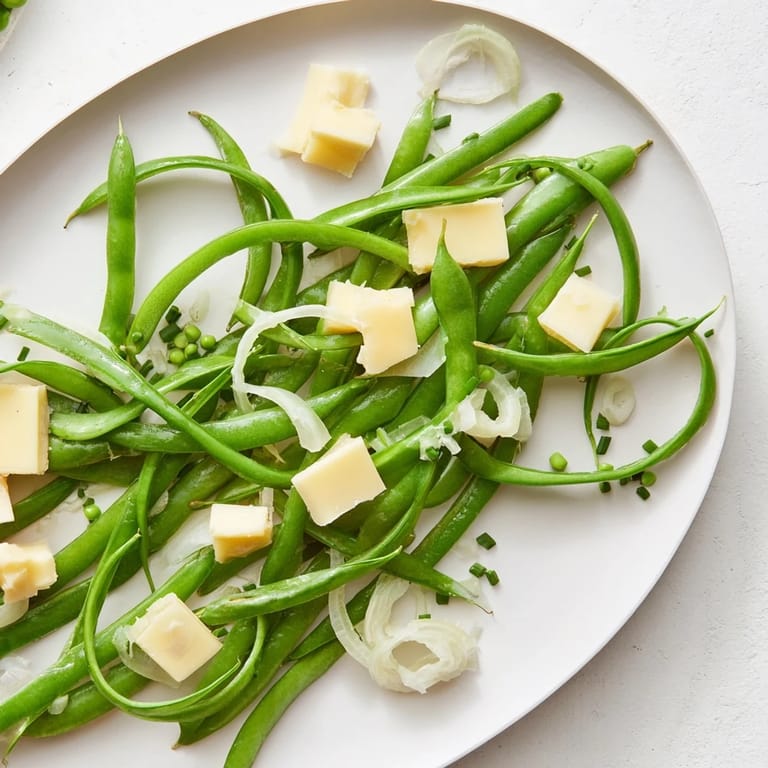
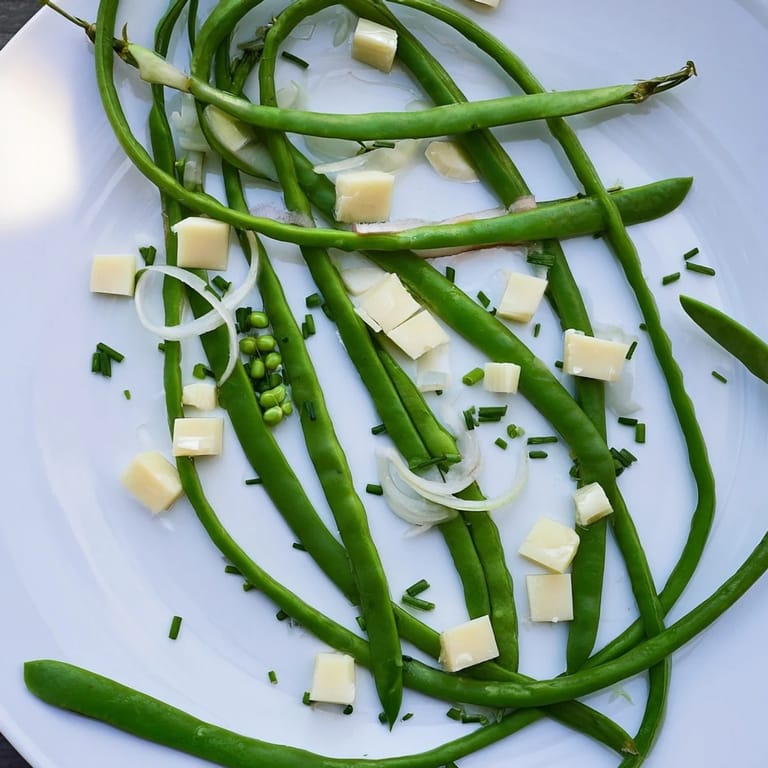
- Transfer everything to a serving platter and arrange the vegetables in long, winding lines, letting them coil and overlap like ivy climbing across a wall. Scatter the cheddar cubes over and between the vegetables, letting some nestle into the spaces.
- Finish and serve:
- Sprinkle with fresh chives and add microgreens if you have them, then serve immediately while everything is still at its peak—cold but not refrigerated, bright and alive.
 Save
Save There was one moment when I was arranging this salad and my partner walked by and just stopped, watching me weave the vegetables back and forth across the plate. They didn't say anything at first, just stood there, and then said, "That looks like something you'd see at a restaurant that's hard to get a reservation for." It was one of those small kitchen moments that reminded me why I love cooking—not because of technique or complexity, but because sometimes you can take simple, honest ingredients and arrange them in a way that makes people pause.
Why This Salad Feels Special
There's a particular magic in salads that are both light and substantial, and this one walks that line beautifully. The blanching step feels like a small act of care—it takes five minutes and transforms raw vegetables into something more refined without making them mushy or losing their essential brightness. When you taste it, you get sweetness from the vegetables, tang from the cheese and dressing, and a textural contrast that keeps every bite interesting.
Playing With Flavor
The sharpness of the white cheddar is really the linchpin here; it's strong enough to stand up to the acidity in the dressing but doesn't overpower the delicate vegetables. If you wanted to shift things around, you could substitute goat cheese for a more tangy direction or feta for something a bit earthier, but the cheddar is what brings this particular version into focus. The honey in the dressing is doing quiet work too, just enough to smooth out the mustard and lemon without making anything sweet.
Serving and Storage
This is best served immediately after assembly, while the vegetables are still crisp and cold and the cheese hasn't started to soften too much into the warmth of the room. If you're making it ahead for a gathering, blanch and chill the vegetables, prepare the dressing separately, and wait until just before serving to dress and arrange everything. For extra texture and richness, consider toasted walnuts or almonds scattered over the top, or finish with a handful of fresh pea shoots if you can find them.
- A crisp Sauvignon Blanc or dry Riesling pairs beautifully, cutting through the richness of the cheese while echoing the brightness of the vegetables.
- This salad works equally well as a light lunch on its own or as a supporting player alongside grilled fish or chicken at dinner.
- Leftovers will keep in the refrigerator for a day or two, though the vegetables lose some of their snap—eat any remainder cold straight from the bowl, not rearranged on a plate.
 Save
Save This salad has become the one I make when I want to cook something that feels both restful and a little bit show-offy, which is maybe the best place any recipe can land. It's simple enough that you can make it on a weeknight without thinking, but pretty enough that you'd be proud to serve it to people you're trying to impress.
Recipe Questions & Answers
- → How do I keep snap peas and green beans crisp?
Blanch them quickly in boiling salted water for 2 minutes, then transfer immediately to ice water to stop cooking and preserve crunch.
- → Can I substitute the sharp white cheddar?
Yes, try goat cheese or feta for a tangier flavor and creamy texture.
- → What dressing ingredients complement this salad?
A blend of extra virgin olive oil, fresh lemon juice, Dijon mustard, honey, salt, and pepper creates a balanced tangy and slightly sweet dressing.
- → Are there any suitable garnish options?
Fresh chives add an oniony note, while microgreens or pea shoots provide a delicate, fresh garnish.
- → What wine pairs well with this salad?
A crisp Sauvignon Blanc or a dry Riesling complements the fresh, sharp flavors perfectly.