 Save
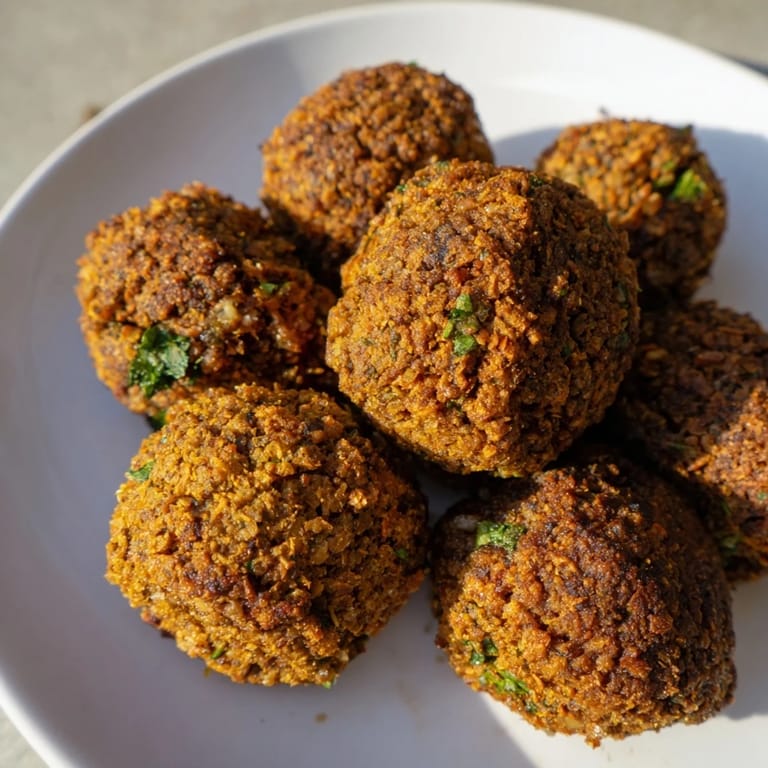
Save My first batch of falafel nearly burned because I got distracted talking to my neighbor over the fence. The oil popped and hissed, sending golden crumbs everywhere, but somehow those imperfect, slightly scorched balls were the best ones—crispy outside, impossibly fluffy within. That kitchen mishap taught me that falafel isn't finicky; it's forgiving. Now whenever I make them, I think about how the smell of cumin and fresh cilantro hitting hot oil is basically a time machine to every Middle Eastern table I've ever sat at.
I made these for my friend's potluck once and watched them disappear before anyone even sat down. People were standing in the kitchen, plucking them warm from the paper towels, dipping them in tahini, asking for the recipe with their mouths full. That's when I realized falafel isn't just food—it's permission to gather and eat without ceremony.
Ingredients
- Dried chickpeas, 1 cup: Don't use canned here; they're too wet and will fall apart in the oil. Soaking dried ones overnight gives you control and a lighter, airier texture that canned chickpeas can't match.
- Fresh parsley and cilantro, 1 cup and 1/2 cup packed: These are non-negotiable. They're what makes falafel taste alive and herbaceous rather than just spiced.
- Onion and garlic, 1 small onion and 3 cloves: Finely chopped in the food processor, they dissolve into the mix and add depth without announcing themselves.
- Ground cumin and coriander, 2 tsp and 1 tsp: Toast them in your palm if you want to wake them up, or use them straight—both work, but the warmth intensifies the aroma.
- Cayenne pepper, 1/2 tsp optional: Add it if you like heat, skip it if you don't; the dish stands fine either way.
- Baking powder, 1 tsp: This is the secret to fluffiness; it makes them pillowy inside.
- All-purpose flour, 3 tbsp: It's a binder and nothing more; use chickpea flour if you're avoiding gluten, and honestly, they're just as good.
- Vegetable oil for frying: Use something neutral that can handle heat—peanut, canola, or sunflower oil all work beautifully.
Tired of Takeout? 🥡
Get 10 meals you can make faster than delivery arrives. Seriously.
One email. No spam. Unsubscribe anytime.
Instructions
- Soak and prepare the chickpeas:
- Rinse your dried chickpeas under cold water, then cover them generously with cold water in a large bowl and let them sit overnight or for up to 12 hours. When you drain them the next day, pat them dry with paper towels—excess moisture will make your falafel dense and greasy. This step feels like waiting, but it's where the magic starts.
- Pulse the base mixture:
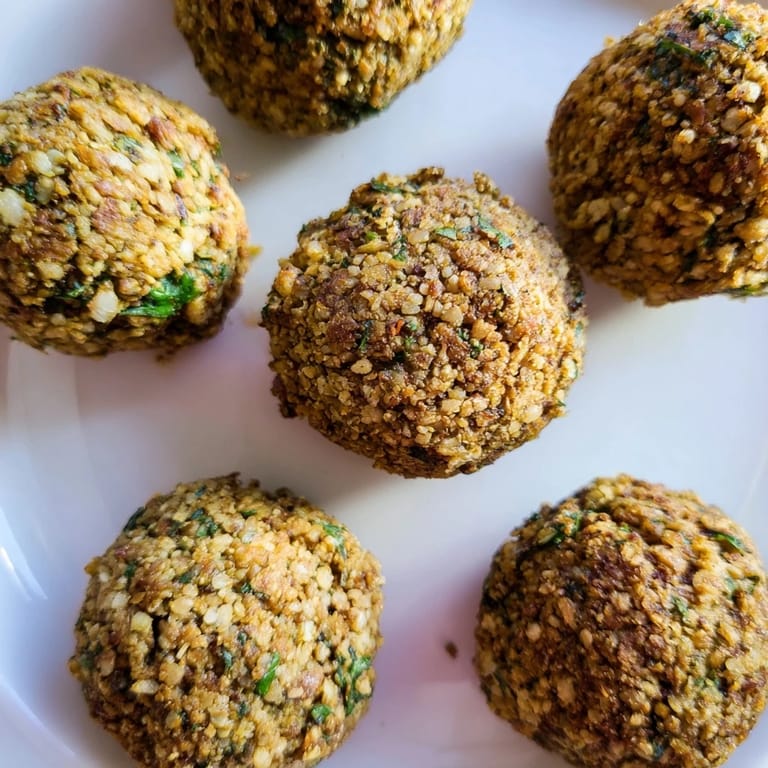
- Add soaked chickpeas, chopped onion, garlic, parsley, and cilantro to your food processor and pulse until everything comes together into a coarse, sand-like mixture that holds together when you squeeze it. You want texture here, not a smooth paste; stop before it looks like hummus or you'll end up with dense, heavy falafel.
- Add the seasonings and bind:
- Sprinkle in cumin, coriander, cayenne, baking powder, salt, black pepper, and flour, then pulse gently to distribute everything evenly. Give the bowl a scrape and do a quick hand mix to make sure no dry spice pockets hide at the bottom.
- Form into balls:
- Wet your hands with cold water and roll the mixture into small balls about 1½ inches across—roughly the size of a large grape or small walnut. If the mixture feels loose and won't hold together, sprinkle in another tablespoon of flour and mix again. Arrange them on a tray; you can refrigerate them here for up to an hour if you need a breather.
- Heat the oil:
- Pour 2 inches of vegetable oil into a deep pot and heat it to 350°F (175°C), using a thermometer if you have one. If you don't have a thermometer, drop a tiny piece of bread into the oil; if it browns in about 60 seconds, you're ready. Too cool and they'll absorb oil; too hot and they'll burn outside while staying raw inside.
- Fry until golden:
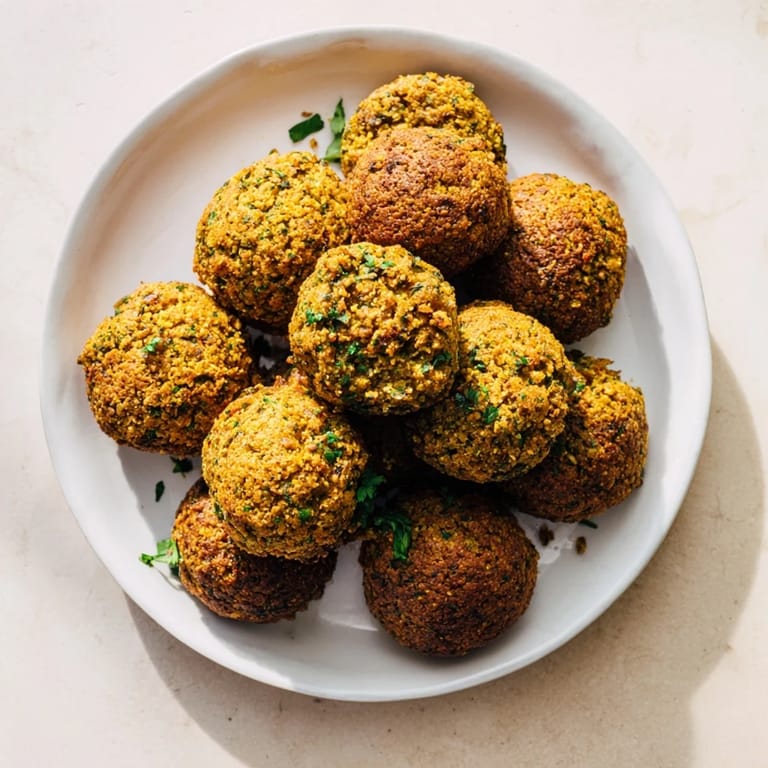
- Working in batches so you don't overcrowd the pot, carefully lower falafel into the hot oil and let them fry for 3 to 4 minutes, turning them halfway through with a slotted spoon so they brown evenly on all sides. They're done when they're deep golden brown and sound hollow when you tap them. Transfer them to paper towels immediately and sprinkle with a tiny pinch of salt while still warm.
- Serve right away:
- Warm falafel are best falafel—stuff them into pita bread with tahini sauce, crisp salad, and pickles, or set them out on a mezze platter for everyone to share.
 Save
Save There was a moment at an early morning meal when my mother tore a warm falafel in half to show me how to tell if it's cooked right—light green and fluffy inside, no gray or dense parts. I've made falafel hundreds of times since, but I still break one open first, just like she taught me.
Why Fresh Herbs Matter More Than You Think
Dried parsley and cilantro are a waste of time here; they're dusty and bitter compared to fresh. Fresh herbs are what separates homemade falafel from the kind that tastes like a spice jar exploded. They brighten everything and remind you that falafel is a vegetable dish first and a spiced dish second. Buy your herbs the morning of if you can, and if they're starting to look tired, they'll still work—better tired fresh than fresh-looking dried.
The Oil Temperature Secret
I learned this the hard way after three batches in a row came out either pale and greasy or charred outside and raw inside. A kitchen thermometer is the single best investment for fried food because guessing by look or bread-dropping will eventually fail you. At 350°F, the exterior sizzles and sets immediately while the inside stays moist and cooks gently. Lower and they absorb oil; higher and you chase a rolling boil with a wooden spoon.
Serving and Storage Wisdom
Falafel are best eaten within an hour or two of frying, when they're still warm and crispy. Leftovers can be reheated gently in a 300°F oven for about 10 minutes to bring back some crispness, though they'll never quite match that first-fry magic. Store them in an airtight container in the fridge for up to 3 days, or freeze them for up to a month and reheat from frozen.
- Tahini sauce and crisp pickles are your best friends here—they cut through the richness and brighten every bite.
- A simple salad of tomatoes, cucumbers, and red onion with lemon and olive oil transforms falafel from snack to a full meal in seconds.
- Make the mixture ahead and refrigerate it overnight if you want to fry them fresh the next day without the long soak wait.
 Save
Save Falafel remind me that good food doesn't need complicated techniques or expensive ingredients—it needs care, fresh herbs, and the willingness to gather people around a table. Make a batch and watch them disappear.
Recipe Questions & Answers
- → What is the best way to soak chickpeas?
Soak dried chickpeas in plenty of cold water for 8 to 12 hours or overnight. This softens them for easier blending and improves texture.
- → Can falafel balls be baked instead of fried?
Yes, brush the formed balls with oil and bake at 400°F (200°C) for 20 to 25 minutes, turning halfway to ensure even crisping.
- → Which herbs enhance the flavor of falafel?
Fresh parsley and cilantro add brightness and freshness, balancing the warm spices like cumin and coriander.
- → How to ensure falafel balls hold together during frying?
Pulse ingredients until coarse but combined, and add flour as a binder if mixture feels too loose before shaping into balls.
- → What oil temperature is ideal for frying falafel?
Heat vegetable oil to 350°F (175°C) to achieve a crispy exterior without absorbing excess oil.
- → Can I make falafel gluten-free?
Yes, substitute all-purpose flour with chickpea flour to keep the mixture binder while maintaining gluten-free status.