 Save
Save The first time I understood what labneh was supposed to taste like, I was sitting in a small kitchen in Beirut, watching my friend's mother fold back cheesecloth from a ceramic bowl like she was unwrapping something precious. What emerged was this impossibly creamy, tangy white cheese that tasted like yogurt had learned to be elegant. She drizzled it with olive oil that gleamed amber in the afternoon light, scattered some dried mint on top, and suddenly I realized I'd been eating mediocre yogurt my whole life. Now whenever I make labneh at home, that kitchen moment comes rushing back.
I made labneh for a dinner party once and forgot about it completely, letting it strain for almost 30 hours instead of the planned 12. When I finally remembered and opened the fridge, I was ready to apologize to my guests for ruined cheese. Instead, what I found was this dense, almost ricotta-like creation that was somehow even better than I'd imagined, tart and rich all at once. My guests spread it on warm pita and kept asking what restaurant I'd ordered it from. That happy accident taught me that labneh is pretty forgiving if you're patient with it.
Ingredients
- Full-fat plain yogurt (1 kg or about 4 cups): This is where everything starts—use the thickest, creamiest yogurt you can find because the fat is what makes labneh so luxurious and tangy, not bland and runny.
- Fine sea salt (½ tsp): Just enough to bring out the yogurt's natural flavor without making it taste salty; this is the gentle seasoning that lets everything else shine.
- Extra-virgin olive oil (2 tbsp): This is what transforms labneh from simple to special, so don't skip it or use anything less than good quality.
- Dried mint or zaatar (1 tsp, optional): A whisper of these herbs adds complexity and that authentic Middle Eastern note that makes people wonder what your secret is.
- Aleppo pepper or sumac (a pinch, optional): Either one adds a faint color and a subtle flavor complexity that makes labneh feel intentional and finished.
Tired of Takeout? 🥡
Get 10 meals you can make faster than delivery arrives. Seriously.
One email. No spam. Unsubscribe anytime.
Instructions
- Mix your foundation:
- Stir the salt into the yogurt until it's completely even and smooth, almost like you're giving it a gentle massage. This takes less than a minute but matters because the salt will help the whey separate more evenly.
- Set up your strainer:
- Double-line your sieve with cheesecloth or a clean thin kitchen towel and position it over a bowl deep enough that the cloth won't touch the collecting whey. This setup is your whole kitchen operation for the next day or so.
- Transfer and cover:
- Tip the yogurt into the lined sieve and gather the cloth edges up and over it like you're tucking the yogurt into bed. This keeps it clean while letting the whey escape quietly underneath.
- Refrigerate and wait:
- Slide everything into the fridge and then just... let time do its thing for 12 to 24 hours depending on how thick you want your cheese. At 12 hours you'll have something soft and spreadable; at 24 hours it becomes dense and almost ricotta-like.
- Unmold and dress it up:
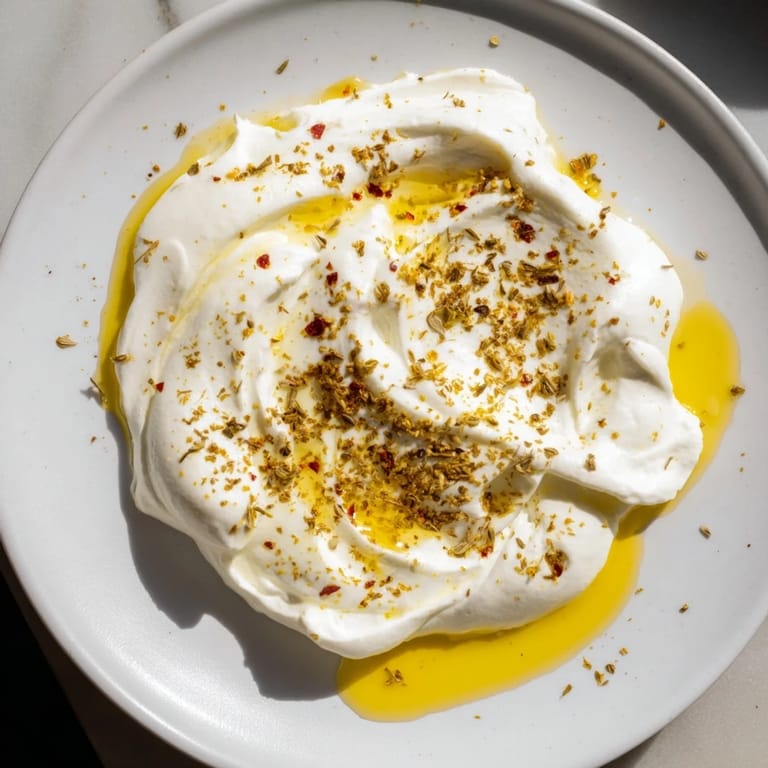
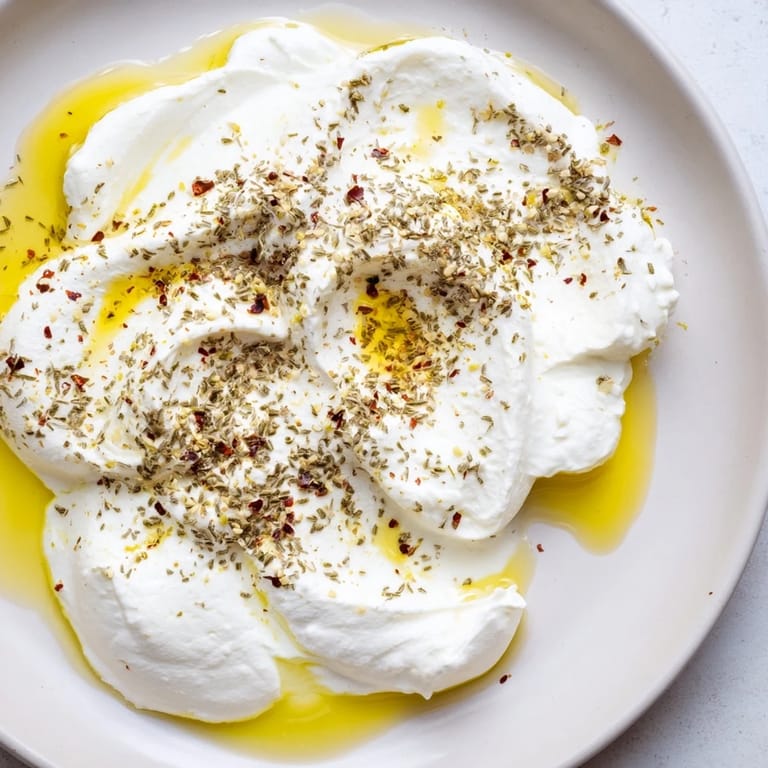
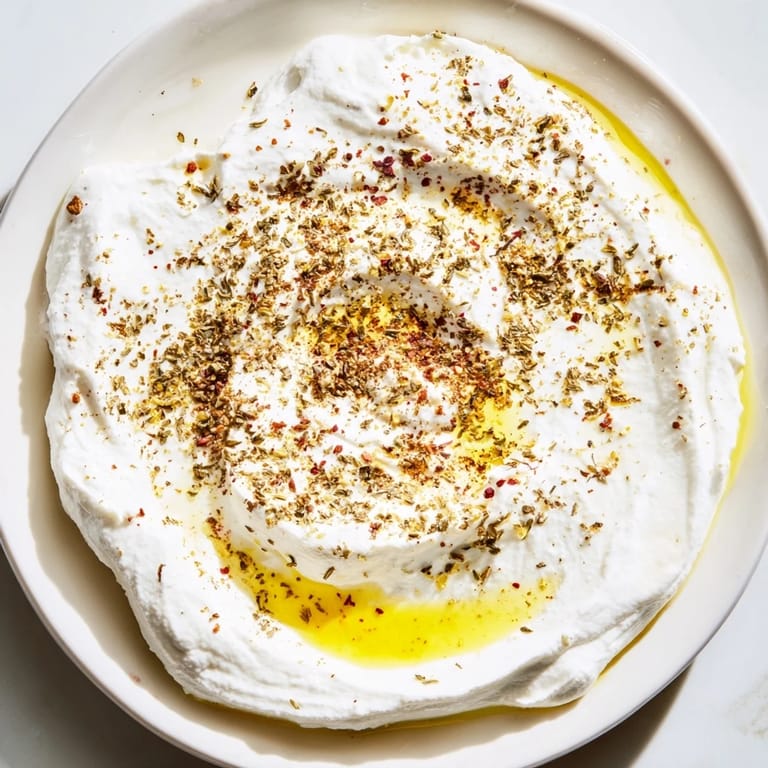
- Once it's reached your desired thickness, tip the labneh onto a serving dish and pour that good olive oil over the top until it pools slightly around the edges. The oil isn't just garnish—it's preservation and flavor all in one pour.
- Finish and serve:
- Scatter your chosen herbs across the surface and crack a tiny pinch of pepper or sumac on top if you're using it, then serve it chilled alongside warm pita, fresh vegetables, or as part of a mezze spread.
 Save
Save Labneh became my shortcut to feeling like a good host. I'd make a batch, forget about it in the fridge, and then when unexpected friends showed up, I had this elegant thing ready to serve that made it look like I'd been planning something special all along. It's the kind of food that quietly makes you look competent.
Texture: What to Expect at Each Stage
At 8 hours, your labneh will still be quite yogurt-like but noticeably thicker, with a spoonable consistency that's perfect if you're impatient. By 12 hours, it becomes genuinely spreadable with a slight firmness, somewhere between thick yogurt and soft cream cheese. At 24 hours, you have something almost dense that holds a shape, almost like ricotta. I've learned that the perfect moment for me is somewhere around 16 hours—thick enough to feel luxurious but still soft enough to swirl with a spoon.
Storage and Keeping Your Labneh Fresh
Once it's made, labneh keeps for about 5 days in the refrigerator, though the olive oil topping helps extend its life by sealing out air. I always keep mine in a shallow bowl rather than a container because that top layer of olive oil keeps it from drying out, and you can scoop what you need without disturbing the rest. If you want to get fancy, you can roll your very firm labneh into walnut-sized balls and store them submerged in olive oil with herbs and spices—they become like little flavor bombs that last even longer.
Variations and Serving Ideas
Beyond the classic herb topping, labneh is endlessly flexible depending on what you have on hand and what mood you're in. I've drizzled it with chili oil and served it with roasted vegetables, swirled in a tiny bit of honey for breakfast with granola, and even used it as a base for a dip mixed with fresh herbs and lemon. The base is so neutral and creamy that it becomes a canvas for whatever flavors you want to play with, whether that's preserved lemon, roasted garlic, or just a crack of black pepper and fresh thyme.
- For a vegan version, use the thickest plant-based yogurt you can find and proceed exactly the same way.
- If you want balls of labneh in oil, strain until very firm, then roll gently and store them submerged in good olive oil with whole spices.
- Leftover whey is liquid gold for cooking grains or making soups, so never discard it.
 Save
Save Labneh taught me that sometimes the most elegant dishes come from the simplest ingredients and the most patient waiting. Every time I open the fridge to find it thick and ready, it feels a little bit like magic.
Recipe Questions & Answers
- → What type of yogurt is best for labneh?
Full-fat plain yogurt, preferably Greek or already strained, creates the best creamy texture and tangy flavor for labneh.
- → How long should yogurt be strained?
Straining time varies from 12 to 24 hours; 12 hours yields soft, spreadable cheese, while 24 hours produces a firmer consistency.
- → What garnishes complement labneh cheese?
Extra-virgin olive oil, dried mint, zaatar, Aleppo pepper, or sumac add fragrant and savory notes to labneh.
- → Can labneh be shaped into balls?
Yes, straining the yogurt until very firm allows shaping into walnut-sized balls that can be stored in olive oil with herbs.
- → How long does labneh keep refrigerated?
When kept in the fridge, labneh stays fresh for up to five days.
- → Are there alternatives for dairy allergies?
Plant-based thick yogurts can be used as a substitute to make a vegan version, suitable for those with dairy intolerance.