 Save
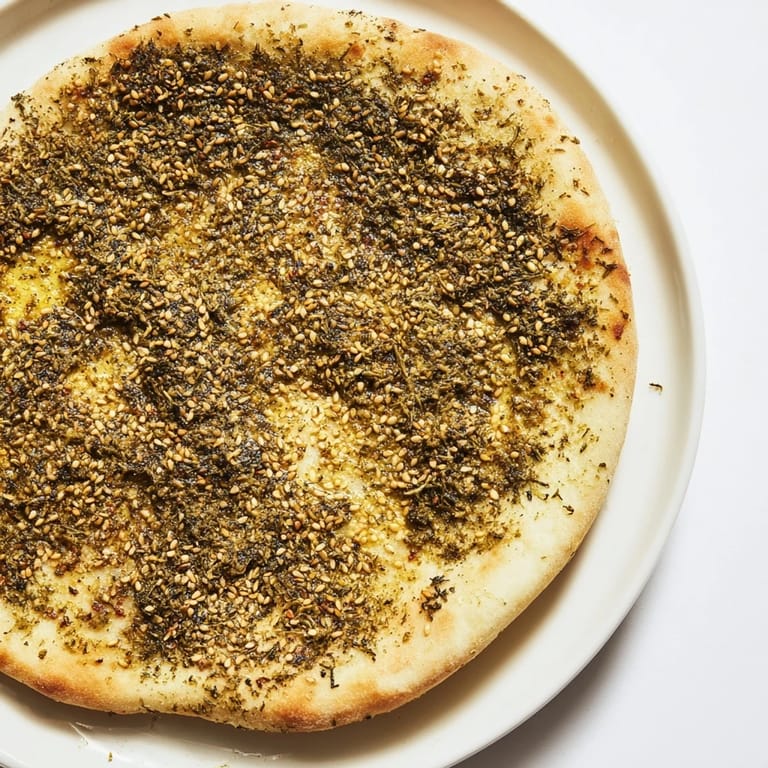
Save The first time I made zaatar bread, I wasn't planning to—I had a container of that fragrant spice blend sitting in my pantry, and the smell of it kept drawing me back. One afternoon, with just enough flour and yeast on hand, I decided to see what would happen if I turned it into something warm and crispy. The moment those golden rounds came out of the oven, the entire kitchen smelled like a bustling Levantine market, and I understood why this bread has been made the same way for generations.
I made this for friends who were skeptical about flatbread until they tasted it straight from the oven, still steaming, dipped into labneh. Watching them go quiet for a moment before asking for the recipe—that's when I knew this was the kind of bread worth mastering and making again and again.
Ingredients
- All-purpose flour (2 cups): The foundation of everything; make sure it's fresh and not compacted so your dough rises properly.
- Instant dry yeast (1 teaspoon): This is your magic ingredient—don't skip the instant kind, as it activates faster and gives you a predictable rise.
- Sugar (1 teaspoon): A tiny amount feeds the yeast and helps create that beautiful golden crust.
- Salt (3/4 teaspoon): Balances the savory topping and strengthens the dough structure.
- Olive oil (2 tablespoons plus 1/3 cup extra virgin): The dough oil keeps everything tender; the finishing oil makes the zaatar coating luxurious and aromatic.
- Warm water (2/3 cup): Warm, not hot—you want it around the temperature of a comfortable bath so the yeast wakes up without shocking it.
- Zaatar spice blend (1/4 cup): This is the soul of the bread; if you can't find it premade, look for blends with sumac, thyme, and sesame.
- Toasted sesame seeds (2 tablespoons): The toasting matters tremendously—it brings out a nuttiness that changes everything about the final flavor.
Tired of Takeout? 🥡
Get 10 meals you can make faster than delivery arrives. Seriously.
One email. No spam. Unsubscribe anytime.
Instructions
- Mix your base:
- In a large bowl, whisk together flour, yeast, sugar, and salt until no lumps remain. This prevents the yeast from clumping and ensures even fermentation throughout the dough.
- Build the dough:
- Pour in the olive oil and gradually add warm water while stirring with a wooden spoon until a shaggy, soft dough pulls together. If it feels too dry, add water a tablespoon at a time until it comes together.
- Knead into smoothness:
- Turn the dough onto a lightly floured surface and knead for 5-7 minutes, pushing it away from you with the heel of your hand, folding it back, and repeating. You'll feel it transform from rough to silky under your palms.
- First rise:
- Place the dough in an oiled bowl, cover with a barely damp cloth, and let it sit undisturbed in a warm corner of your kitchen for 1 hour. You're looking for it to double in size and feel pillowy when you poke it gently.
- Heat and shape:
- While the dough rises, preheat your oven to 220°C (425°F) and line two baking sheets with parchment. Divide the dough into 4 equal pieces, roll each into a ball, then gently flatten and stretch into a round about 6-7 inches across.
- Make the topping:
- In a small bowl, stir together the zaatar, toasted sesame seeds, and extra virgin olive oil until you have a fragrant, oily paste. This mixture is where all the flavor lives.
- Top and finish:
- Spread the zaatar mixture generously over each dough round, leaving a small border around the edges to keep the crust from burning. The oil will bubble and caramelize in the oven, creating an irresistible crust.
- Bake to golden:
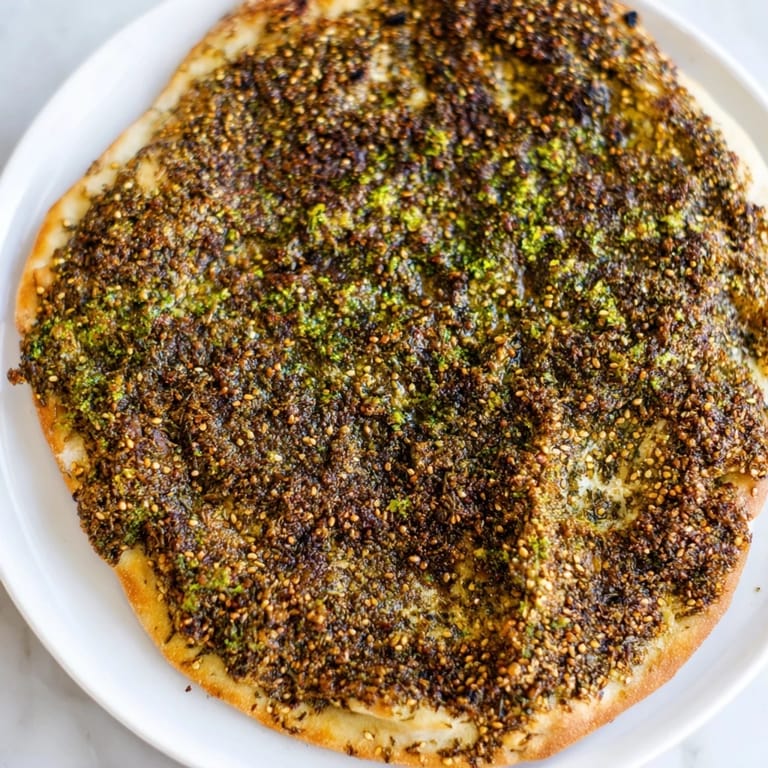
- Slide the baking sheets into the oven for 12-15 minutes, until the breads are deep golden and the edges are crisp. A few dark spots on the topping are not a mistake—they're proof of flavor.
 Save
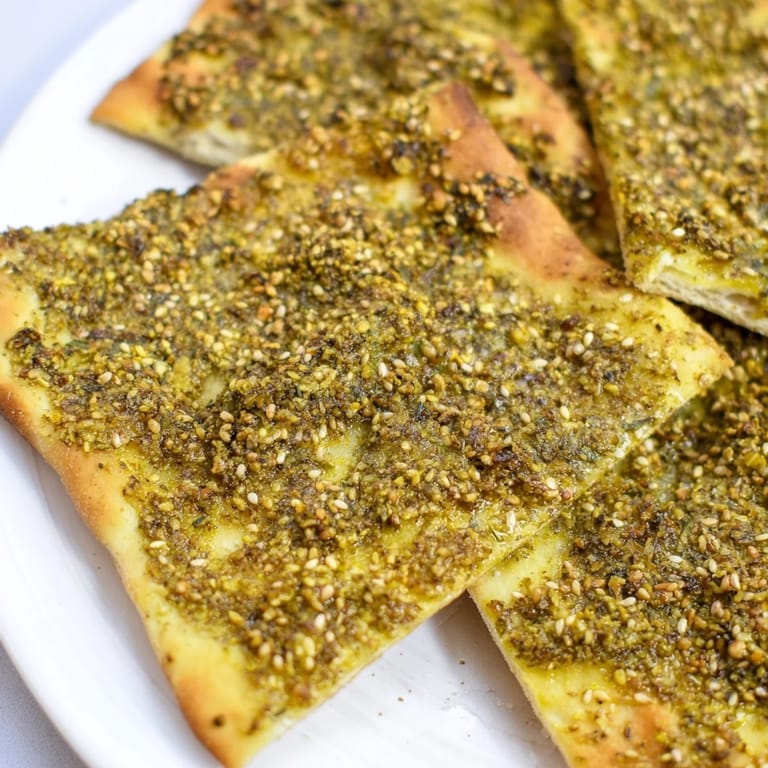
Save There's something almost meditative about watching this bread emerge from the oven, the edges catching fire just enough to turn crispy and brown. I think of it as a moment of transformation—flour and water becoming something worthy of a table full of people, passed around until the last crumb is gone.
The Magic of Zaatar
Zaatar isn't just a spice blend; it's a tradition that's been feeding people across the Levant for centuries. The combination of dried thyme, sumac, and sesame creates this tangy, herbal flavor that somehow feels both ancient and completely modern. Once you taste it on warm bread, you'll start finding reasons to add it to everything—eggs, yogurt, roasted vegetables, even popcorn if you're feeling adventurous.
Customizing Your Bread
While the classic version is perfect as is, this dough is forgiving and fun to play with. I've added a pinch of chili flakes for heat, mixed in a few nigella seeds for extra nuttiness, and even tried a combination with dried oregano when I was out of zaatar. The beauty is that you can make it exactly the way you love it, and it will still taste like you've known what you're doing all along.
Serving and Storing
Zaatar bread is best eaten warm or at room temperature, which means it works beautifully whether you're serving it fresh or reheating it hours later. I like to pair it with labneh, a scatter of olives, and crisp vegetables, but honestly, it's so good on its own that you might find yourself eating it straight from the cooling rack.
- Wrap any leftovers in a clean kitchen towel to keep them soft for up to two days.
- To reheat, wrap the bread in foil and warm it in a 180°C (350°F) oven for about 5 minutes.
- Frozen dough can be shaped, wrapped tightly, and thawed at room temperature before baking with fresh topping.
 Save
Save This bread has a way of becoming part of your rotation once you make it the first time. It's simple enough for a Tuesday night, but impressive enough to pull out when people you care about are coming over.
Recipe Questions & Answers
- → What is the best flour to use for flatbread?
All-purpose flour works well, offering a balanced texture that's both tender and sturdy for this flatbread.
- → How does the zaatar topping enhance the bread?
Zaatar adds an aromatic blend of herbs and sesame that infuses the bread with savory, earthy notes.
- → Can I make the dough ahead of time?
Yes, preparing the dough in advance and allowing it to rise slowly enhances flavor and flexibility.
- → What is the ideal baking temperature for crisp edges?
Baking at around 220°C (425°F) ensures a golden, crisp crust while keeping the inside soft.
- → Are there variations for extra flavor?
Adding chili flakes or swapping sesame seeds for pine nuts can add a spicy or rich twist.