 Save
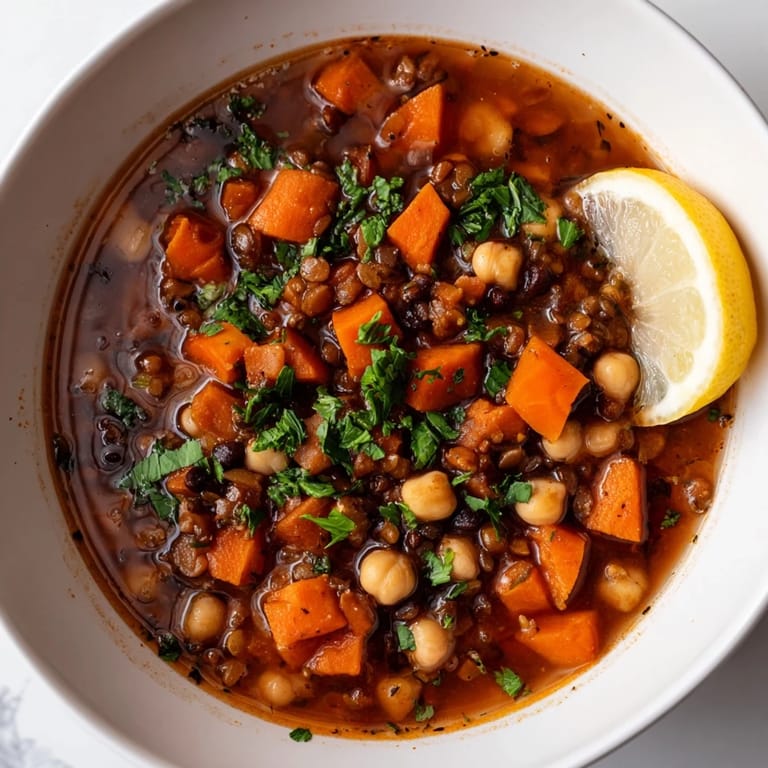
Save Years ago, a friend invited me to her family's Ramadan table, and there it was—a steaming bowl of harira, its aroma filling the room with cinnamon, cumin, and something I couldn't quite name at first. That soup taught me that North African cooking doesn't just feed you; it wraps around you like a warm embrace. Now, whenever the weather turns cool, I find myself recreating that exact moment in my own kitchen, chasing that same magic of spices and comfort.
I made this soup for my sister during her first winter in a new apartment, and I watched her take that first spoonful, close her eyes, and smile without saying anything. She didn't need to—the soup said it all. That's the thing about harira: it's not just lunch or dinner, it's a moment where someone feels seen and cared for.
Ingredients
- Dried chickpeas: Soaking them overnight makes a real difference in texture, though canned works beautifully if you're short on time—no judgment here.
- Lentils: They break down slightly as the soup simmers, thickening it naturally and giving you that silky consistency.
- Olive oil: Use something you actually enjoy the taste of, because it's the foundation of your flavor base.
- Onion, celery, and carrots: This trio is your aromatic backbone—don't skip the celery, even though you might be tempted.
- Garlic: Fresh and minced fine makes all the difference; jarred garlic will leave your soup tasting a bit tired.
- Canned tomatoes: Look for whole or crushed, not tomato sauce, which is too concentrated.
- Spices (cumin, cinnamon, ginger, turmeric, paprika): These are what make harira unmistakably itself—don't substitute or skip any of them.
- Dried apricots: They add a subtle sweetness that balances the earthiness of the legumes in a way that feels almost magical.
- Fresh cilantro and parsley: Added at the end, they brighten everything and remind you why fresh herbs matter.
- Lemon juice: A small squeeze wakes up all the flavors you've been building; it's the final flourish.
Tired of Takeout? 🥡
Get 10 meals you can make faster than delivery arrives. Seriously.
One email. No spam. Unsubscribe anytime.
Instructions
- Warm your oil and build your base:
- Heat olive oil in your large pot over medium heat, then add the onion, celery, and carrots. You'll know it's ready when the vegetables soften and the onion turns translucent, about 6 to 8 minutes—this isn't the time to rush.
- Bloom the spices:
- Stir in the minced garlic and all your spices, cooking together for just one minute. You'll smell the shift immediately—that's when you know the flavors are waking up.
- Deepen the flavor:
- Add the tomato paste and let it cook for another minute, then add your tomatoes, chickpeas, lentils, and apricots. Give everything a good stir to combine.
- Let it simmer:
- Pour in your vegetable broth, bring the whole pot to a boil, then reduce the heat and let it simmer uncovered for 45 to 50 minutes. Stir occasionally and taste as you go—the chickpeas and lentils should be completely tender, almost melting on your tongue.
- Finish with brightness:
- Stir in the cilantro, parsley, and lemon juice, then taste and adjust the salt and pepper. This final step transforms the soup from good to memorable.
- Optional heartiness:
- If you want a thicker, more substantial soup, stir in some cooked vermicelli or rice.
 Save
Save I once made harira for a dinner party and forgot the lemon juice entirely—I only realized halfway through the second bowl when my friend mentioned something was missing. The next day, I reheated the leftovers, added that squeeze of lemon, and suddenly everyone understood what they'd been tasting the night before. That's when I learned that sometimes a recipe's magic lives in the smallest details.
The Sweetness Factor
The dried apricots in this soup are doing something unexpected: they're creating a subtle sweetness that plays against the earthiness of the legumes and the warmth of the spices. It's a technique you see throughout North African cooking, where sweet and savory aren't enemies but partners in the same dance. If you've never cooked with apricots in a savory dish before, this is your invitation to try it.
Making It Your Own
While the classic recipe is perfect as written, I've discovered that harira welcomes small personal touches. Some people add a pinch of saffron for luxury, others stir in a spoonful of harissa paste for heat and depth. I once added a handful of diced preserved lemon because I had it on hand, and it created a completely different flavor profile that was equally delicious. The soup respects creativity while maintaining its soul.
Serving and Storage
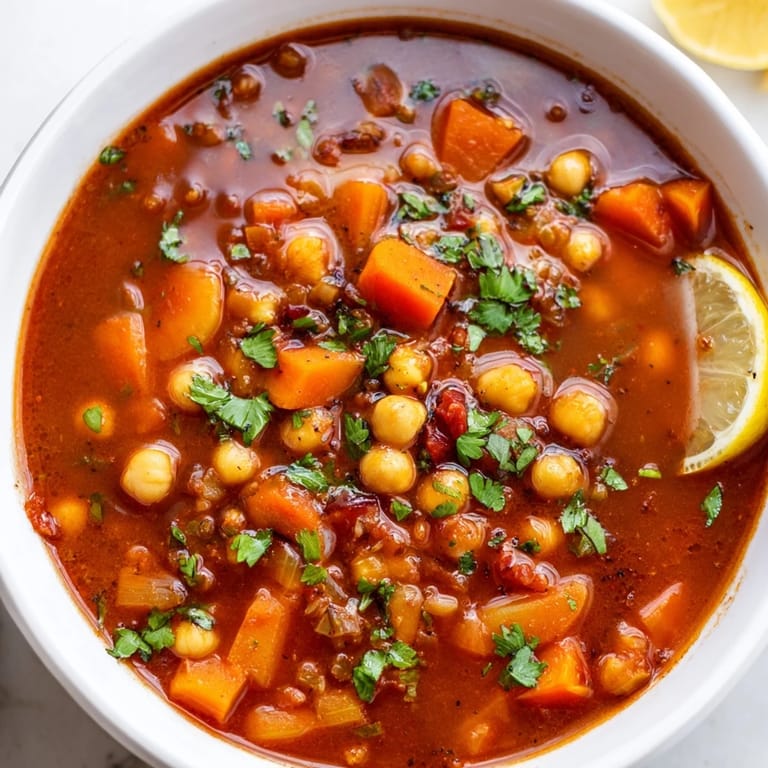
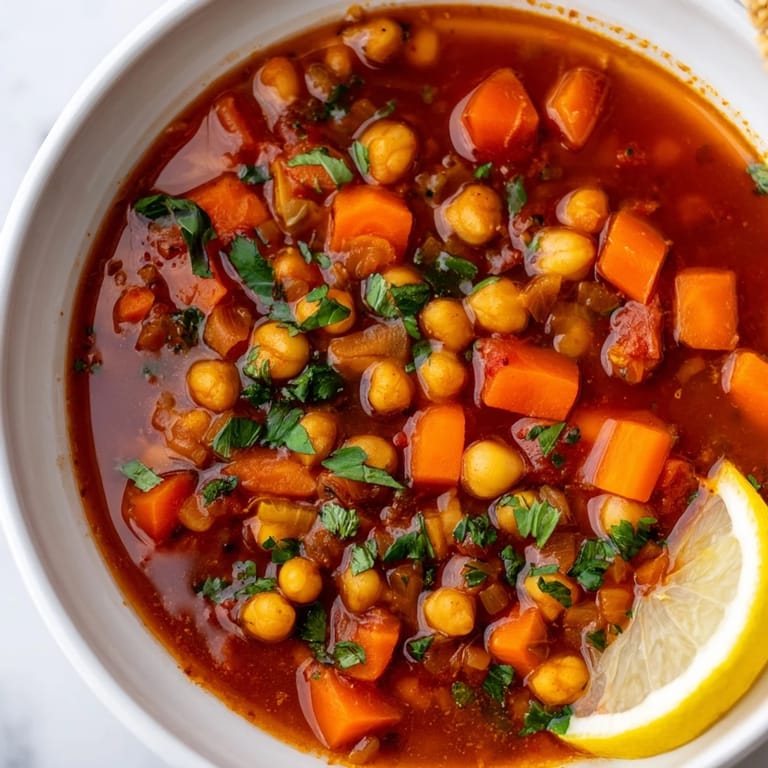
Harira is one of those soups that actually improves with time, as the flavors continue to meld and deepen. I've kept it in the refrigerator for up to four days, and it reheats beautifully on the stove with a splash of broth to loosen it slightly if needed. Whether you're serving it at a festive gathering or on a quiet Tuesday night, garnish generously with fresh herbs and lemon wedges—let people personalize their own bowls.
- You can freeze harira for up to three months, though the texture of the vegetables softens slightly upon thawing.
- For a vegan version, simply use plant-based broth and double-check that your tomato paste and any store-bought broth are certified vegan.
- If you're cooking for someone with a gluten sensitivity, verify that your broth and all packaged ingredients are labeled gluten-free.
 Save
Save There's something profound about a soup that carries the warmth of an entire region in a single bowl. Make this harira and you're not just cooking dinner—you're inviting a whole tradition to your table.
Recipe Questions & Answers
- → Can I use canned chickpeas and lentils instead of dried?
Yes, canned chickpeas and lentils can be used to save time. Just be sure to rinse and drain them before adding to the pot.
- → How can I make the dish vegan?
Use a plant-based vegetable broth to ensure the dish remains vegan-friendly without affecting the rich flavors.
- → What spices give this dish its signature flavor?
Cumin, cinnamon, turmeric, and a hint of cayenne pepper provide the warm and aromatic profile unique to this dish.
- → Is it possible to prepare this dish in advance?
Yes, flavors develop even more after resting overnight, making it a convenient dish to prepare ahead of time.
- → What are some suitable garnishes or additions?
Fresh lemon wedges, extra cilantro or parsley, and cooked vermicelli or rice are traditional and delicious options.