 Save
Save I discovered this dish during a misty morning hike through the Cascade forests, where I stumbled upon a farmer's market vendor arranging wild mushrooms in the most artistic way. She told me she was recreating the forest floor on a plate, and I was instantly mesmerized. That afternoon, I rushed home and began experimenting with layering earthy mushrooms, toasted nuts, and berries to capture that same woodland magic. Now, every time I make this, I'm transported back to that foggy morning and the feeling of wonder that inspired it.
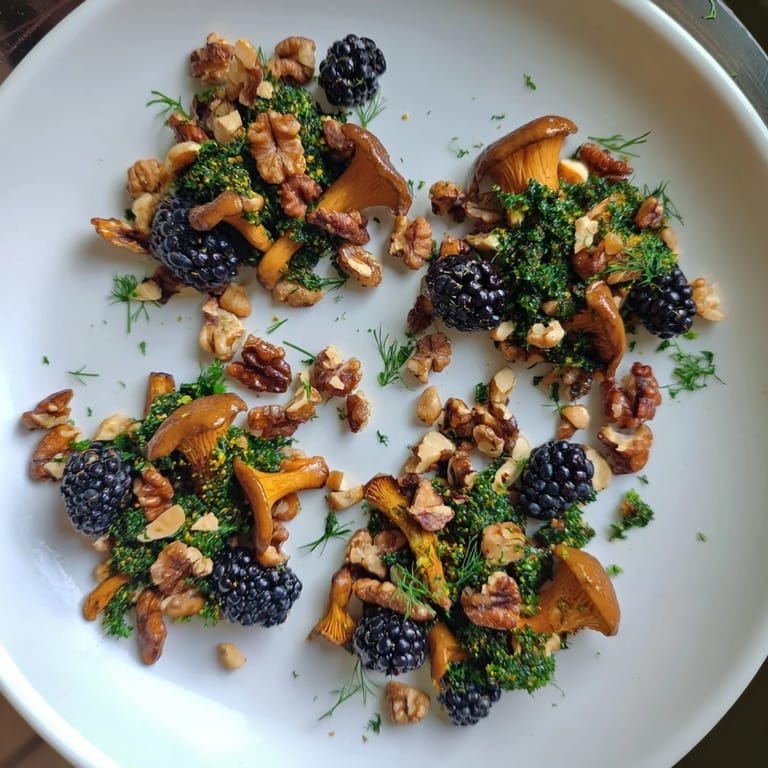
I'll never forget the first time I plated this for my sister's book club gathering. She walked into the kitchen, saw this earthy masterpiece arranged on a large platter, and actually gasped. Her friends gathered around before even sitting down, phones out to capture the beauty. That's when I realized this dish isn't just about flavor, it's about creating a moment of connection and wonder at the table.
Ingredients
- Mixed wild mushrooms (chanterelle, shiitake, oyster), 200 g: These three varieties offer different textures and earthy depths. Chanterelles bring delicate flavor, shiitake adds umami richness, and oyster mushrooms stay tender. Buy them the morning of cooking for the best quality, and gently brush them clean rather than washing.
- Olive oil and unsalted butter, 1 tbsp each: The combination of both creates a golden, nutty flavor in the pan. Butter adds richness while olive oil prevents it from burning. This is the flavor foundation of the entire dish.
- Garlic clove, minced, 1: Just enough to perfume the mushrooms without overwhelming them. Mince it finely so it disperses evenly and doesn't brown too quickly.
- Salt and freshly ground black pepper: Season generously but taste as you go. Fresh pepper makes an enormous difference here.
- Toasted hazelnuts, 50 g coarsely chopped: Toasting brings out their natural sweetness and adds a satisfying crunch. The chop should be rough so you get textural variety in each bite.
- Toasted walnuts, 30 g coarsely chopped: Walnuts add an earthy, slightly astringent note that balances the richness beautifully.
- Fresh blackberries and blueberries, 80 g and 60 g: The berries provide bursts of tartness and sweetness. Choose firm berries at their peak ripeness for the best flavor and visual contrast.
- Fresh flat-leaf parsley, dill, chervil or tarragon, chives, 20 g + 10 g + 10 g + 1 tbsp: This herb moss is the soul of the dish. Each herb contributes its own personality, and together they create something living and fresh. Chop them very finely so they clump together when tossed with oil.
- Lemon zest, from 1 small lemon: This brightens the entire plate and ties all the flavors together. Use a microplane for the finest, most aromatic zest.
- Flaky sea salt for the herb moss: Different from table salt, flaky sea salt clings better to the herbs and adds a pleasant minerality.
Tired of Takeout? 🥡
Get 10 meals you can make faster than delivery arrives. Seriously.
One email. No spam. Unsubscribe anytime.
Instructions
- Clean and prepare your mushrooms:
- Gently brush any forest debris from your mushrooms with a damp paper towel, then slice them into roughly quarter-inch pieces. Variety matters here, so try to keep different mushroom types somewhat separate in your mind as you work, so you can arrange them distinctly later.
- Sauté the mushroom medley:
- Heat your skillet to medium and let the olive oil and butter melt together until they stop foaming. Add your minced garlic and let it bloom for about 30 seconds, filling the kitchen with that unmistakable aroma. Now add all your mushrooms in a single layer if possible, then let them sit undisturbed for about 2 minutes. This is where the magic happens, as they develop a golden crust. Toss them and continue cooking for another 4 to 6 minutes until they're tender and deeply golden. Season generously with salt and pepper, then pour them onto a plate to cool slightly.
- Create your herb moss:
- Finely chop all your fresh herbs until they're almost paste-like. The finer you go, the better they'll cling together. In a small bowl, combine the herbs with that tablespoon of olive oil, your lemon zest, and a pinch of flaky sea salt. Stir gently until everything is evenly coated and the mixture has a loose, clumpy texture like moss from the forest floor. Taste and adjust the seasoning.
- Toast your nuts to golden perfection:
- Spread your hazelnuts and walnuts on a baking tray and place in a preheated 180°C (350°F) oven. You'll want to check them after 8 minutes, and they're done when they smell absolutely irresistible and have turned a deep golden brown. This step cannot be rushed, as the difference between perfectly toasted and slightly bitter is just a couple of minutes. Once cool enough to handle, coarsely chop them, leaving some lovely chunks.
- Arrange your forest floor:
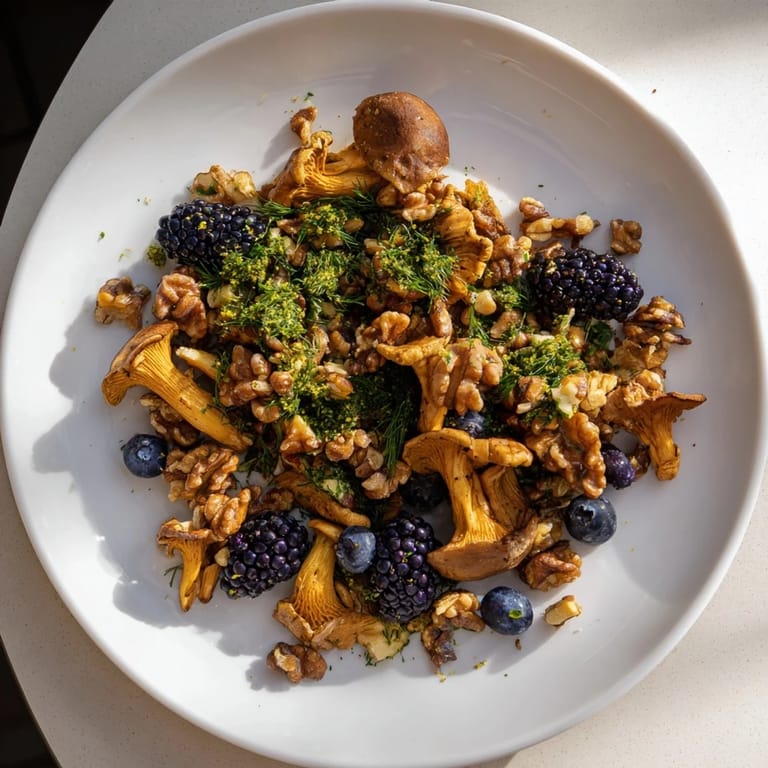
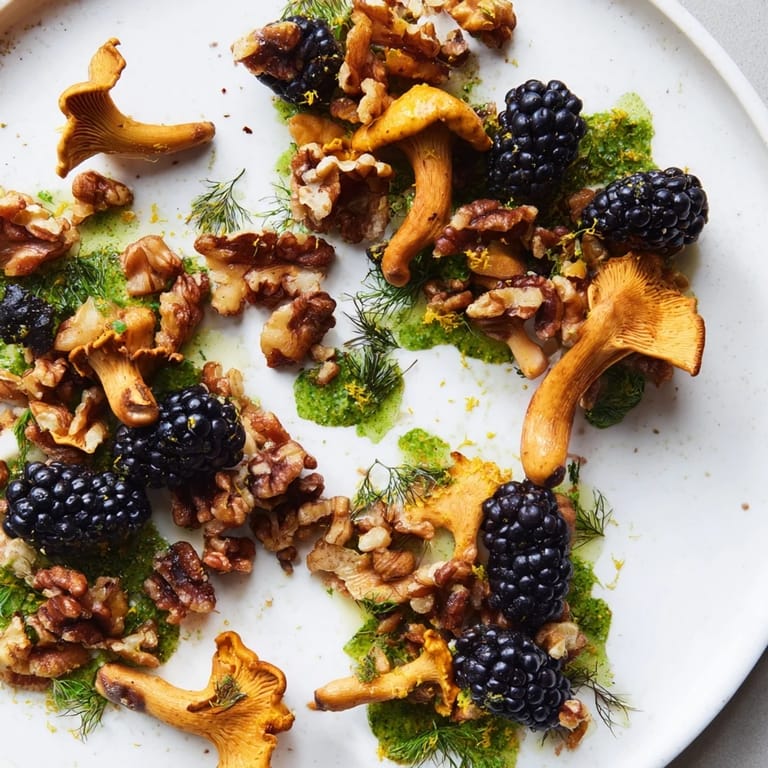
- This is where you become the artist. On a large platter or individual plates, begin arranging your ingredients in organic clusters rather than neat lines. Think about how nature scatters things. Start with clusters of mushrooms, then nestle groups of hazelnuts and walnuts nearby. Scatter your blackberries and blueberries in pockets between the other elements, letting their deep colors pop against the earthy tones. Now generously spoon your herb moss around and between all these clusters, creating little green patches like actual moss on a forest floor.
- Final flourishes:
- If you have edible flowers, scatter a few delicate blossoms across the arrangement. A handful of microgreens or tender baby sorrel leaves adds a professional touch and another layer of freshness. Step back and admire your work before serving at room temperature.
 Save
Save What struck me most was when a dinner guest, someone who claimed they didn't like mushrooms, took a bite and paused mid-chew, eyes widening. He said he'd never tasted mushrooms prepared this way before, and suddenly everything changed for him. That's when I understood that this dish isn't just about the ingredients, it's about showing people the beauty and potential in the things they thought they didn't like.
Why This Dish Captures the Pacific Northwest Spirit
The Pacific Northwest has this mysterious quality, where damp forests meet wild berries and cultivated ingredients grow side by side with foraged treasures. This dish tries to capture that duality. It's refined enough for a dinner party, yet it tastes like you could have found every element walking through the woods on a cool morning. The arrangement isn't fussy plating for its own sake, it's an honest attempt to bring the forest to the table and share that sense of wonder with people you care about.
Pairing and Serving Suggestions
I've learned through countless tastings that this dish sings with a light Pinot Noir, especially one from Oregon or Washington. The wine's bright acidity cuts through the richness of the butter and nuts, while its subtle earthiness echoes the mushrooms. A crisp dry cider works beautifully too, particularly one with just a hint of tannin. Serve this as an elegant first course before something hearty, or as the main event at a light lunch with crusty bread on the side.
Variations and Kitchen Experiments
Once you master the basic arrangement, you'll discover this canvas begs for experimentation. I've added thinly sliced roasted root vegetables, creating deeper earthiness, and pickled shallots for surprising bursts of acidity and spice. A drizzle of truffle oil transforms it into something luxurious, while crispy sage leaves add an herbaceous crunch. Some seasons I substitute pecans or pine nuts for the walnuts, discovering new flavor combinations each time. The beauty is that the technique and philosophy remain the same while the specific ingredients can dance with your mood and what's available at the market.
- Roasted beets or parsnips add color and a warm, sweet note that plays beautifully with the berries
- Crispy sage or thyme leaves provide aromatic texture and look stunning scattered across the arrangement
- Try a light drizzle of aged balsamic vinegar for those who love a touch of acidity, but apply it moments before serving so it doesn't make anything soggy
 Save
Save This dish reminds me why I cook, not because it's complicated or impressive in a technical sense, but because it creates moments where people genuinely pause and experience something beautiful together. Every time you make it, you're sharing a piece of the forest and a piece of yourself.
Recipe Questions & Answers
- → What types of mushrooms are best for this dish?
Mixed wild mushrooms like chanterelle, shiitake, and oyster provide a variety of textures and earthy flavors that complement each other beautifully.
- → How should the nuts be prepared?
Toast hazelnuts and walnuts until golden and fragrant to enhance their natural nuttiness before chopping them roughly for texture.
- → What is the purpose of the herb moss?
The herb moss, made from finely chopped fresh herbs mixed with olive oil and lemon zest, adds freshness and mimics the look and feel of a forest floor.
- → Can this dish be served warm or cold?
It is best enjoyed at room temperature to balance the sautéed mushrooms with the fresh berries and herb moss.
- → Are there variations suggested for dietary preferences?
For a vegan option, replace butter with a plant-based alternative and consider swapping nuts if needed for allergy concerns.