 Save
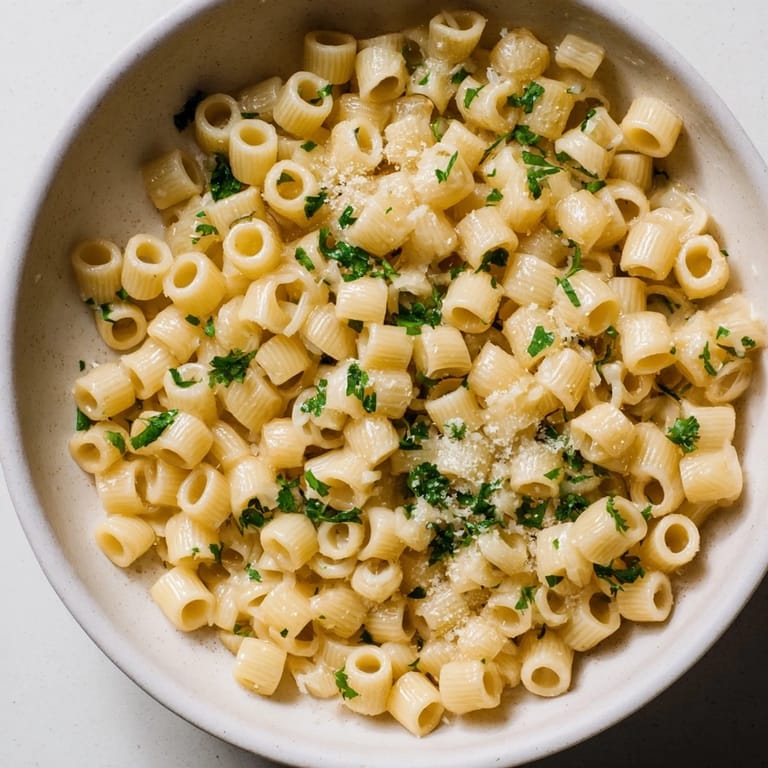
Save There's something magical about pasta that cooks directly in broth instead of a separate pot—I discovered this while rushing through a weeknight dinner and accidentally grabbed the wrong pan. What started as a mistake became my go-to when I want something warm and filling without the cleanup, and honestly, the pasta absorbs so much more flavor this way. One-pot garlic butter ditalini became my quiet victory on nights when cooking felt like one more task to squeeze in.
I made this for my neighbor one cold afternoon when she mentioned offhandedly that she'd been living on sad desk lunches. Watching her face light up when she tasted how the broth had transformed into this silky, garlicky coating on the pasta—that's when I realized this isn't just fast food, it's the kind of dish that makes people feel cared for in the simplest way.
Ingredients
- Ditalini pasta (340 g / 12 oz): Small, tube-shaped pasta that's perfect for trapping broth and flavor in every bite—it's the secret to why this dish feels so much more substantial than it has any right to be.
- Low-sodium chicken broth (1 liter / 4 cups): The foundation; use vegetable broth if you're going vegetarian, but taste it first because some broths are aggressively salty.
- Unsalted butter (3 tablespoons): This is where the richness comes from, and unsalted lets you control the seasoning without it becoming a salt bomb.
- Freshly grated Parmesan cheese (60 g / ½ cup): Buy a wedge and grate it yourself—pre-grated cheese has anti-caking agents that make it grainy and weird in creamy dishes.
- Garlic cloves (4 large, minced): Mince them yourself and add them fresh; the kitchen will smell incredible within two minutes of them hitting the hot butter.
- Shallot (1 small, finely chopped, optional): It adds a whisper of sweetness that keeps the dish from feeling one-dimensional, but it's genuinely optional if you don't have one on hand.
- Freshly ground black pepper (½ teaspoon): Fresh grinding makes a noticeable difference here—stale pepper tastes dusty and flat.
- Red pepper flakes (¼ teaspoon, optional): A tiny pinch adds warmth without heat if you like that subtle kick.
- Salt (to taste): Add it gradually at the end after tasting; the broth and cheese already bring salt to the party.
- Fresh parsley (2 tablespoons chopped) and extra Parmesan (for serving): The fresh herb cuts through the richness and makes it feel finished rather than heavy.
Tired of Takeout? 🥡
Get 10 meals you can make faster than delivery arrives. Seriously.
One email. No spam. Unsubscribe anytime.
Instructions
- Melt butter and awaken the garlic:
- Over medium heat, let the butter foam and turn golden, then add your minced garlic and stir for about a minute—you're looking for that moment when the kitchen smells incredible but before the garlic turns brown and bitter. If you're using shallot, add it here too.
- Coat the pasta in golden goodness:
- Dump in your ditalini and stir it around so every piece gets kissed by that garlicky butter. This step takes maybe a minute but makes a real difference in how the pasta will taste.
- Pour in the broth and let it bubble:
- Add all your broth at once, give it a stir, and bring it to a proper boil—you'll see the pasta start to bob around. Once it's boiling, dial the heat back to a simmer so it's bubbling gently rather than violently.
- Stir and watch it transform:
- For the next 10 to 12 minutes, stir occasionally to prevent the pasta from sticking to the bottom. You're cooking it until it's tender but not mushy, and you'll notice the liquid disappearing as the pasta absorbs it like a sponge. If it looks too dry and the pasta still needs time, splash in some hot water and keep going.
- Finish with cheese and warmth:
- Once the pasta is al dente, take it off the heat and stir in your grated Parmesan, black pepper, and red pepper flakes if you're using them. Taste it and add salt until it tastes like itself, not like salt.
- Let it rest and thicken:
- Give it two minutes off the heat—the residual warmth will help it thicken slightly and come together into something creamy without any cream at all.
- Plate and garnish:
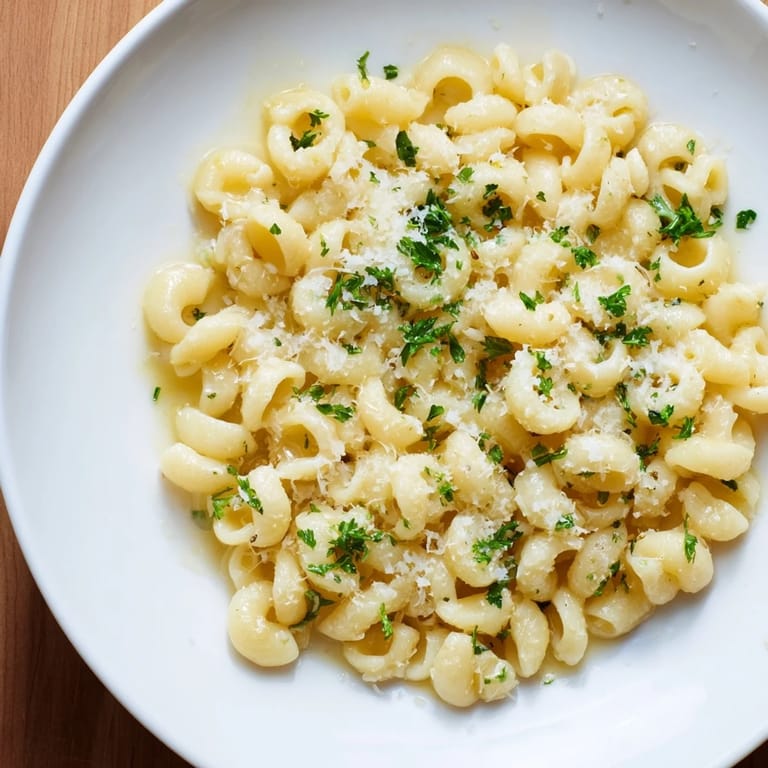
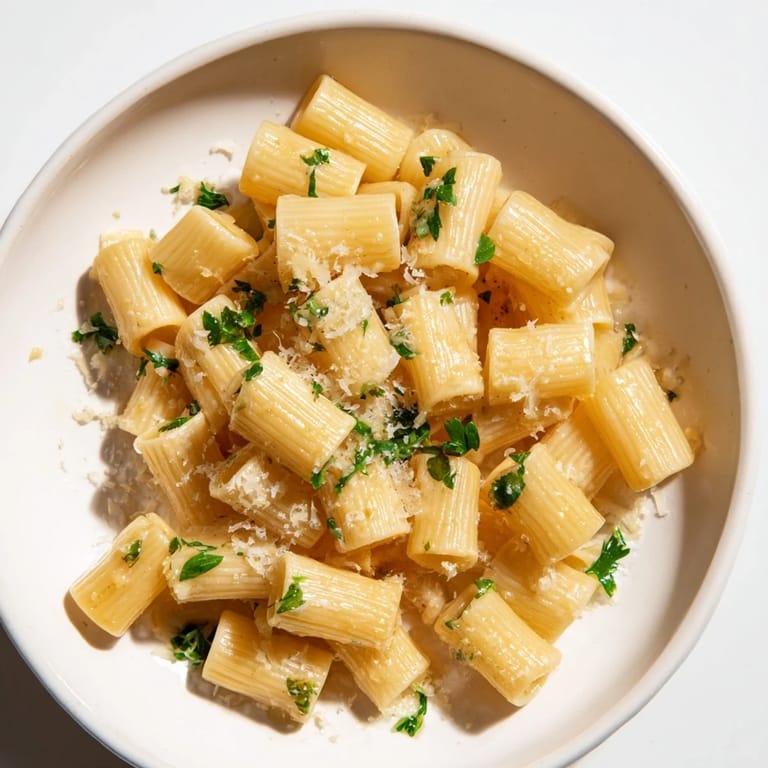
- Divide it into bowls and scatter fresh parsley over the top, along with more Parmesan shavings. Serve immediately while it's still warm.
 Save
Save My partner ate three bowls of this without saying much, which for someone usually chatty enough to talk during movies is basically a standing ovation. That's when I understood that sometimes the best dishes aren't the complicated ones—they're the ones that taste like someone understands what you need.
When You Want It Even Creamier
There's a debate in my kitchen about whether this needs cream, and the answer is genuinely no, but I won't judge you for adding some. A couple of tablespoons of heavy cream or even a splash of whole milk stirred in at the very end (after you turn off the heat) creates an almost silky texture that makes it feel indulgent. Just remember that cream will mellow out the garlic slightly, so you might want to use the full amount of garlic or add an extra clove if you go that route.
Making It a Complete Meal
On its own, this is comforting and filling, but sometimes I'll toss in a handful of sautéed spinach at the very end, or stir through some peas I've thawed in hot water. If you're cooking for someone hungry or want leftovers that feel substantial, shredded rotisserie chicken mixed in transforms this from a side dish energy into genuine main course territory. The beauty is that all these additions stay in the background and let the garlic butter star shine.
Timing and Adaptability
This entire dish lives in that sweet spot of being genuinely quick without feeling rushed or sacrificing flavor—perfect for those moments when you're hungry now but not interested in spending an evening cooking. The one variable is how long your specific pasta takes to cook, so taste it around the 10-minute mark rather than waiting until 12. If you're using vegetable broth instead of chicken, nothing changes except maybe adding a tiny pinch more salt since vegetable broth is often less seasoned.
- Taste the pasta at 10 minutes rather than waiting until 12—all ditalini cooks slightly differently depending on the brand.
- If you're making this vegetarian, use vegetable broth and make sure your Parmesan doesn't contain animal rennet if that matters to your dietary choices.
- Leftover ditalini reheats beautifully in a pot with a splash of extra broth stirred through, though it's honestly best eaten fresh.
 Save
Save This dish has a way of turning an ordinary evening into something that feels intentional and kind—which maybe says less about the food and more about what happens when you slow down enough to make something simple for the people around you. Try it and see what quiet moments it creates in your kitchen.
Recipe Questions & Answers
- → Can I use vegetable broth instead of chicken broth?
Yes, vegetable broth makes a suitable substitute and keeps the dish vegetarian-friendly while maintaining a rich flavor.
- → How do I prevent the pasta from sticking during cooking?
Stir frequently as the ditalini cooks in the broth to prevent clumping and ensure even cooking.
- → What can I add for extra creaminess?
Stirring in heavy cream or a splash of milk at the end enhances the sauce’s creaminess without overpowering the flavors.
- → Can the dish be made spicier?
Yes, adding more red pepper flakes or black pepper boosts the heat to your desired level.
- → How do I make a vegetarian version?
Use vegetable broth instead of chicken broth and substitute Parmesan with a vegetarian cheese alternative.