 Save
Save There's something about the smell of mushrooms hitting hot butter that makes you pause mid-conversation. I learned that on a grey Tuesday when I was supposed to be meal-prepping something practical, but instead found myself standing in front of the farmers market stall, unable to resist the heap of cremini and shiitake that had just arrived. That one impulse led me to this soup—the kind that transforms a ordinary weeknight into something worth lingering over.
My neighbor knocked on the door while this was simmering, drawn in by the aroma drifting through the hallway. She stayed for a bowl and we ended up talking for two hours, the kind of conversation that happens when food does the work of making you feel welcome without trying. That's when I realized this soup isn't just dinner—it's an invitation.
Ingredients
- Mixed fresh mushrooms (cremini, button, shiitake), 500 g (1 lb), cleaned and sliced: The variety matters more than the quantity here; each type brings its own earthiness, and together they create a depth you won't get from one kind alone.
- Unsalted butter, 2 tbsp: This is your foundation—it carries the flavor of everything that comes after, so don't skip it or go margarine.
- Olive oil, 1 tbsp: The butter alone can burn at higher heat, so the oil keeps things even and prevents that bitter edge.
- Medium onion, finely chopped: This dissolves into sweetness as it cooks, binding all the flavors together like an invisible thread.
- Garlic, 2 cloves, minced: Add it after the softer vegetables so it perfumes the pot without turning bitter.
- Carrot and celery stalk, peeled and diced: These aren't just filler—they add a subtle sweetness and body that makes the broth taste homemade in the truest sense.
- Vegetable broth, 1 L (4 cups): Use the good stuff; your soup will taste exactly like your broth tastes.
- Heavy cream, 120 ml (½ cup): Swirl it in at the end to soften the earthiness and add a touch of luxury.
- Dry sherry, 2 tbsp (optional): If you use it, you're adding a complexity that makes people wonder what your secret ingredient is.
- Dried thyme, ½ tsp or fresh thyme, 1 tsp: Fresh is more delicate and bright; dried is deeper and more concentrated—pick based on your mood.
- Bay leaf, 1: Fish it out before serving or risk someone biting into it and learning a lesson.
- Salt and freshly ground black pepper, to taste: Season as you go, not all at once at the end.
- Fresh parsley, 2 tbsp, chopped: This isn't just garnish—it adds a final bright note that lifts the whole bowl.
Tired of Takeout? 🥡
Get 10 meals you can make faster than delivery arrives. Seriously.
One email. No spam. Unsubscribe anytime.
Instructions
- Start with heat and fat:
- In your large pot, let the butter and oil mingle over medium heat until they're shimmering and smell nutty—this takes about a minute and makes all the difference. You're building a flavor base that everything else will rest on.
- Coax out the sweetness:
- Toss in the onion, carrot, and celery, and let them soften for five minutes while you listen to them sizzle. They should be turning tender and slightly golden at the edges, not brown.
- Wake everything up:
- Add the minced garlic and stir constantly for just one minute—any longer and it loses its brightness. You'll smell when it's ready; that moment when the aroma shifts is your cue.
- Brown the mushrooms:
- Pour in your sliced mushrooms along with the thyme and let them have the space to brown, stirring occasionally over eight to ten minutes. They'll release their moisture, then reabsorb it, then finally brown—this is when the magic happens and the soup starts tasting like something serious.
- Add the wine (if you're using it):
- Pour in the sherry and let it bubble away for a minute or two, letting the alcohol cook off and leave behind a subtle sweetness. You'll notice the smell shift slightly, becoming more rounded.
- Pour in the broth:
- Add your vegetable broth and bay leaf, bring it to a gentle boil, then dial it back to a simmer for fifteen minutes uncovered. The soup needs this time to marry the flavors together.
- Blend or leave it rustic:
- Remove that bay leaf, then decide: use an immersion blender to make it silky smooth, or blend half of it for texture, or leave it chunky if that's how you like it. There's no wrong choice here.
- Finish with cream and seasoning:
- Stir in the cream gently, then taste and adjust salt and pepper—remember that broth already carries salt, so go easy. Heat it through on low without letting it boil, which can make the cream separate.
- Serve and celebrate:
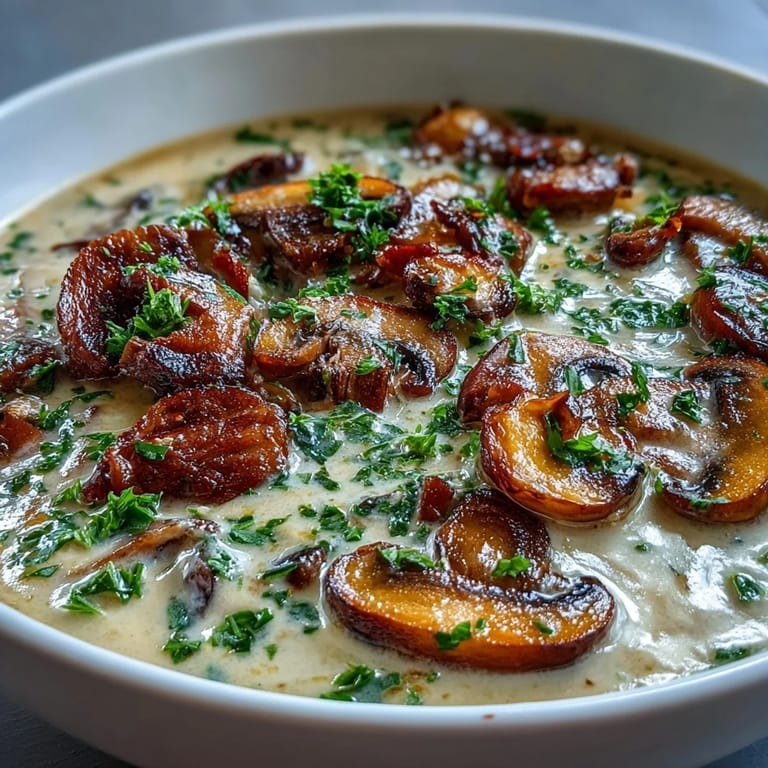
- Ladle into bowls, scatter parsley on top, and take a moment before eating to appreciate the color and steam rising up. This is the part where you know it was worth it.
 Save
Save The first time someone asked for the recipe, I realized I'd been writing down notes on the back of an envelope while cooking because I was too busy to write properly. When I finally sat down to type it out, I understood why this soup had become a regular in my kitchen—it's forgiving, flexible, and somehow always tastes like someone cares.
The Mushroom Question
People always ask if they can use just one type of mushroom, and the honest answer is yes, but the soup will taste one-dimensional compared to when you mix them. Button mushrooms are mild and familiar; cremini brings earthiness; shiitake adds this deep, almost meaty quality that makes vegetarians feel satisfied. If you're at the market and one kind looks better than the others, grab that one and fill the rest with whatever's fresh—your soup will adjust.
Texture and Temperature
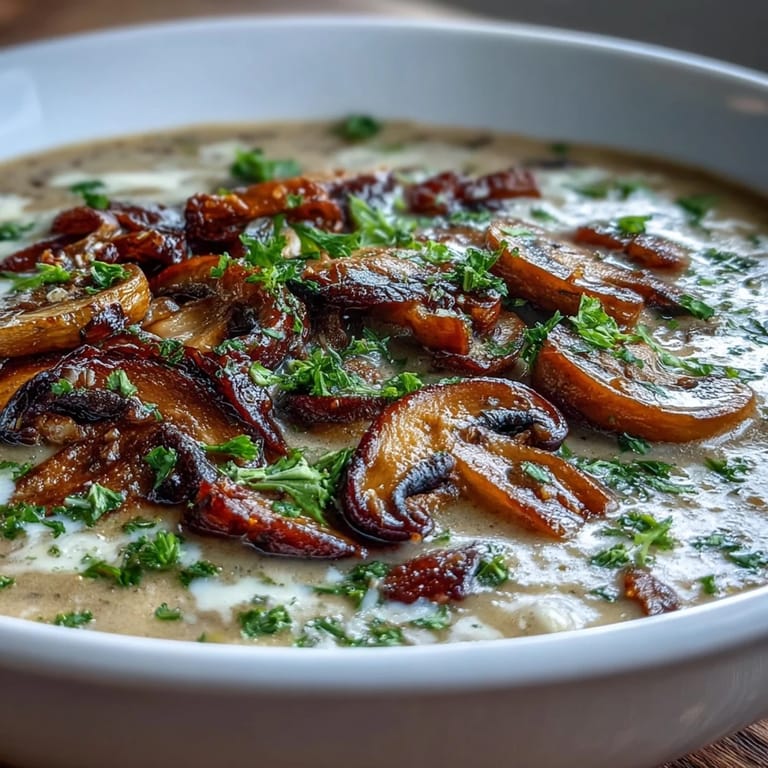
I used to blend this soup completely smooth, thinking that was fancier, until someone mentioned they liked biting into soft mushroom pieces. Now I use the immersion blender on just half of it, leaving enough texture to make it interesting. The soup should be steaming hot but not boiling when it hits your bowl—boiling breaks the emulsion and makes the cream separate into little islands of fat, which isn't the vibe we're going for.
Making It Your Own
This recipe is a skeleton that invites you to add your own bones. Some people swear by a splash of soy sauce for extra umami; others add a pinch of nutmeg at the very end for warmth. I once added a handful of rehydrated porcini mushrooms when I had them, and the soup transformed into something almost unrecognizably deep and complex. The base is solid, but the personality comes from what you bring to it.
- For a vegan version, swap the butter for plant-based butter and the cream for coconut milk or cashew cream—it works better than you'd expect.
- A handful of fresh spinach stirred in at the last second adds color and iron without changing the flavor profile.
- Leftover soup keeps in the fridge for four days and freezes beautifully for up to three months, making this an ideal make-ahead friend.
 Save
Save This soup has become my answer to almost every question: feeling under the weather, need comfort food, want to impress someone, have extra mushrooms sitting around. It's proof that the simplest dishes, made with attention and good ingredients, are often the ones people remember.
Recipe Questions & Answers
- → Can I make this soup ahead of time?
Absolutely. This soup actually develops deeper flavors when made ahead. Store in the refrigerator for up to 3 days, then gently reheat without boiling to prevent cream separation.
- → What mushroom varieties work best?
A mix of cremini, button, and shiitake provides excellent depth. For extra richness, add rehydrated dried porcini mushrooms—their concentrated umami elevates the entire preparation.
- → How do I achieve the perfect consistency?
Use an immersion blender to purée partially or fully based on your preference. Leaving some chunks adds rustic texture, while complete blending creates an elegant, restaurant-quality finish.
- → What can I substitute for heavy cream?
For dairy-free versions, use full-fat coconut cream or cashew cream. Plant-based alternatives work beautifully, though they may slightly alter the final flavor profile.
- → Is dry sherry essential?
Not essential, but highly recommended. Sherry adds subtle complexity and acidity that balances the earthy mushrooms. If unavailable, a splash of dry white wine works equally well.