 Save
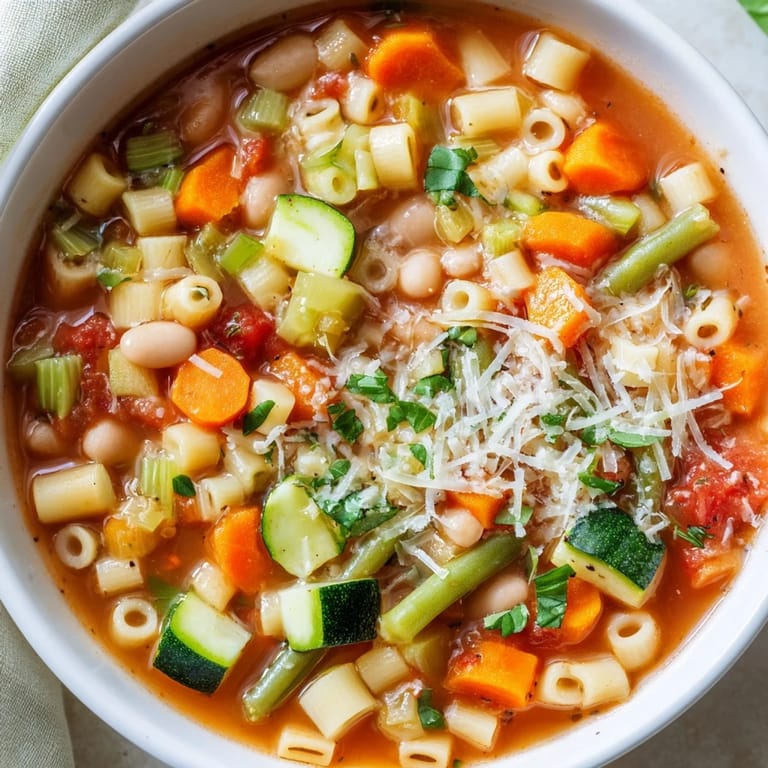
Save There's something about minestrone that makes a kitchen feel lived-in, warm, and full of possibility. The first time I really understood this soup was on a gray afternoon when I had odds and ends of vegetables scattered across my counter—nothing fancy, just what needed using. I threw them into a pot with some tomato and broth, and by the time it was simmering, my whole apartment smelled like Italy. That's when I realized minestrone isn't a recipe you follow so much as a conversation between you and whatever produce you have on hand.
I made this for a friend who showed up unannounced, half-frozen from walking across the city in February. She sat at my kitchen table while the pot bubbled away, and within twenty minutes she had a steaming bowl in her hands and color back in her cheeks. She went quiet for a moment after the first spoonful, and I knew then that simple food, made with attention, speaks louder than anything complicated ever could.
Ingredients
- Olive oil: This is your base, so don't skip it or use something flavorless—it carries the whole flavor profile of the soup.
- Onion, carrots, and celery: This holy trinity is where the depth comes from; take time sautéing them until they're soft and sweet.
- Garlic: Fresh and minced, never the jarred stuff—you'll taste the difference immediately.
- Zucchini and green beans: These vegetables stay tender enough not to disappear into mush, keeping the soup textured and interesting.
- Diced and crushed tomatoes: Two kinds give you both body and brightness; the combination is crucial.
- Vegetable broth: A good-quality broth matters here because it's the backbone of everything else.
- Oregano and thyme: Dried herbs work beautifully in this context, infusing the liquid as it simmers.
- Tomato paste: A small amount concentrates the tomato flavor and adds richness you can't fake.
- Cannellini beans: They add creaminess and protein without falling apart during cooking.
- Small pasta: Ditalini or elbow shapes work perfectly—they catch the broth and hold flavor.
- Fresh basil and parsley: Added at the end, these brighten everything and remind you why you're eating soup in the first place.
Tired of Takeout? 🥡
Get 10 meals you can make faster than delivery arrives. Seriously.
One email. No spam. Unsubscribe anytime.
Instructions
- Start the foundation:
- Warm olive oil in a large pot over medium heat and add your diced onion, carrots, and celery. Let them soften for about five minutes—you're not looking for color here, just tenderness and the beginning of sweetness. Stir occasionally so everything cooks evenly.
- Build the aromatics:
- Stir in your minced garlic, zucchini, and green beans, cooking for three minutes until you can really smell what's happening. This is when the kitchen starts to feel like home.
- Add the tomato base:
- Pour in both kinds of tomatoes along with the broth and all your seasonings—oregano, thyme, salt, pepper, red pepper flakes, and tomato paste. Give it a good stir until the paste dissolves, then bring everything to a boil. You'll see the color deepen as it heats.
- Let it simmer and develop:
- Turn the heat down and let the soup bubble gently uncovered for fifteen minutes so flavors can meld and intensify. Taste it as it goes; you're building something that tastes intentional, not rushed.
- Add pasta and beans:
- Stir in the pasta and drained cannellini beans, simmering for another ten to twelve minutes until the pasta is tender and has absorbed some of the flavorful broth. The soup will thicken slightly as the starch releases into the liquid.
- Finish with fresh herbs:
- Stir in your chopped basil and parsley at the very end, tasting as you go to adjust salt and pepper. Fresh herbs should brighten everything without overpowering the base you've built.
 Save
Save What makes minestrone special isn't any single ingredient—it's the decision to slow down and let vegetables become something greater than themselves. One winter I made this soup weekly, and my neighbors started stopping by around five o'clock, drawn by that smell of simmering tomato and basil. Food that brings people to your door without invitation is food worth knowing how to make.
The Magic of Simmering
Minestrone rewards patience in a way that many soups don't. The vegetables break down slightly, releasing their flavors into the broth, while the tomato base deepens and becomes more complex. I learned this by accident when I left a pot on the stove longer than intended and came back to something utterly transformed. Now I approach the simmering stage as the most important part—this is where a collection of ingredients becomes a dish with character.
Making It Your Own
The beauty of minestrone is that it's endlessly adaptable without losing its soul. I've made it with kale instead of green beans, added spinach at the end for extra greens, and once threw in diced fennel because it was there. The structure stays the same—sautéed aromatics, tomato base, vegetables, beans, pasta—but the details are yours to decide. This flexibility means minestrone is as much about listening to what you have as it is about following instructions.
Serving and Storage Wisdom
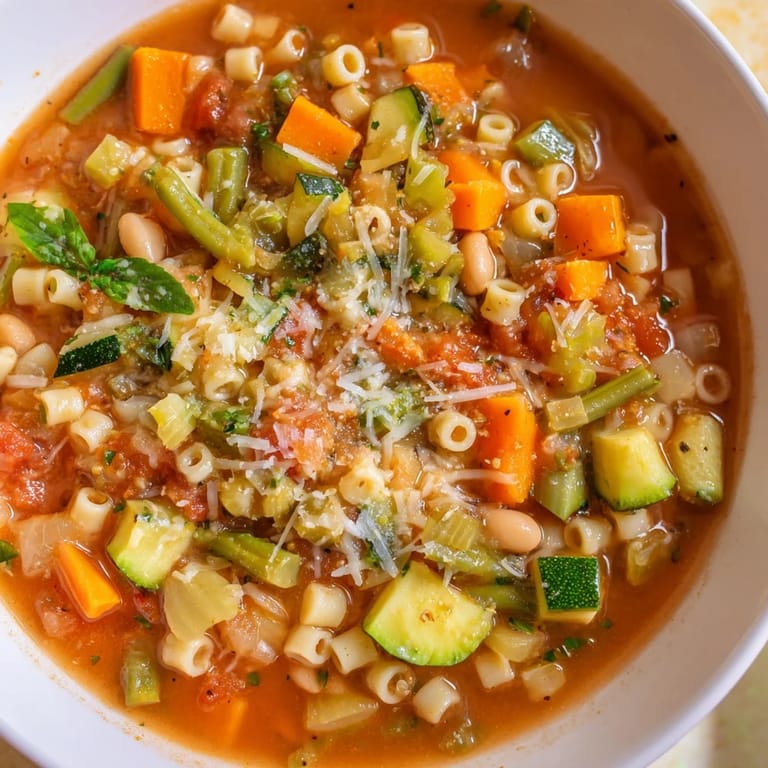
Minestrone is one of those soups that tastes better on the second day, once everything has had time to truly know each other. Store it in the refrigerator for up to four days, or freeze it for months—just wait to add the fresh basil and parsley until you're reheating and serving. Serve it hot in a deep bowl with crusty bread on the side and Parmesan cheese grated over the top if you'd like that salty, umami layer.
- Add extra pasta when reheating if the soup has thickened—it absorbs more liquid as it sits.
- For a vegan version, skip the Parmesan entirely and the soup stands completely on its own.
- Leftover soup freezes beautifully, so don't hesitate to make a double batch and have comfort on hand.
 Save
Save Minestrone teaches you that the most nourishing meals don't require fancy techniques or hard-to-find ingredients. They just require showing up with whatever you have and giving it the time it deserves.
Recipe Questions & Answers
- → What vegetables are included in this minestrone?
This minestrone includes onion, carrots, celery, garlic, zucchini, and green beans, creating a rich vegetable base.
- → Can I make this dish gluten-free?
Yes, by substituting the pasta with gluten-free varieties, you can enjoy this dish without gluten.
- → Which herbs enhance the flavor of this soup?
Dried oregano and thyme are simmered in the broth, complemented by fresh basil and parsley added at the end.
- → Is it possible to make this suitable for a vegan diet?
Omit the Parmesan cheese for a vegan-friendly option, and ensure the pasta contains no animal products.
- → How do I achieve the best texture for the pasta and beans?
Add small pasta and cannellini beans to the simmering broth later in cooking, allowing them to become tender without overcooking.