 Save
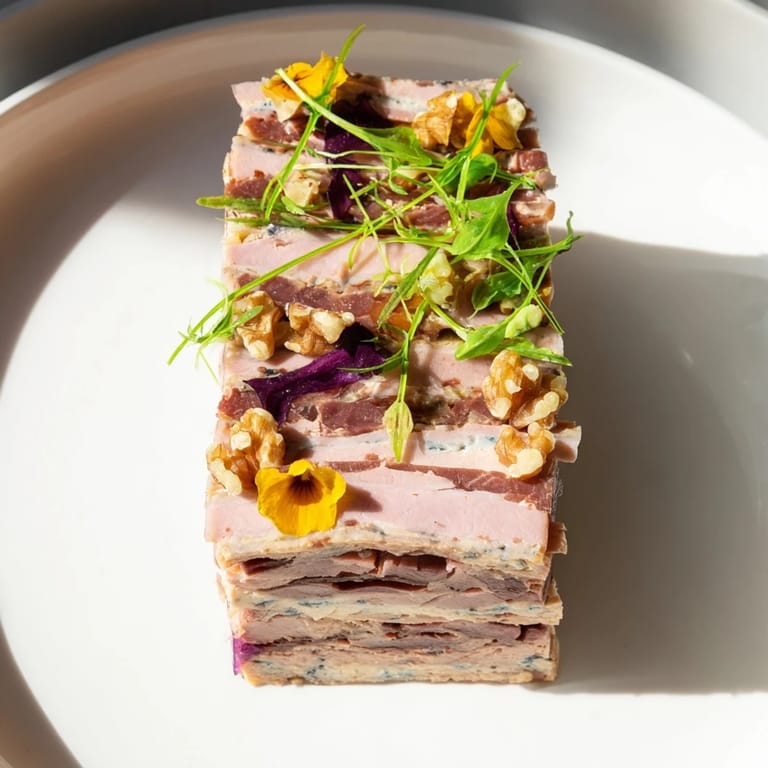
Save My friend Sarah handed me a coffee table book about the Grand Canyon one afternoon, and I became obsessed with those layers of red and purple stone. That evening, I was testing a new terrine recipe when it hit me—what if I could recreate that canyon on a plate? The beef, turkey, ham, and pork became my geological strata, and suddenly this wasn't just dinner. It was edible art that actually tasted incredible.
I made this for a dinner party on a cold November evening, and when I unmolded it at the table, everyone went quiet for a moment. Then someone said it looked like an actual landscape, and suddenly it wasn't just food anymore—it was a conversation starter that tasted better than it looked, which almost never happens.
Ingredients
- Beef sirloin, thinly sliced (300 g): You want it thin enough to flex but sturdy enough not to tear; partially freeze it for 20 minutes if your knife skills need backup.
- Turkey breast, thinly sliced (250 g): The mild flavor balances the richness without competing; this is your transition layer between bold flavors.
- Smoked ham, thinly sliced (200 g): The smoke adds depth and keeps everything from tasting one-note; good ham makes the whole thing.
- Pork loin, thinly sliced (200 g): Its slight sweetness rounds out the meat composition and adds texture variety.
- Blue cheese, crumbled (150 g): This is the river, the centerpiece; don't go mild here, you want boldness.
- Cream cheese, softened (100 g): It binds the blue cheese into something spreadable without drowning it.
- Heavy cream (30 ml for mousse, 60 ml for binding): The cream adds luxurious texture and helps everything blend without becoming grainy.
- Fresh chives and parsley (1 tbsp each, finely chopped): These herbs brighten the richness and add visual appeal when you slice through.
- Eggs (4 large): The binding agent that holds everything together during the bake; don't skip this step.
- Whole milk (120 ml): It tempers the eggs so they cook gently instead of scrambling.
- Salt and black pepper: Use freshly ground pepper; it makes a real difference in the final taste.
Tired of Takeout? 🥡
Get 10 meals you can make faster than delivery arrives. Seriously.
One email. No spam. Unsubscribe anytime.
Instructions
- Set your stage:
- Preheat to 160°C and line your loaf pan with plastic wrap, leaving enough overhang to fold over the top like you're wrapping a gift. This is your safety net for unmolding later.
- Mix your binding liquid:
- Whisk eggs with milk, cream, salt, and pepper until smooth; this becomes the glue holding your meat layers together. Set it aside within arm's reach of your pan.
- Prepare the blue cheese river:
- Blend your crumbled blue cheese with softened cream cheese, heavy cream, chives, and parsley until it's thick but spreadable, like a very luxurious butter. Taste it and adjust pepper; it should taste bold enough to cut through the meat.
- Build the first cliff:
- Arrange beef slices along one side of the pan, overlapping slightly like roof shingles, creating a gentle slope downward. This is your foundation; take your time here because it sets the visual tone.
- Layer your strata:
- Add turkey, then ham, then pork loin in alternating layers, each one angled to deepen that cliff effect, and brush lightly with binding liquid every two or three layers to lock everything in place. Watch the layers build like you're creating actual geology.
- Insert the river:
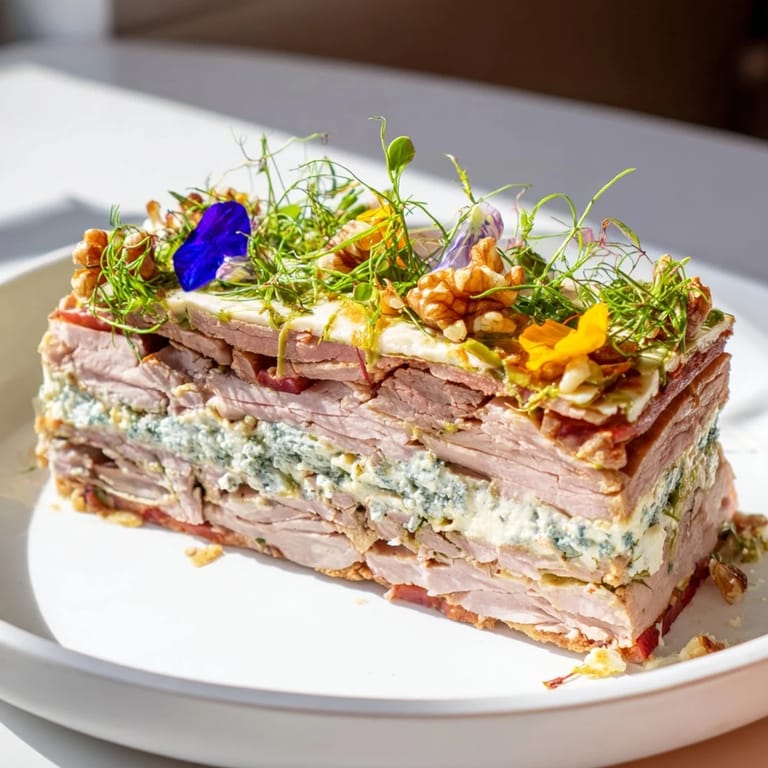
- Halfway up the pan, spoon your blue cheese mixture down the center in a thick line, then continue layering meats around it and over it, keeping your canyon walls intact. This is where the magic happens.
- Seal and water-bath:
- Fold the plastic wrap over the top, cover everything with foil, then nestle your loaf pan into a roasting dish and fill with hot water halfway up the sides. The steam gentles the cooking and keeps everything silky.
- Bake and chill:
- Bake for 1 hour 15 minutes until it feels set but still has a little give when you press it, then cool completely before refrigerating for at least 4 hours, ideally overnight. The chilling is non-negotiable; it lets the layers fuse and makes unmolding possible.
- Unmold with confidence:
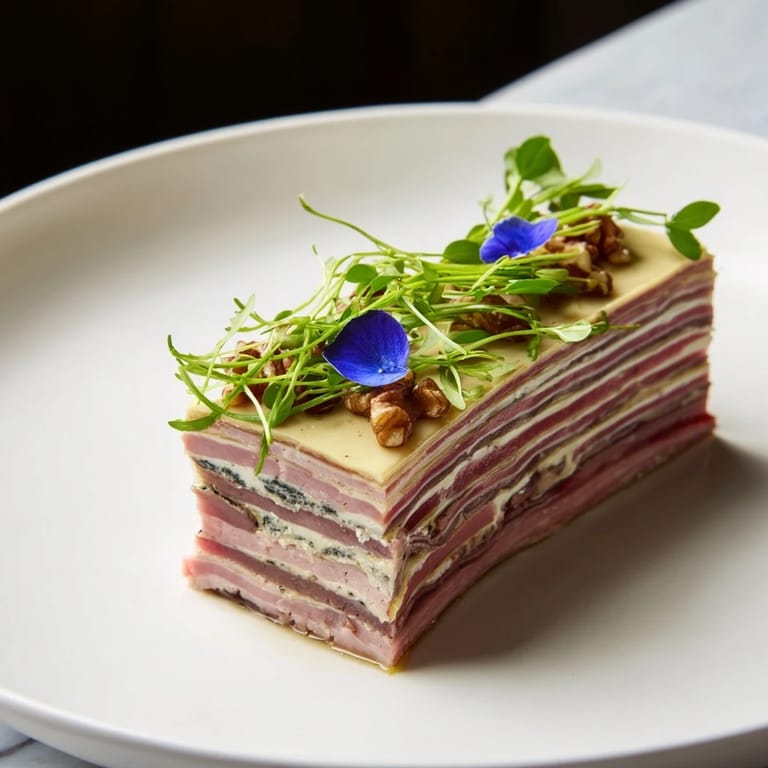
- Run a thin knife around the edges, flip it onto your serving platter, and peel away the plastic wrap slowly to reveal your canyon. Slice thick enough to see all the layers without them crumbling apart.
 Save
Save There's a moment, right when you unmold this thing and the layers reveal themselves, when you remember why you love cooking. It's not complicated, but it requires patience and attention, and somehow that restraint makes people feel honored to eat it.
The Art of Meat Layering
Getting the cliff effect right is about angles and overlaps, not perfection. Each layer should slope slightly downward from where the previous one ended, like you're mimicking natural erosion. Some cooks worry about symmetry here, but honestly, nature isn't symmetrical, and neither should your canyon be. I learned this after obsessing over perfectly parallel layers that actually looked fake. The beauty is in the irregularity.
Blue Cheese Variations and Substitutions
If blue cheese isn't your crowd's thing, swap it for herbed goat cheese, which gives you a milder flavor but keeps that visual impact. Smoked duck can replace some of the pork loin for an extra layer of flavor complexity. I've even added finely chopped pistachios to the mousse for a subtle earthiness that surprised everyone. The mousse is flexible; it just needs to stay bold enough to taste like something intentional when you bite through to the center.
Serving and Pairing Ideas
Slice thick and lay each piece on a plate with space around it so the layers are the star. Toasted brioche soaks up the richness without overwhelming the delicate meat textures, and a crisp white wine or light red cuts through the richness beautifully. I serve it with a simple green salad dressed in sharp vinaigrette to add brightness, and maybe toasted walnuts and microgreens scattered on top for that fine dining feel that makes people Instagram their food.
- Let the terrine sit at room temperature for 15 minutes before slicing so the flavors are fully awake.
- Use a sharp knife dipped in hot water between slices for clean cuts that showcase the layers.
- Leftover slices taste even better the next day when the flavors have melded overnight.
 Save
Save This dish proves that the most impressive meals often come from the simplest idea—looking at something beautiful in nature and asking what it would taste like on a plate. Make it once and you'll find yourself making it again.
Recipe Questions & Answers
- → How do the meat layers achieve the canyon effect?
The thinly sliced meats are carefully layered in a downward sloping pattern to mimic the natural cliffs of the Grand Canyon, creating distinct visual strata.
- → What is the purpose of the blue cheese mousse layer?
The blue cheese mousse serves as a vibrant river flowing through the terrine, adding richness and a herbal, creamy contrast to the meats.
- → Why is a bain-marie used for baking?
Baking in a bain-marie gently cooks the terrine, preserving moisture and ensuring even heat distribution for a tender texture.
- → Can the blue cheese be substituted for milder options?
Yes, herbed goat cheese can replace blue cheese for a milder, creamier flavor without overpowering the other layers.
- → What garnishes enhance the final presentation?
Microgreens, edible flowers, and toasted walnuts add color, freshness, and texture, complementing the terrine's complex layers.